

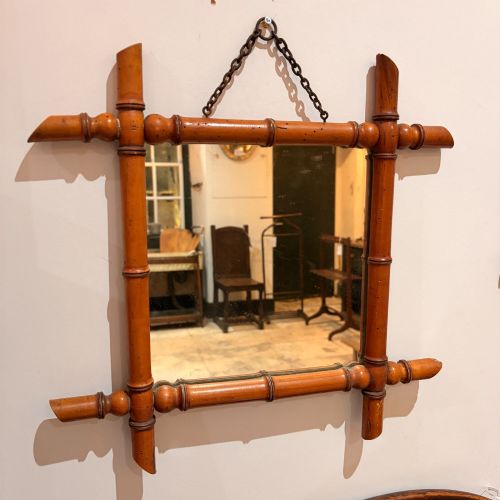
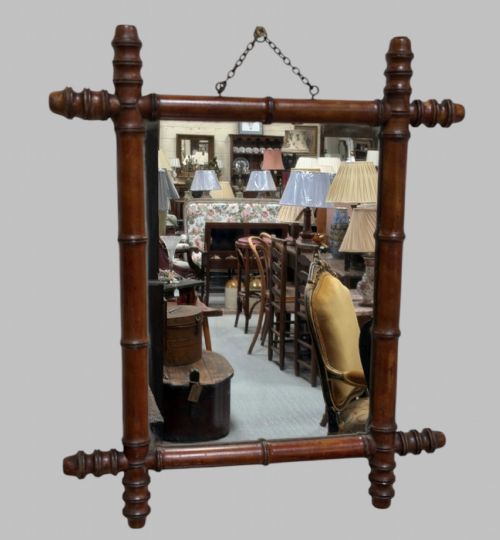


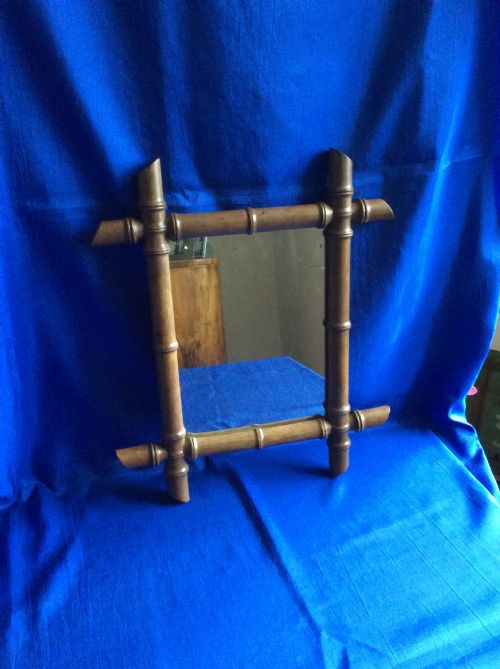


Faux Bamboo Wall Mirror
A faux bamboo wall mirror brings sculptural whimsy to a room, turning a simple glass plate into an organic statement of nineteenth-century taste.
Faux Bamboo Wall Mirror
A faux bamboo wall mirror is a framed looking glass designed for wall hanging, defined by frames carved or shaped to resemble natural bamboo shoots and nodes. When searching for a faux bamboo wall mirror, a buyer encounters pieces originating primarily from the nineteenth century, including examples dated around 1890, 1900, and the broader 19th Century period.
The pieces appearing on this page lean heavily towards continental origins, specifically French Provincial and French Chinoiserie styles. Forms range from standard wall mirrors to large formats and overmantle mirrors, sometimes found in sets rather than solely as individual items.
Construction origins divide between domestic British and continental workshops, with French interpretations dominating the available selection. Buyers frequently meet pieces finished in black lacquer and gilt, alongside natural wood grains and ebonised surfaces.
Materials and construction
Makers utilised timber such as beech, pine, and carved wood to build the structural frames, shaping the solid material by hand to imitate the jointed rings and irregular ridges of real bamboo. Metal components also appear alongside glass and mirror glass to form the complete hanging object.
Surface treatments define the visual execution, varying from natural polished wood to heavy ebonisation and Chinoiserie black lacquer punctuated by gilt highlights. The glass plates are set within these shaped wooden armatures, secured to accommodate both modest and large overmantle proportions.
Faux Bamboo Wall Mirror Retail Price Guide 2026
Typical asking prices for faux bamboo wall mirror among the pieces listed under this phrase on Sellingantiques today, from the lower quarter to the upper quarter. They describe what is for sale here now, not the wider market.
Styles documented across the inventory include French Provincial, Victorian, and French Chinoiserie.
Distinguishing quality across the range
The distinction between standard examples and the finest items rests upon the depth of the carving and the intricacy of the surface finish. Superior pieces display crisp articulation at the bamboo nodes and sophisticated applications of black lacquer combined with gilt leaf.
Scale and proportion separate utilitarian frames from grand decorative statements, particularly in large overmantle formats or matching sets. The integration of original mirror glass and the fidelity of the carved wooden joints further separate the ordinary production from exceptional craftsmanship.
The Faux Bamboo Wall Mirror Glossary
- Faux bamboo
- A decorative technique where wood, metal, or other materials are carved, turned, or painted to imitate natural bamboo. This style gained immense popularity in European furniture and decorative arts during the nineteenth century.
- Ebonised
- Timber treated with chemical stains, paints, or polishes to resemble expensive ebony wood. This dark, uniform finish provides a dramatic contrast against gilt highlights on nineteenth-century frames.
- Overmantle mirror
- A large wall mirror specifically designed to hang above a fireplace mantelpiece. These pieces often feature extended horizontal proportions to match the width of the hearth below.
- Chinoiserie
- A European artistic style that reflects Chinese decorative motifs and techniques, reinterpreted through Western sensibilities. It frequently incorporates black lacquer, gilt detailing, and whimsical pictorial elements.
Faux Bamboo Wall Mirror: Frequently Asked Questions
How do I date a faux bamboo mirror?
Dating relies on examining the construction methods of the wooden frame, the composition of the mirror glass, and the specific surface finish applied by the maker. Nineteenth-century examples often exhibit hand-carved beech or pine with traditional joinery and period silvering on the glass.
Secondary clues include the style label, such as French Provincial or Chinoiserie, and whether the piece utilises ebonisation or gilt. Comparing these physical characteristics against documented pieces from around 1890 and 1900 helps establish an accurate timeframe.
Were these mirrors made in France?
Many surviving examples originate from French workshops, embracing continental aesthetic movements like French Provincial and French Chinoiserie. These pieces often display distinct carving styles and lacquer finishes characteristic of nineteenth-century continental cabinetmaking.
British makers also produced similar frames, but the French market favored decorative bamboo motifs for salons and bedrooms. Examining the framing technique and timber types helps identify the likely regional origin.
Where should I hang an overmantle mirror?
An overmantle mirror belongs above a fireplace mantelpiece, where its wide proportions balance the architectural weight of the hearth. These large nineteenth-century pieces anchor a room and reflect light across the space.
They also function effectively on principal walls in reception rooms or hallways where sufficient wall space accommodates their scale. Secure wall fixings are essential due to the combined weight of the timber frame and glass.
What is ebonised wood?
Ebonised wood is timber treated to achieve the deep, black appearance of ebony. Makers utilised this finish on nineteenth-century frames to create a striking backdrop for gilt details.
The process typically involves staining or painting beech, pine, or other hardwoods. This dark surface emphasises the carved bamboo nodes and adds formal elegance to the decorative frame.