


Victorian Faux Bamboo Frame
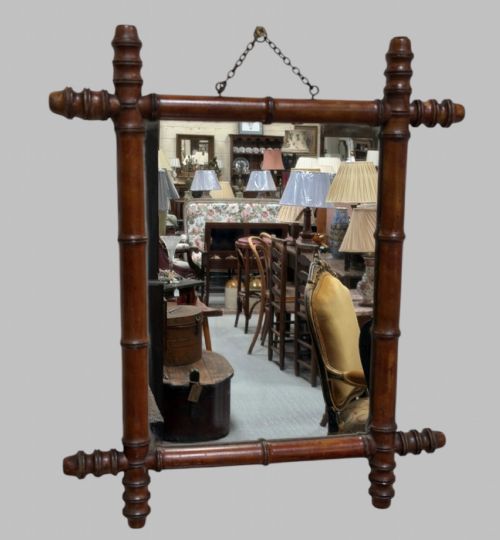
These Victorian faux bamboo frame pieces bring playful nineteenth-century design to a wall or bedroom, modelled on natural cane.
Victorian Faux Bamboo Frame
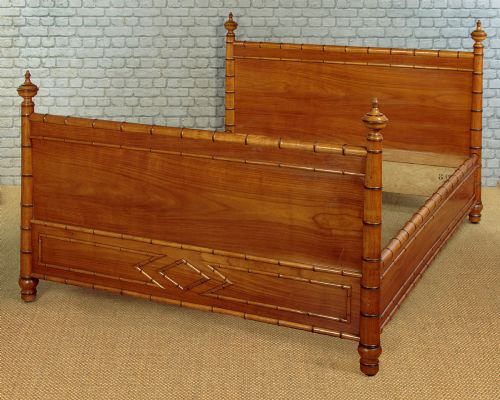
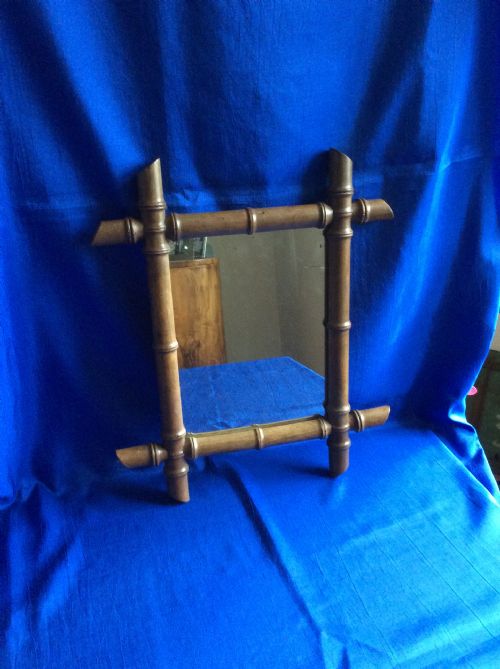
When you search for a Victorian faux bamboo frame, you encounter turned wooden pieces designed to imitate real oriental cane. The selection here leans heavily towards wall mirrors, alongside occasional larger items such as beds and side tables.
Most examples hail from the nineteenth century, including French pieces and specific Victorian creations. These objects reflect the nineteenth-century fascination with exotic styles while utilising domestic timbers.
The forms range from simple hanging mirror plates to substantial bedsteads and decorative tables. Each piece employs the distinctive jointed moulding that defines the aesthetic.
How they were made
Craftsmen shaped domestic woods like beech, pine, mahogany, and turned hardwood on a lathe to create the characteristic segmented bamboo ridges. These wooden frames were then assembled around mirror glass, paintings, or structural furniture forms.
Many items retain painted or polished finishes designed to mimic the natural tone and texture of real bamboo. Metal components sometimes feature in the internal construction or hardware of the beds and mirrors.
Even the modest bedside table occasionally pretended to be a patch of exotic jungle cane.
What varies in quality
The crispness of the lathe turning defines the better examples, where each simulated joint and node is sharply carved or moulded. Softer, shallower turning produces a less convincing imitation of natural cane.
Proportion and scale also separate standard items from superior pieces, particularly in large wall mirrors and French frames. The depth of the timber mouldings and the quality of the original glass or secondary woods dictate the overall standard.
John Taylor Edinburgh
The Victorian Faux Bamboo Frame Glossary
- Faux bamboo
- A style of furniture decoration where wood is turned and carved to imitate natural bamboo stalks. This technique gained popularity during the nineteenth century.
- Aesthetic movement
- A late nineteenth-century design current emphasising visual beauty over narrative content. Pieces from this era often incorporate exotic motifs like turned cane.
- Turned hardwood
- Timber shaped on a rotating lathe using cutting tools. This method creates the cylindrical and knotted sections seen in faux bamboo mouldings.
- French provincial
- A regional style reflecting traditional craftsmanship from outside Paris. Items bearing this label often display simpler, robust construction.
Victorian Faux Bamboo Frame: Frequently Asked Questions
What is a faux bamboo frame?
A faux bamboo frame is a piece of nineteenth-century woodwork turned on a lathe to mimic natural cane. Makers used domestic timbers like beech and mahogany to create the segmented look.
These frames appear most often around wall mirrors and paintings. The style reflects a broader Victorian enthusiasm for exotic botanical motifs in interior decoration.
Are these frames genuinely Victorian?
The listings span the nineteenth century, including periods around eighteen seventy, eighteen ninety, and nineteen hundred. Many originate from France as well as Britain.
Examining the turning technique and the underlying wood helps determine the exact period. Beech and turned hardwood were standard choices for these nineteenth-century pieces.
How do I hang a heavy mirror?
Large wall mirrors require secure fixings suited to the weight of the timber and glass. Using appropriate wall plugs and screws distributed across the frame ensures stability.
Professional mirror hangers can assess the wall structure and the hanging loops attached to the back of the frame. This prevents strain on the wooden joints.