



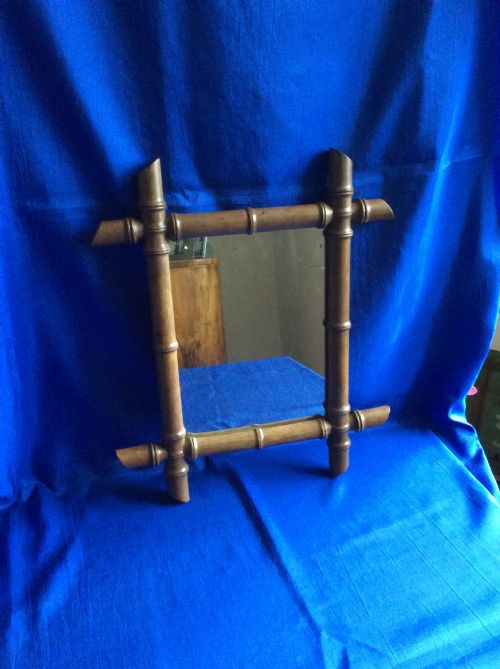


French Faux Bamboo Mirror
A french faux bamboo mirror brings playful botanical charm to a room, mimicking exotic cane through skilled carpentry.
French Faux Bamboo Mirror
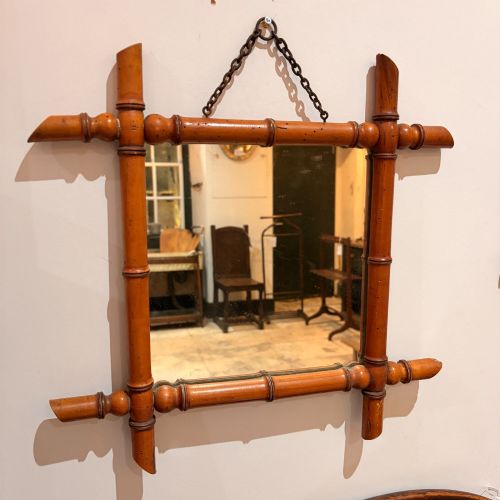
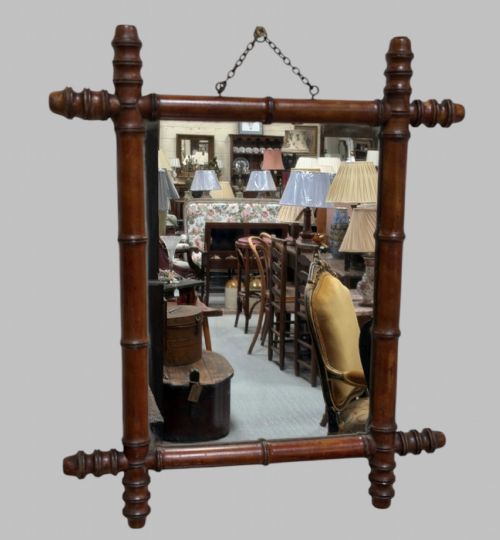
A french faux bamboo mirror represents a whimsical intersection of 19th-century European design and fascination with Eastern forms. When you search for a french faux bamboo mirror, you find wooden frames painstakingly carved, turned, or moulded to imitate segmented cane stems.
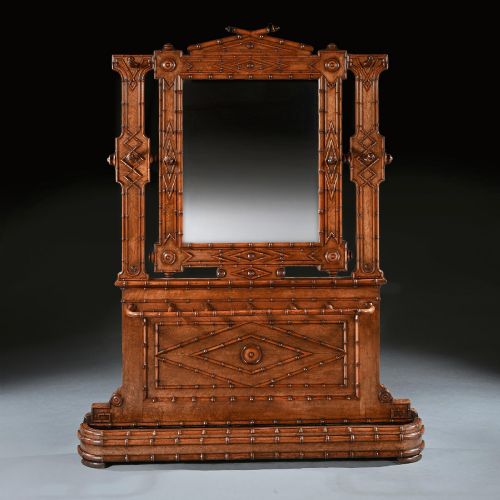
The pieces on this page mostly take the form of wall-hung looking glasses, though the broader tradition includes dressing table pieces and cheval mirrors. Dating predominantly from the late nineteenth century and the Edwardian era, these items reflect both Victorian revivalism and the Aesthetic Movement.
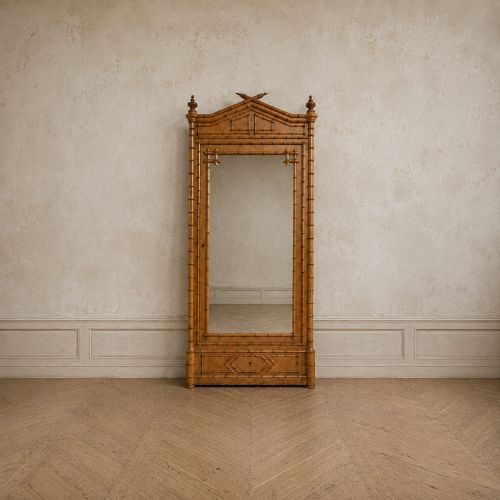
Makers across France produced these frames in various sizes, ranging from small wall mirrors to large, commanding items designed for grand bedrooms or hallways. Their enduring appeal lies in this ability to combine architectural structure with botanical whimsy.
How they were made
Carpenters typically used native timbers such as beech, cherrywood, or birch, turning the wood on a lathe to create the characteristic swollen nodes and ridged joints of natural bamboo. Artisans also worked in cast iron for utilitarian pieces like hall stands, or applied carved wood and gesso finished with silvering.
Surface treatments define much of the character in these frames, varying from natural polished woods to painted finishes. Workshops employed ebonising, grey paint, turquoise, yellow, and green lacquering with gilt highlights to emulate or celebrate the exotic material.
French Faux Bamboo Mirror Retail Price Guide 2026
Typical asking prices for french faux bamboo mirror among the pieces listed under this phrase on Sellingantiques today, from the lower quarter to the upper quarter. They describe what is for sale here now, not the wider market.
Some Victorian workshops even turned cast iron into convincing bamboo, proving that heavy metal can successfully play at being light grass.
What varies in quality
Quality rests significantly in the fidelity and depth of the turning and carving. Superior examples display crisp, well-defined nodes and convincing joint details that mimic actual cane without looking clumsy or overly uniform.
The condition and retention of original materials also separate standard pieces from finer ones. Surviving original mirror glass, often showing gentle foxing, alongside untouched painted or ebonised surfaces, elevates the integrity of the piece.
The French Faux Bamboo Mirror Glossary
- Faux bamboo
- Simulated cane work created by turning wood on a lathe to mimic the joints and rings of real bamboo. This technique became highly fashionable in European furniture during the nineteenth century.
- Ebonised
- Wood finished to resemble ebony through staining or dark painting. This dark treatment was frequently applied to faux bamboo frames during the Aesthetic Movement.
- Cheval mirror
- A full-length looking glass hung in a vertical frame that tilts on pivots between two upright floor pillars. These large mirrors often featured sturdy faux bamboo supports.
- Foxing
- Age-related spots and discoloration on mirror glass caused by the breakdown of the silver backing over decades. Collectors often prize original glass with gentle foxing for its authentic patina.
- Gesso
- A plaster-like mixture applied to wood surfaces as a base for painting or gilding. On certain mirrors, gesso was moulded to enhance the bamboo-like relief work before silvering.
French Faux Bamboo Mirror: Frequently Asked Questions
How do I date a faux bamboo mirror?
Dating relies heavily on construction methods, timber choices, and backing boards. Late nineteenth-century examples often feature older fixings and native hardwoods like beech or cherrywood.
Stylistic cues also help narrow the era, as pieces from the Aesthetic Movement or Art Deco periods carry distinct design markers and paint finishes characteristic of their decades.
Are these mirrors made of real bamboo?
Despite the convincing appearance, these frames are carved or turned from solid wood rather than actual cane. Artisans used timbers like beech, pine, or birch to achieve the desired botanical shapes.
Cast iron was also utilised for heavier items like hall stands, providing the necessary structural strength while maintaining the faux bamboo aesthetic.
What is foxed glass?
Foxed glass refers to the speckled, aged appearance of older mirror plates where the reflective backing has slightly deteriorated over time. This creates soft, cloudy patches across the reflection.
Many collectors value original foxed glass because it confirms the mirror plate is period-authentic rather than a modern replacement.
How should I style a faux bamboo mirror?
These mirrors work well in diverse interiors, adding texture and a touch of organic geometry to modern or traditional spaces. Their distinctive frames suit hallways, bedrooms, or living rooms as feature wall pieces.
Pairing them with neutral walls allows the intricate turned wood or painted finish to stand out as a focal point.