
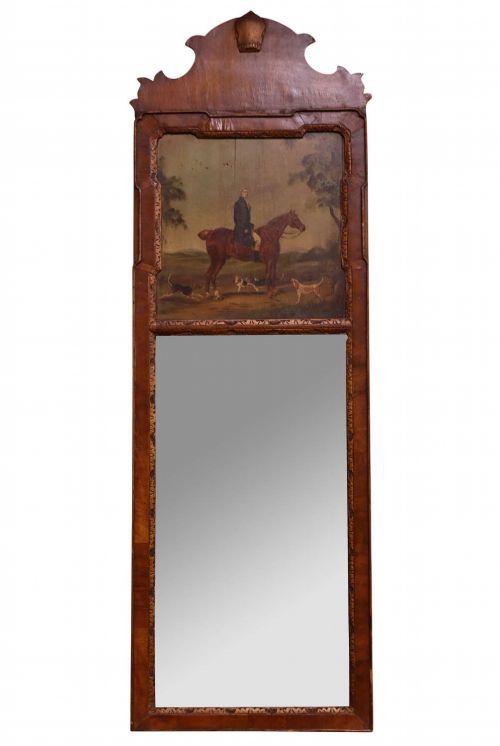


Warm Brown Wall Mirror
A warm brown wall mirror brings deep timber tones and traditional craftsmanship into a room, offering both practical reflection and rich historic character.

What warm brown wall mirrors are
When you search for a warm brown wall mirror, you encounter pieces defined by rich timber tones and traditional forms. These items bring functional reflection together with the natural grain of woods like walnut and mahogany. They span diverse historical eras, each bringing its own distinct approach to domestic furnishing.
On this page, you are most likely to meet Victorian and nineteenth-century examples. These pieces frequently take the form of overmantel mirrors or pier mirrors designed for placement above fireplaces or between windows. Their brown wooden frames range from simple fretted mahogany to intricate Tunbridge Ware marquetry.
The selection also includes French items, such as faux bamboo designs, alongside William IV style pieces featuring half columns and original mercury plates. Such varieties demonstrate how nineteenth-century makers utilised different timbers and decorative techniques to achieve deep, warm brown surface finishes.
How they were made
Makers utilised solid timbers and veneers, selecting walnut, mahogany, beech, and mixed woods for their rich grain patterns and deep natural colour. Construction often involved traditional joinery to build sturdy wooden frames capable of supporting heavy glass plates.
Surface decoration required specialist skills, ranging from fine Tunbridge Ware wood mosaics to carved architectural elements like half columns and fretted details. Some items incorporated original mercury plates, a traditional silvering technique that imparts a characteristic soft reflection to the glass.
Retail Price Guide 2026
Typical UK retail prices for warm brown wall mirror, calculated from the Sellingantiques database of over a million retail prices indexed since 2003. This retail price guide relies exclusively on Sellingantiques data; no external sources or auction records are used, so the figures do not describe the wider market.
What varies in quality
The distinction between standard examples and finer pieces lies in the sophistication of the woodwork and the selection of timber veneers. Superior items display meticulous attention to detail in carved elements, intricate marquetry, or well-executed fretted frames that retain their structural integrity over time.
Condition and originality play a significant part in distinguishing the range, particularly regarding the survival of original glass plates and uncompromised wooden surfaces. Pieces that retain their historic mercury glass and authentic patination offer a truer representation of period craftsmanship than those with later replacements.
The Warm Brown Wall Mirror Glossary
- Overmantel mirror
- A large wall mirror designed specifically to hang above a fireplace mantelpiece. These pieces frequently anchor the decorative scheme of a period room.
- Pier mirror
- A tall, narrow mirror traditionally hung on the wall space between two windows, often placed above a pier table. They were designed to maximise light in nineteenth-century interiors.
- Mercury plate
- An early type of mirror glass silvered using a tin and mercury amalgam rather than modern chemical solutions. It produces a slightly mottled, softer reflection prized by collectors.
- Tunbridge Ware
- A form of decorative woodwork originating from Kent, featuring intricate mosaics made from tiny pieces of naturally coloured British timbers to create geometric or pictorial designs.
- Fretted mahogany
- Mahogany woodwork featuring pierced or cut-out decorative patterns, often seen in scrollwork and fret-sawn frames from the nineteenth century.
Frequently Asked Questions
What is an overmantel mirror?
An overmantel mirror is a large wall mirror designed to hang directly above a fireplace. These pieces were proportioned to fill the architectural space of the chimney breast.
Historically, they served to reflect candlelight and daylight around nineteenth-century rooms while acting as a central decorative focus.
How do I identify a Victorian mirror?
Victorian mirrors are identified through their use of period timbers like walnut and mahogany, alongside characteristic nineteenth-century styles. Details such as fretted woodwork, intricate marquetry, and architectural framing point directly to this era.
Examining the construction methods and the backboards often confirms the period of manufacture.
What is mercury glass?
Mercury glass refers to mirror plates produced using a traditional tin and mercury amalgamation technique before modern chemical silvering was invented. This method creates a distinctive, slightly cloudy and warm reflection.
Collectors value original mercury plates for the gentle, historic character they bring to antique mirrors.
Where should I hang a wall mirror?
Wall mirrors work best when positioned to bounce natural light into darker corners of a room or to anchor a specific piece of furniture. Placing one above a fireplace or console table follows traditional nineteenth-century interior placement.
Ensure the wall structure can support the weight of heavy wooden and glass frames before hanging.