



Faux Bamboo Mirror
A faux bamboo mirror brings a clever organic line into a room, mimicking exotic cane through skilled turning and carving.
Faux Bamboo Mirror
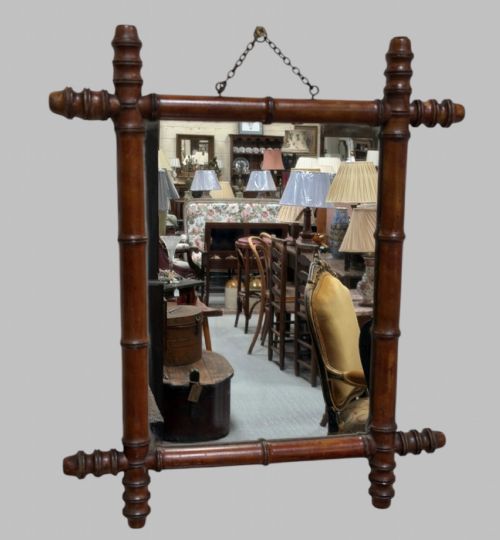
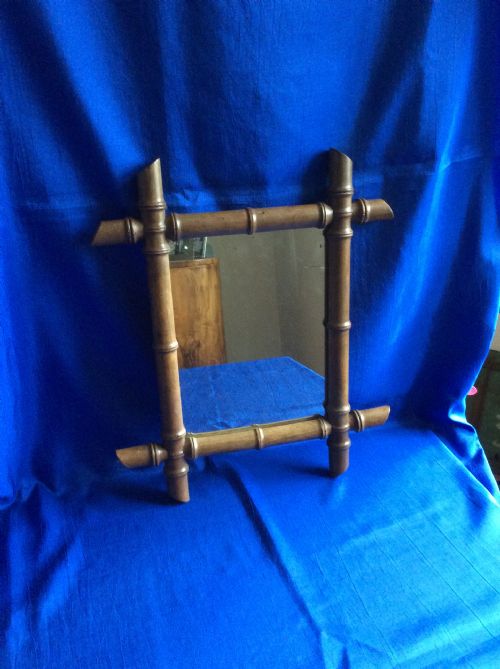
A faux bamboo mirror is a reflective glass panel set within a frame shaped to imitate natural cane segments, joints and nodes. These pieces appear frequently across nineteenth-century and early twentieth-century listings, often hailing from French workshops or English makers influenced by the Aesthetic Movement.
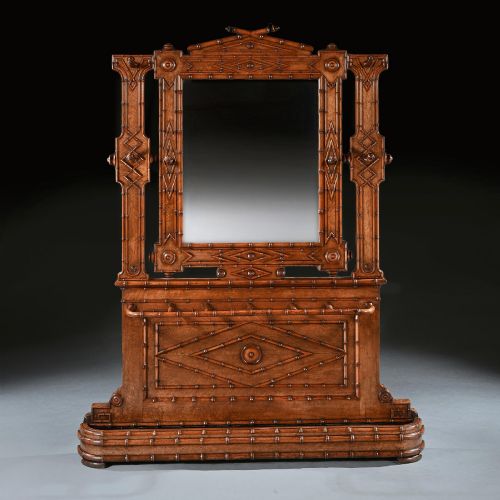
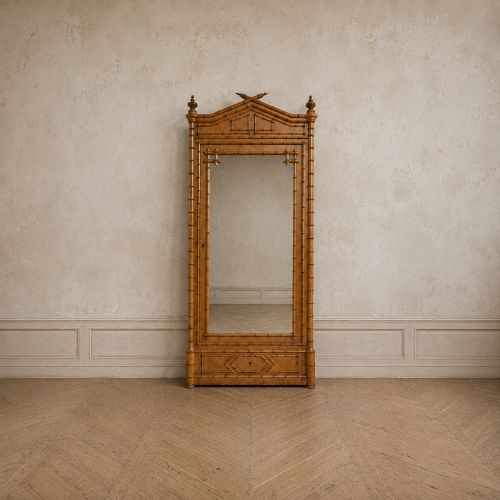
The form spans simple wall-hanging plates to large cheval glasses and overmantles, frequently rendered in woods such as cherry, beech, oak or painted pine. Buyers most commonly encounter wall mirrors dating from around eighteen-ninety, reflecting the Victorian and Edwardian enthusiasm for exoticism in domestic interiors.
How they were made
Craftsmen shaped solid timbers like beech, cherry and pine using lathes and hand-carving chisels to replicate the distinctive rings and swellings of genuine bamboo culms. Frames were subsequently finished with paint, ebonising, or gilding to enhance the illusion of plant material.
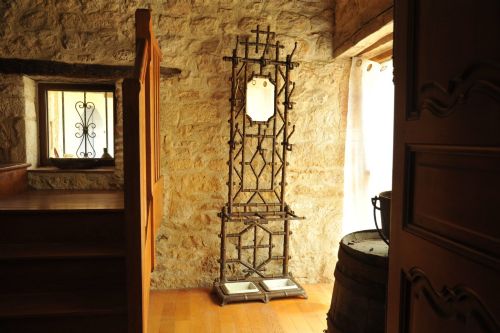
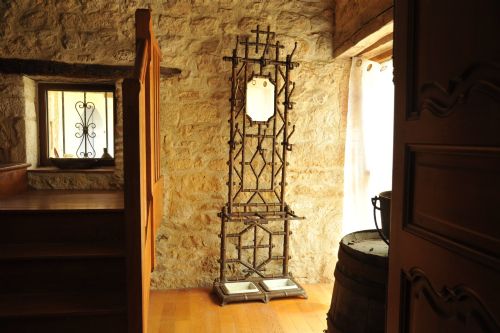
Many examples incorporate secondary woods such as birdseye maple or incorporate cast iron, particularly in utilitarian items like hall stands and umbrella holders. The glass itself is typically bevelled or flat plate, secured within rebated wooden frames using traditional glazing techniques.
Listings demonstrate that while wood is standard, nineteenth-century French makers also utilised cast iron to fashion faux bamboo frames for hall stands.
What varies in quality
Quality rests primarily in the fidelity and depth of the carved or turned nodes, where finer examples display crisp, convincing irregularities rather than flat, repetitive machine mouldings. The choice of primary timber also dictates merit, with dense fruitwoods and figured maples holding superior definition compared to softer painted pines.
The sophistication of the surface finish sets apart superior pieces, whether through meticulous ebonising, layered gilding, or preserved original paintwork. Heavier section framing and robust corner construction indicate higher workshop standards during the nineteenth and early twentieth centuries.
The Faux Bamboo Mirror Glossary
- Aesthetic Movement
- A late nineteenth-century design ethos prioritising visual beauty over narrative or moral content, heavily influenced by Japanese art. This movement popularised bamboo furniture across Britain and France.
- Cheval mirror
- A freestanding full-length looking glass suspended on a vertical frame with pivots, allowing the plate to tilt. These pieces often feature substantial turned supports.
- Ebonising
- The process of staining dark wood, typically fruitwood or beech, to imitate expensive ebony. This finish is frequently encountered on nineteenth-century simulated cane frames.
- Overmantle mirror
- A wide looking glass designed to hang specifically above a fireplace mantelpiece. They often utilise large scale frames and substantial plate glass.
- Japonisme
- The study and influence of Japanese art and aesthetics on Western design during the late nineteenth century. It directly inspired the creation of simulated cane furniture and accessories.
Faux Bamboo Mirror: Frequently Asked Questions
How do I date a faux bamboo mirror?
Dating relies heavily on construction methods, timber choice, and the characteristics of the mirror plate itself. Nineteenth-century examples often display hand-turned nodes and older backing boards, whereas twentieth-century pieces may show machine-standardised uniformity.
Secondary materials and surface finishes also offer clues. Pieces from the Victorian and Edwardian eras frequently utilise ebonised beech or cherry, while later interpretations introduce different mounting hardware and modern glass bevelling.
Where should I hang a faux bamboo mirror?
These mirrors suit hallways, bedrooms, and living spaces where their botanical silhouette adds texture against plain walls. Smaller wall-hanging versions work well above console tables or dressing chests.
Larger overmantle or cheval formats require stronger wall anchors or floor space to support their weight. Their eclectic aesthetic allows them to complement both period interiors and contemporary minimalist rooms.
Are faux bamboo mirrors French or English?
The listings show a high proportion of French origin, alongside English and Italian examples. French workshops produced numerous wall mirrors and armoires featuring simulated cane during the nineteenth century.
Design influences travelled fluidly between Britain and France during the Aesthetic Movement. Consequently, identifying the exact origin often depends on secondary wood choices and regional cabinet-making traits rather than the surface style alone.
What woods were used for these mirrors?
Makers selected timbers that turned cleanly on a lathe and held fine detail around the simulated nodes. Beech, cherry, oak, and pine appear regularly across the surviving inventory.
Finer decorative examples incorporate exotic veneers or birdseye maple panels to complement the turned frame. Painted or ebonised coatings were frequently applied to unify the various timber sections used in construction.