



Bamboo Wall Mirror
A bamboo wall mirror brings organic warmth and lightweight texture to a room, captured here in Victorian and early twentieth-century examples.
Bamboo Wall Mirror
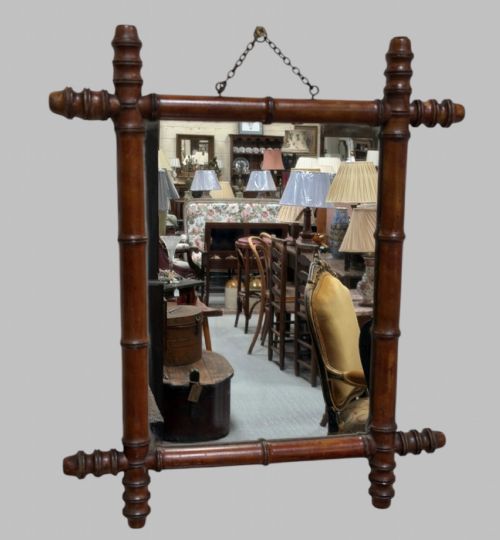
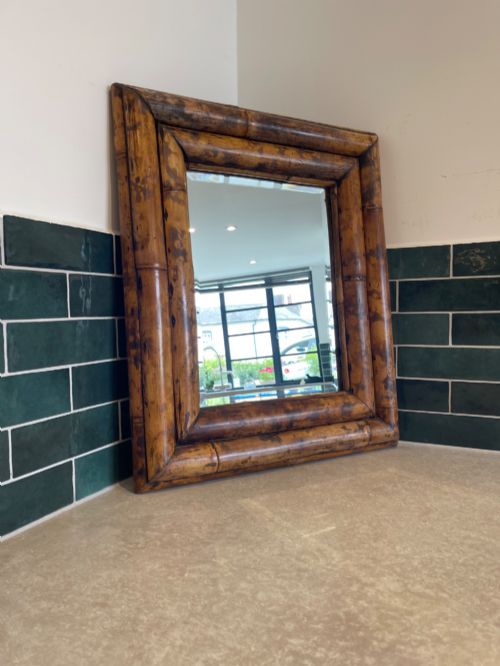
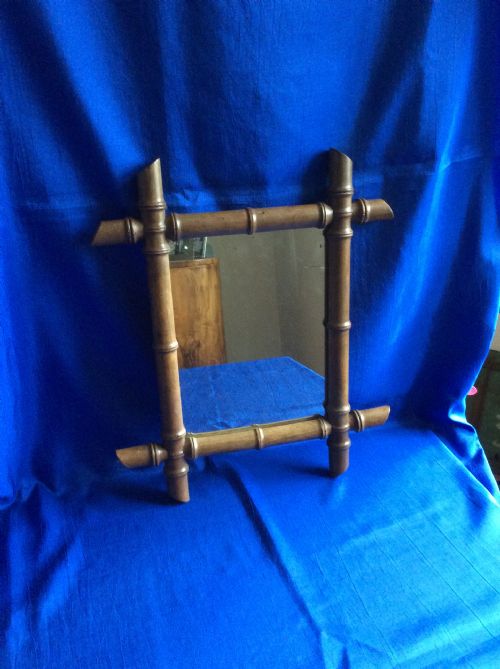
A bamboo wall mirror uses natural or simulated cane framing to create a distinct botanical profile suited to period interiors. These wall mirrors appear in forms ranging from simple rectangular frames to overmantles with display shelves and whatnot sections.
The pieces on this page span the late nineteenth century into the early twentieth century, with notable French provincial influences and Victorian Aesthetic Movement sensibilities. Buyers frequently encounter French faux bamboo designs alongside genuine bamboo structures.
Makers utilised contrasting finishes, incorporating black lacquer, gilt, and panelled elements into the frames. Styles extend from Chinoiserie interpretations to Italian neoclassical and French art deco expressions.
Construction and Materials
Makers constructed these frames using natural bamboo stems or carved wood shaped to simulate bamboo joints and nodes. Beech and general timber served as the foundational materials for faux bamboo pieces, carved and turned by hand.
Surfaces received treatments including ebonising, black lacquer, and gilding to heighten decorative impact. Mirror glass sits within these timber or cane armatures, often backed by original wooden panelling.
Styles span French Provincial, Victorian Aesthetic Movement, Italian Neoclassical, French Art Deco, and Chinoiserie.
Quality Variations
Quality rests on the depth of the carving in simulated pieces and the tightness of the joinery in natural bamboo frames. Superior examples display crisp nodes and stable structural alignment without looseness at the corners.
The sophistication of the secondary materials, such as heavy gilt applications, fine ebonising, and integrated display shelves, separates standard wall mirrors from more ambitious decorative works.
The Bamboo Wall Mirror Glossary
- Faux bamboo
- Carved or turned wood shaped to resemble natural bamboo cane. This technique was popular in nineteenth-century furniture production.
- Aesthetic Movement
- A late nineteenth-century design ethos prioritising visual beauty over narrative function. Pieces from this era often embrace Asian-inspired forms.
- Overmantle
- A large wall mirror designed to hang specifically above a fireplace mantelpiece. These often incorporate wider frames and display ledges.
- Chinoiserie
- European artistic style reflecting Chinese motifs and techniques. It frequently appears in lacquered finishes and gilded wall mirror frames.
- Ebonising
- A wood finishing process that stains timber to resemble ebony. This treatment provides a dark, polished contrast to gilt highlights.
Bamboo Wall Mirror: Frequently Asked Questions
How do I hang a heavy bamboo mirror safely?
These wall mirrors require secure wall fixings suited to the specific weight of the timber and glass. Using appropriate wall plugs and screws into structural studs ensures stability.
Professional mirror hangers recommend load-rated brackets that distribute the weight evenly across the top frame.
Are faux bamboo frames made of real wood?
Faux bamboo frames are constructed from solid woods like beech or general timber. Craftsmen carved and turned these materials by hand to replicate the distinct rings and nodes of natural cane.
This method provided greater durability while retaining the fashionable botanical aesthetic.
How do I clean an antique mirror glass?
Cleaning requires a soft microfiber cloth and a mild glass cleaner sprayed onto the cloth rather than directly onto the glass. This prevents moisture from seeping behind the silvering or damaging the wooden frame.
Harsh chemical solvents should stay away from both the antique mirror plate and the surrounding lacquer or gilt.
What is the difference between Victorian and Edwardian bamboo mirrors?
Victorian examples often lean towards Aesthetic Movement styles with ebonised finishes and heavy Chinoiserie influences. Edwardian pieces occasionally introduce integrated display shelves and whatnot sections for small ornaments.
Both periods utilise natural cane alongside carved faux bamboo timber.