


Vintage Entryway Wall Mirror
A vintage entryway wall mirror sorts the hall at once, holding glass, hooks, and shelves for daily comings and goings.
Vintage Entryway Wall Mirror
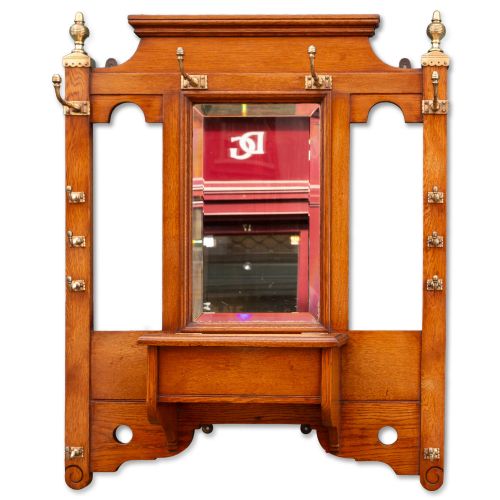
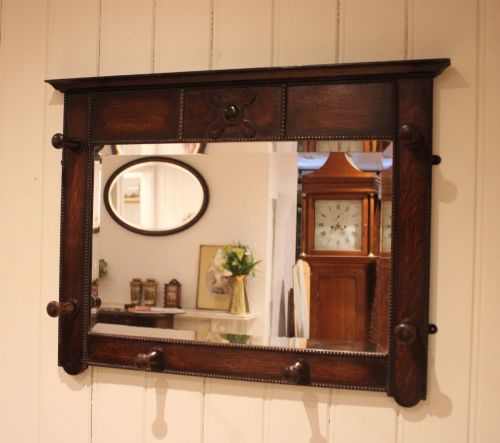
A vintage entryway wall mirror combines a looking glass with practical furniture forms such as coat racks, umbrella stands, or small shelves designed for narrow hallways. These pieces date from the nineteenth century through the interwar decades, spanning Victorian, Edwardian, and Art Deco designs.
The versions most commonly met on this page include oak wall mirrors with brass coat hooks, walnut hall stands, and French iron or bamboo frames fitted with integrated shelves. They serve the dual purpose of checking appearance before leaving the house and storing hats, coats, or walking sticks.
How they were made
Glass plates are set directly into wooden backboards or metal armatures, occasionally accompanied by velvet coverings or overpainted gilt finishes. Construction relies on sturdy joinery to support the combined weight of the mirror and hanging garments.
One Victorian piece is simply described as a velvet covered mirror, offering a tactile touch to the hallway.
What varies in quality
Quality rests in the integration of materials, separating straightforward timber boards from pieces that combine figured oak or walnut with substantial brass hardware and fitted shelves. Finer examples display thoughtful proportion between the mirror plate and the surrounding storage elements.
The treatment of decorative details, such as overpainted gilt surfaces or hand-forged ironwork, distinguishes standard utility items from more ambitious Arts and Crafts or French Art Deco designs.
The Vintage Entryway Wall Mirror Glossary
- Hall mirror
- A wall-mounted or freestanding looking glass specifically proportioned for entranceways and narrow corridors. These often incorporate ledges, trays, or hooks for everyday items.
- Coat rack
- A structural fixture bearing pegs or hooks for hanging hats, coats, and cloaks. In entryway furniture, these frequently merge directly beneath or beside the mirror plate.
- Arts and Crafts
- A design movement emphasising honest construction, visible joinery, and local materials. Pieces from this tradition avoid excessive ornamentation in favour of solid oak and functional form.
- Gilt
- A thin layer of gold leaf or gold paint applied to wood or metal surfaces. Overpainted gilt finishes provide a reflective, aged sheen to nineteenth-century frames.
Vintage Entryway Wall Mirror: Frequently Asked Questions
Where should I hang a hall mirror?
Mount the mirror near the main entrance at a height that allows family members and visitors to check their appearance before stepping outside.
Ensure the wall structure can support both the weight of the glass and any additional load from coats placed on attached hooks.
How do I date an Edwardian mirror?
Examine the timber selection, hardware style, and overall proportions of the frame to identify Edwardian manufacturing traits. These pieces often feature lighter golden oak and simpler, practical lines compared to heavy Victorian designs.
Look for integrated shelves and brass hooks that prioritize everyday hallway utility.
Can these mirrors handle heavy coats?
Many surviving examples include robust brass or iron hooks secured directly to solid oak or walnut backboards. They were built for daily use in busy households.
Check that the wall mountings and backboard fixings remain firm before hanging heavy winter garments.
What is an overpainted gilt finish?
An overpainted gilt finish involves applying a metallic gold coating over an existing wooden or gesso surface. This technique creates a bright, decorative border around the glass.
Over time, the paint develops a soft patina that marks its nineteenth-century origins.