



Dark Wood Mirror Console
Dark wood mirror console tables bring architectural depth and rich timber tones into a hallway, pairing reflective glass with substantial console bases.
Dark Wood Mirror Console
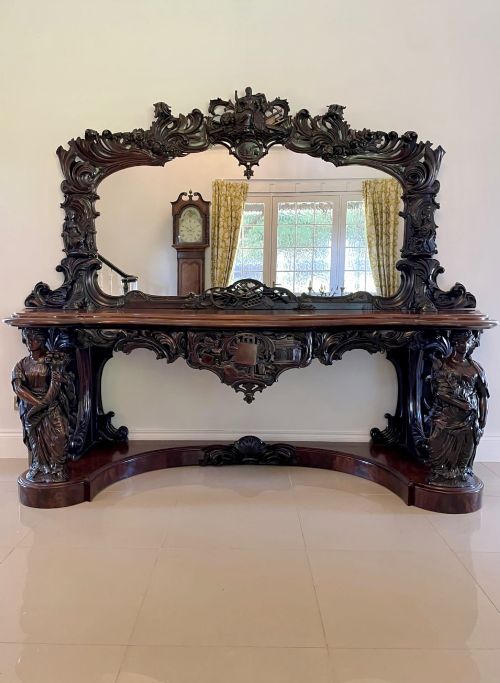
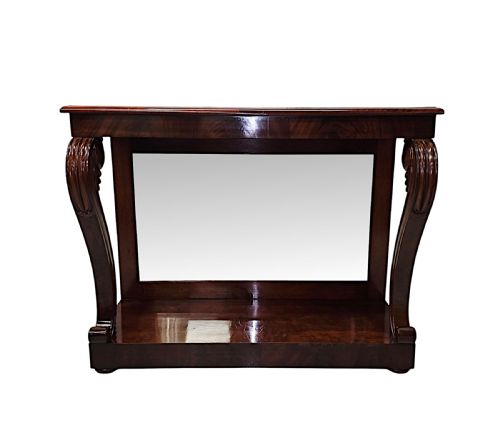
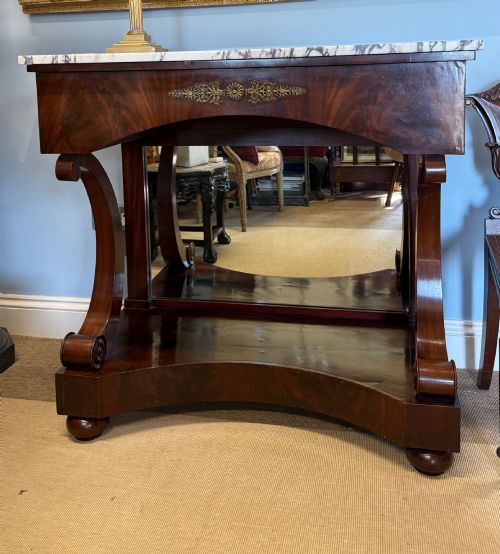
A dark wood mirror console combines timber console tables, pier tables, and side cabinets with paired or attached mirrors, originating predominantly from the nineteenth century alongside later twentieth-century interpretations. These forms include grand exhibition pieces with carved mahogany frames and marble tops, as well as more streamlined Regency and William IV examples in rosewood and mahogany.
Buyers seeking this phrase most frequently encounter nineteenth-century mahogany and rosewood console tables paired with marble tops and mirror backs, or hall stands integrating mirror glass and timber shelves. Pieces span specific historical idioms such as Irish Regency, Victorian Rococo Revival, and Grand Regency styles, alongside Edwardian wall shelving and cloakroom mirrors.
The selection extends from monumental carved mirror-back tables down to narrow hall stands and wall-hanging units, demonstrating how makers adapted the dark wood and mirror combination for domestic spaces of varying proportions.
Materials and construction methods
Makers constructed these consoles and stands using dense tropical hardwoods, predominantly solid and veneered mahogany and rosewood, frequently mounted upon cool marble slabs. Brass detailing, gilt highlights, and traditional joinery support the heavy timber frames.
Reflective surfaces utilise period mirror glass set securely into carved, inlaid, or giltwood frames, engineered to withstand the weight of the projecting console brackets and heavy stone tops.
Listings feature mahogany, rosewood, oak, and marble alongside mirror glass, spanning the Regency, Victorian, and Edwardian periods.
Distinctions in construction and design
Quality rests upon the depth of hand-carving in the timber, the integration between the console base and the upright mirror frame, and the selection of dense, richly figured mahogany or rosewood veneers. Superior examples exhibit crisply carved foliage, unblemished marble slabs, and substantial secondary framing that ensures structural stability.
Lesser iterations show simpler timber work without sculptural relief, plainer glass, or later adaptations where mirrors and tables have been reunited after independent origins.
The Dark Wood Mirror Console Glossary
- Console Table
- A table designed to stand against a wall, frequently supported by front legs or wall brackets rather than a full four-legged freestanding frame. These often incorporate marble tops.
- Pier Table
- A low table specifically built to sit against the wall beneath a pier glass mirror, typically matching the mirror frame in timber and decorative style.
- Marble Top
- A stone slab fitted to the upper surface of a console table, offering a cool, durable working surface with distinct natural veining.
- Hall Stand
- A tall hallway furnishing that combines timber panels, clothes hooks, a mirror, a glove drawer, and a shelf or umbrella well.
- Mirror Back
- An upright mirror fixed directly to the rear of a console table or sideboard, designed to bounce light across a room and visually expand the interior space.
Dark Wood Mirror Console: Frequently Asked Questions
Where should I place a console table?
These pieces suit entrance halls, reception rooms, and narrow corridors where a shallow footprint preserves floor space while providing a useful surface.
The vertical mirror component requires adequate wall clearance and benefits from positioning opposite a window to maximise natural light reflection.
How do I care for marble tops?
Marble requires regular dusting with a soft cloth and immediate cleaning of liquid spills to prevent staining on the porous stone surface.
Avoid harsh acidic cleaners that can etch the polish, opting instead for mild soapy water or specialised stone maintenance products.
Are these tables freestanding?
Console tables designed with mirror backs or wall brackets often rely on the wall for absolute stability to prevent tipping forward under weight.
Freestanding pier tables utilise sturdy front legs, but taller hall stands and mirror-backed consoles benefit from secure wall attachment.
How do I identify Regency pieces?
Regency furniture typically displays classical restraint, clean architectural lines, and dark timbers such as rosewood accented with brass inlay or gilt mounts.
Carving on these pieces draws inspiration from ancient Greek and Roman motifs, contrasting with the heavier, more florid ornamentation of later Victorian revivals.