



Oak Wall Brackets
Oak wall brackets are solid timber supports designed to hold shelves, clocks or figures, bringing centuries of carved detail directly onto a room's wall.
Oak Wall Brackets
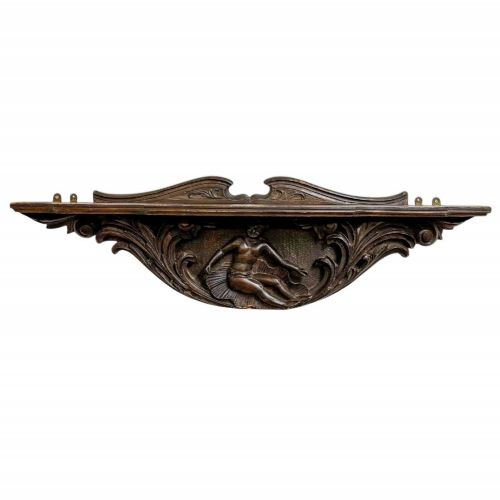
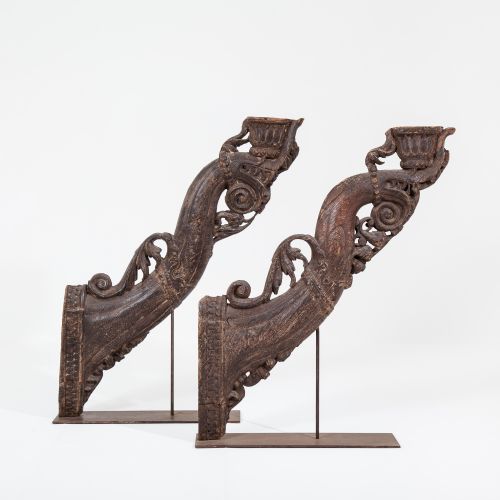
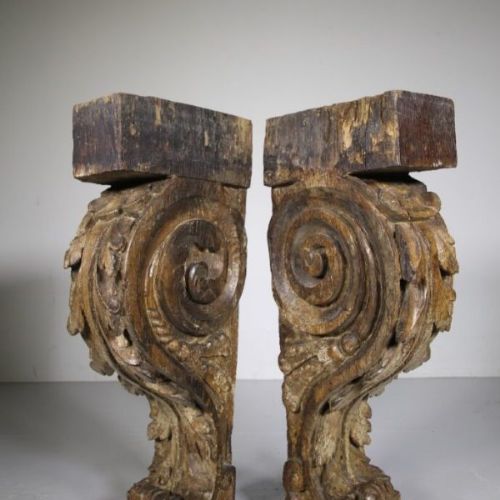
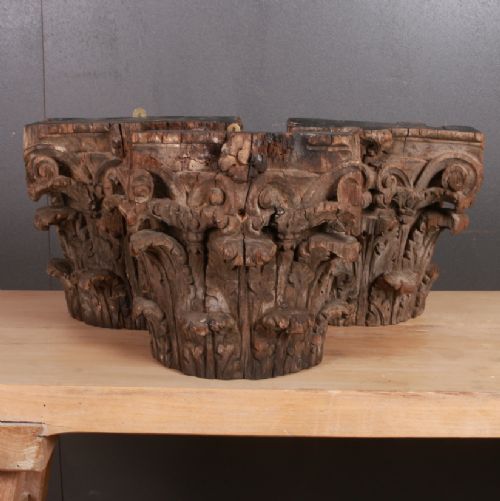
When you search for oak wall brackets, you encounter everything from simple architectural salvage to deeply carved figural corbels and shelf supports. The most frequent pieces on this page are pairs of carved timber brackets originating from the seventeenth, eighteenth and nineteenth centuries.
The forms vary widely across the inventory, encompassing structural corbels, shelf brackets, overdoor pediments, and specialised supports adorned with eagles, armorial crests or caryatid guardians. Many pieces bridge the gap between functional architectural elements and standalone decorative woodcarving.
Origins stretch from English workshops to Continental centres, including specific pieces linked to German and Austrian carvers as well as distinct Victorian Black Forest interpretations. Buyers select these items to add architectural weight and period character to plain interior walls.
Judging quality in carved brackets
Quality rests principally on the depth, sharpness and confidence of the hand-carving rather than the sheer size of the timber block. Crisp undercut foliage, expressive figurative details like medieval faces or caryatids, and well-balanced proportions distinguish superior work from simpler commercial production.
The integrity of the timber and the survival of original surface patination also define the upper tier of pieces. Items retaining their original structural thickness without excessive modern repairs command greater interest from experienced collectors.
One medieval-style man peers permanently from a seventeenth-century carved oak corbel.
Henry Deykin
The Oak Wall Brackets Glossary
- Corbel
- A structural projecting block carved from stone or timber to support a weight above it. In these listings, they function as substantial decorative wall brackets.
- Caryatid
- A sculpted female figure serving as an architectural support taking the place of a column or pillar. They appear frequently on carved wooden brackets supporting shelves.
- Pediment
- An upper structural gable or decorative triangular crown above a door, window or overdoor shelf. These architectural salvage pieces often incorporate deep oak carvings.
- Pricket
- A sharp metal spike in a candlestick holder designed to hold a candle upright. Pricket candle lights mounted on carved oak brackets represent specialised ecclesiastical or domestic lighting.
Oak Wall Brackets: Frequently Asked Questions
How do I hang heavy oak wall brackets?
Most substantial brackets require secure fixing directly into wall studs or solid masonry using appropriate heavy-duty screws and wall plugs. Because many seventeenth and eighteenth-century pieces are heavy, professional installation ensures the weight is distributed safely.
Take care to inspect the rear fixing points and any integrated hanging slots before mounting. Ensuring the bracket sits flush against the wall prevents any gradual loosening over time.
How do I date an antique oak bracket?
Dating relies on examining the tool marks, timber density, style of carving and the method of construction. Seventeenth-century pieces typically exhibit hand-riven oak with deep, bold tool work and heavy patination.
Victorian and later nineteenth-century revivals often feature crisper, more symmetrical machine-assisted preparation combined with characteristic period motifs like Gothic tracery or Black Forest foliage. Comparing the piece to known architectural salvage examples helps narrow the decade.
How should I clean antique carved oak?
Maintain the surface simply by dusting with a dry, soft bristle brush to clear out crevices within the deep carvings. Avoid using modern liquid polishes, silicone sprays or abrasive cloths that can strip the historic wax patination.
If the timber appears dry, apply a minimal amount of traditional beeswax using a soft cloth and buff gently. Keeping pieces away from direct heat sources prevents the oak from splitting or warping.