


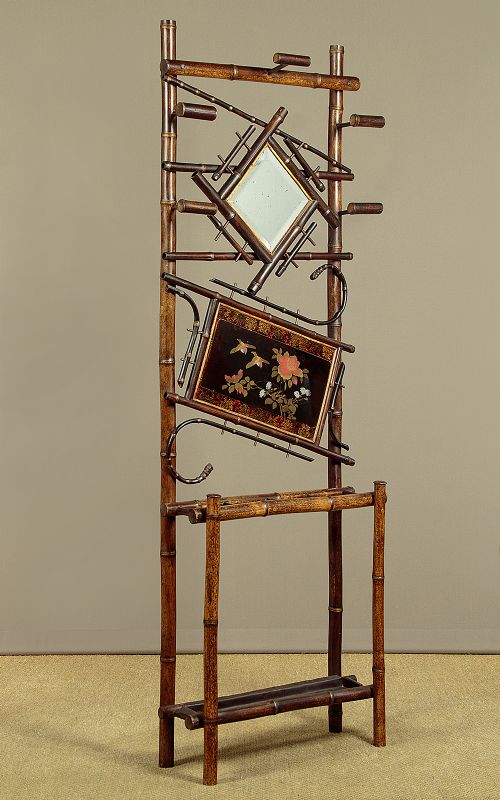
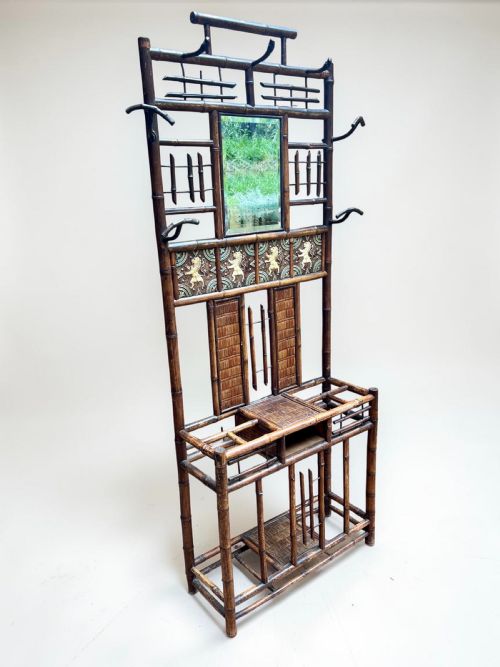


Bamboo Hall Mirror
A bamboo hall mirror brings lightness and texture to a narrow corridor, offering a practical looking glass framed in natural or simulated cane.
Bamboo Hall Mirror
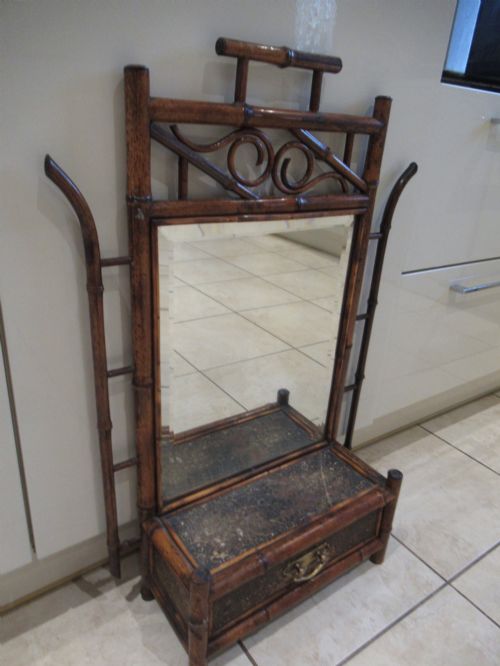
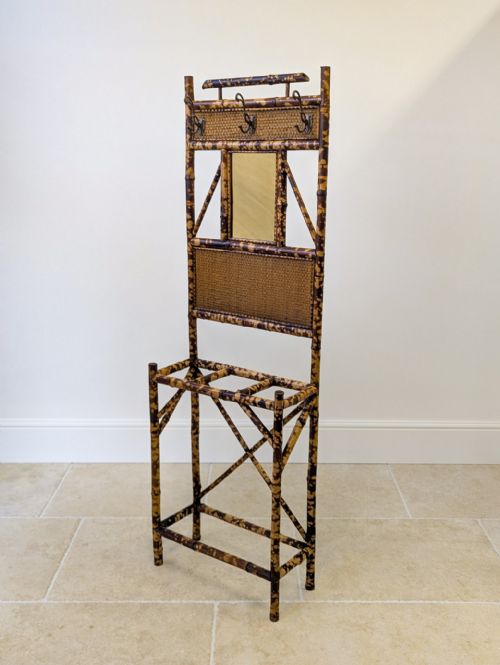
A bamboo hall mirror combines a reflective surface with structural cane work, serving both as a decorative wall hanging and a functional entryway accessory. These pieces often arrive as standalone wall mirrors or as part of larger hall stands equipped for coats and umbrellas.
The versions most commonly met on this page date from the late Victorian and Edwardian eras, spanning from the late nineteenth century into the early decades of the twentieth. Makers from this period embraced both natural materials and simulated finishes to satisfy the taste for exotic furnishings.
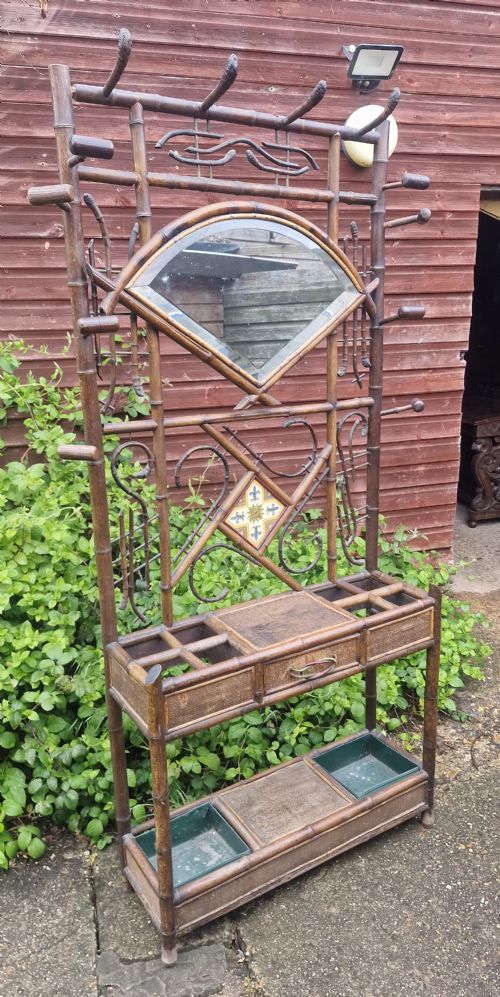
Stylistic influences range from the British Aesthetic Movement and Chinoiserie to French provincial interpretations and Art Deco designs. This variety means a buyer might find a simple wall-mounted glass or a complex stand featuring ceramic tiles and lacquer work.
How they were made
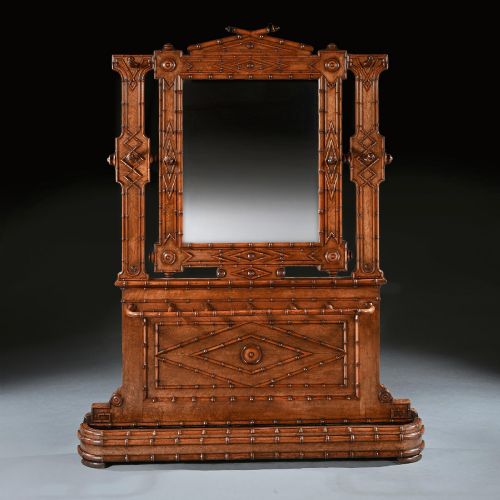
Construction relies heavily on natural bamboo poles secured together with dowels and wrapped bindings, creating a framework that is both surprisingly light and rigid. In many continental examples, makers turned hardwood or cast iron to imitate the jointed segments of natural cane, known as faux bamboo.
Surfaces frequently incorporate mirror glass, sometimes accompanied by secondary materials such as metal brackets, ceramic tiles, or lacquer panels. These additions provided contrast and durability in busy domestic entryways where moisture and heavy use were expected.
Bamboo Hall Mirror Retail Price Guide 2026
Typical asking prices for bamboo hall mirror among the pieces listed under this phrase on Sellingantiques today, from the lower quarter to the upper quarter. They describe what is for sale here now, not the wider market.
Materials recorded across the selection include natural bamboo, rattan, cast iron, mirror glass, ceramic tile, and lacquer.
What varies in quality
The distinction between ordinary and superior pieces rests upon structural integrity and the complexity of the frame's arrangement. Items that integrate multiple functional elements like umbrella wells and shelving demand greater joinery skill than simple wall-mounted frames.
The inclusion of decorative details such as hand-painted lacquer, distinctive ceramic tiles, or specialised hardware elevates a piece above standard mass-produced examples. Original mirror glass with clear bevels and minimal silver degradation also marks a higher grade of manufacture.
The Bamboo Hall Mirror Glossary
- Aesthetic Movement
- A late nineteenth-century design ethos prioritising visual beauty over narrative or moral function. It drew heavily on Japanese art and decorative motifs.
- Faux bamboo
- Wood or metal turned and painted to resemble natural bamboo cane. French makers utilised this technique extensively for durability in hall furniture.
- Chinoiserie
- European artistic interpretation of Chinese and East Asian motifs. This style appears on frames decorated with lacquered surfaces and oriental scenes.
- Hall stand
- A multifunctional hallway item combining a mirror, coat hooks, and umbrella storage. Many examples incorporate a central shelf or small drawer.
- Japonisme
- The influence of Japanese art on Western makers during the nineteenth century. It is frequently expressed through asymmetrical arrangements and natural subjects.
Bamboo Hall Mirror: Frequently Asked Questions
How do I date a bamboo hall mirror?
Dating relies on examining construction methods, hardware, and the style of the frame. Pieces from the late nineteenth century often reflect Aesthetic Movement or Victorian sensibilities.
Later examples from the early twentieth century may show French Art Deco or simplified Edwardian characteristics. Comparing the mirror backing and screw types can also offer clues to the decade of manufacture.
Were these mirrors used only in hallways?
While primarily designed for entryways to check one's appearance before leaving the house, their decorative frames made them suitable for reception rooms and bedrooms.
Larger versions combined storage for walking sticks and hats, making them essential furniture for Victorian domestic organisation.
How do I clean a bamboo frame?
Dusting with a dry, soft cloth prevents buildup in the natural crevices and wrapped bindings of the cane. Avoid using harsh chemical sprays or excessive water, which can damage the lacquer or loosen the structural bindings.
What is the difference between real and faux bamboo?
Real bamboo consists of natural plant stems with characteristic nodes, offering a lightweight and flexible structure. Faux bamboo is carved or turned from solid hardwoods or cast iron, providing heavier stability while mimicking the visual appearance of cane.