



Bamboo Framed Mirror
These bamboo framed mirror pieces bring genuine nineteenth and twentieth century character to a wall with their distinct botanical motifs and organic silhouettes.
Bamboo Framed Mirror
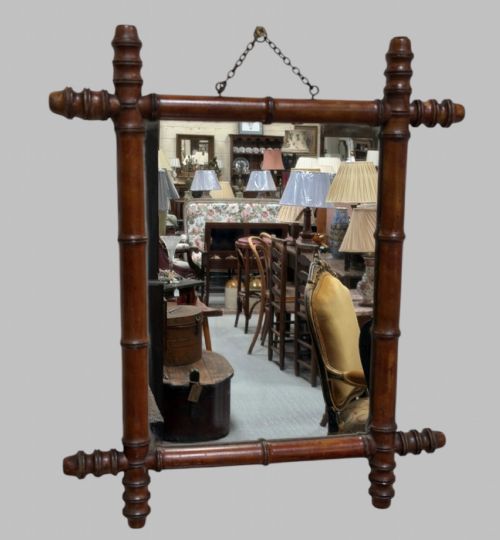
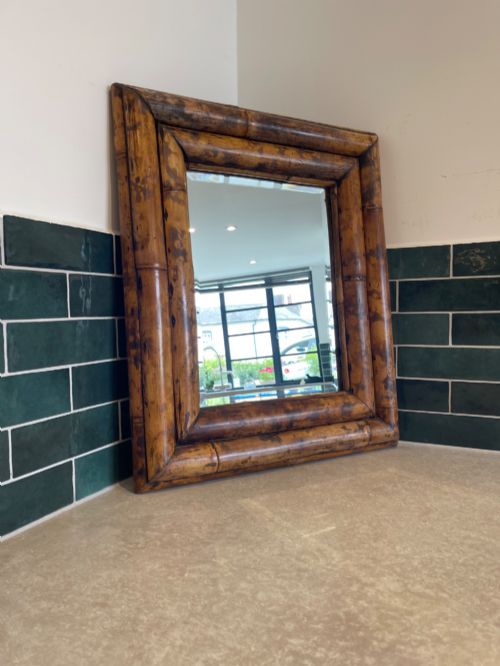
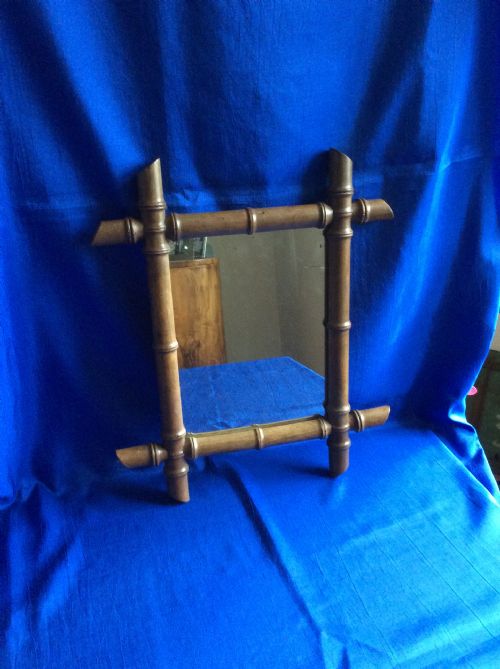
A bamboo framed mirror is a wall mirror enclosed in natural bamboo or carved wood mimicking bamboo stems, designed to hang in hallways, bedrooms and reception rooms. The pieces gathered under this phrase span the Victorian era, the early twentieth century and the Art Deco period, originating from French provincial workshops as well as Italian makers.
Most examples encountered here are French faux bamboo wall mirrors dating from the late nineteenth century, often finished with gesso or silvering over carved wood. Visitors also find genuine bamboo pieces alongside Chinoiserie style black lacquer and gilt variations that reflect broader nineteenth century Aesthetic Movement tastes.
How they were made
The construction relies on either natural bamboo sections joined securely to form the frame or solid timber such as beech carved meticulously into faux bamboo joints and nodes. Craftsmen applied gesso, silver leaf, gilt or black lacquer over the carved wood surfaces to achieve specific decorative finishes.
Mirror glass of the period was fitted securely into the rebated back of the frame, occasionally featuring bevelled edges that catch the light. Metal fixings and timber panels provided structural support at the reverse to hold the heavy glass safely in place.
Listings for this phrase feature pieces from the Victorian era up through the 1920s, utilising beech, carved wood, metal, and glass.
What varies in quality
Quality rests upon the depth of the carving and the precision with which the faux bamboo nodes and joints are rendered in the wood. Finer pieces display crisp definition in the gesso and silvering or gilt work, whilst simpler items show softer detailing.
The scale of the mirror and the weight of the timber frame distinguish substantial hall mirrors from domestic wall pieces. Original mirror glass with authentic foxing and ageing holds greater appeal for traditional interiors than replaced plates.
The Bamboo Framed Mirror Glossary
- Faux bamboo
- Carved wood formed to imitate natural bamboo stalks complete with rings and nodes. This technique allowed cabinetmakers to create sturdy frames while embracing exotic botanical aesthetics.
- Gesso
- A plaster mixture applied to carved wood surfaces to create a smooth base for gilding or silvering. It accepts fine detail and holds metallic leaf securely.
- Aesthetic Movement
- A late nineteenth century design philosophy prioritising beauty over narrative or moral function. It encouraged the use of Japanese and Chinese motifs, including bamboo forms.
- Chinoiserie
- European artistic style reflecting Chinese motifs and techniques. It frequently appears in black lacquer and gilt finishes on nineteenth century frames.
Bamboo Framed Mirror: Frequently Asked Questions
Where should I hang a bamboo framed mirror?
These mirrors suit narrow entrance halls, above mantelpieces, or as feature pieces in bedrooms. Their organic lines soften formal spaces.
Ensure the wall fixings match the weight of the specific frame, especially for larger carved wood or metal reinforced examples.
How do I clean an antique mirror frame?
Dust the frame gently with a dry, soft brush to protect the original gesso, lacquer or silvered surface. Avoid abrasive liquids.
Clean the glass plate using a mild glass cleaner applied to a cloth rather than sprayed directly onto the mirror.
Are these frames made of real bamboo?
The selection includes both natural bamboo and carved timber known as faux bamboo. Beech was frequently carved to imitate the plant.
Both materials date from the same Victorian and early twentieth century periods and served similar decorative roles in homes.
How do I date a bamboo framed mirror?
Dating relies on construction methods, backboards, and the style of the mirror glass. Victorian pieces often show heavier timber and silvered gesso.
Twentieth century examples introduce Art Deco influences and Italian gilt work alongside traditional French provincial forms.