






Chinoiserie Papier Mache Tray
These chinoiserie papier mache tray pieces bring painted orientalist scenes into domestic rooms with deep lacquered surfaces and gilded details.
Chinoiserie Papier Mache Tray
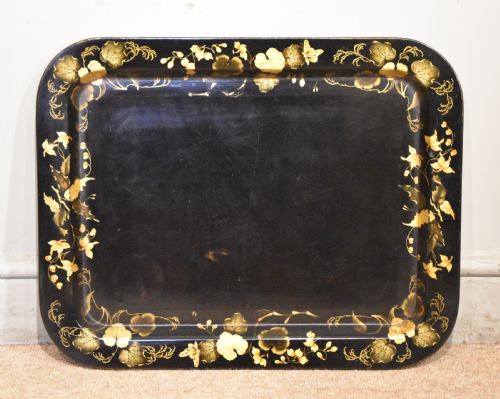
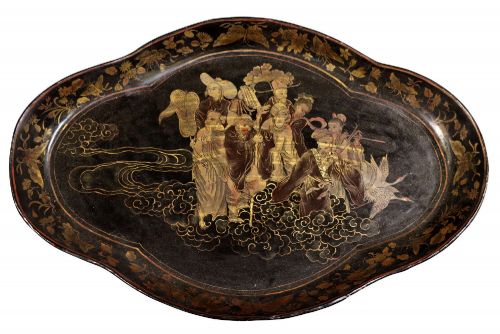
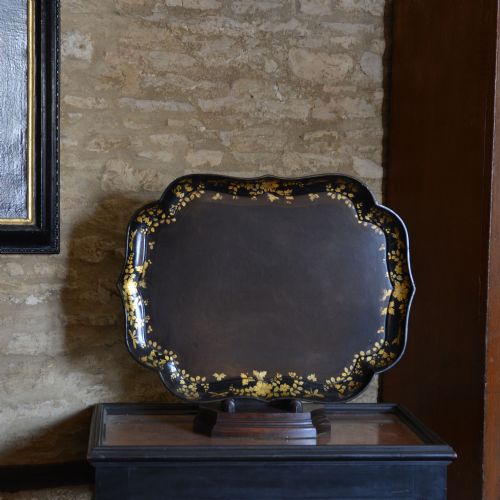
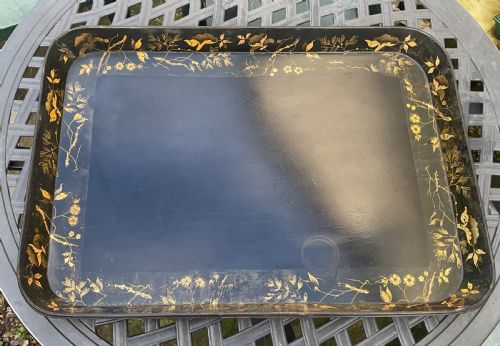
When someone searches for a chinoiserie papier mache tray, they look at moulded serving pieces and occasional tables from the nineteenth century, including Regency and Victorian periods. Most examples on this page take the form of large oval or rectangular trays, occasionally mounted on folding wooden stands to serve as side or coffee tables.
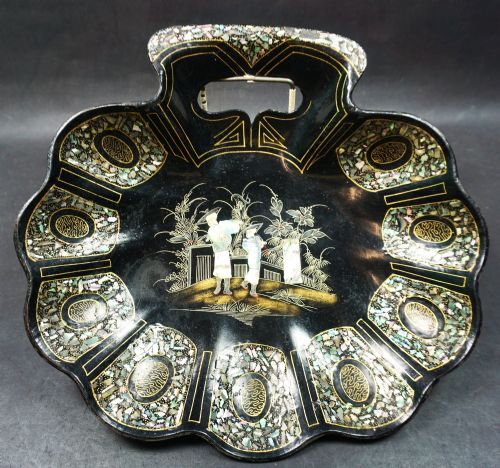
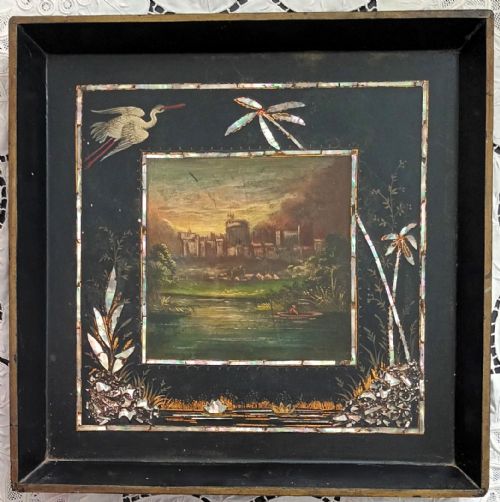
The decorative schemes rely heavily on painted and gilded orientalist motifs set against ebonised or dark lacquered grounds. Makers often integrated mother-of-pearl inlay to catch the light within architectural and garden landscapes.
Origins cluster around English workshops of the Georgian, Regency, and Victorian eras, with occasional pieces produced in the early twentieth century following earlier styles. Buyers encounter both flat serving pieces and complete tray tables designed for domestic hospitality.
How they were made
Craftsmen built the core structure using layers of paper pulp combined with glue and resin, pressed into moulds and subjected to heavy pressure and heat to achieve a rigid, durable board. This papier-mâché base was then sealed and smoothed before receiving multiple coats of dark lacquer.
Decoration involved hand painting using metallic pigments, gold leaf, and gilt, frequently enhanced with inlaid mother-of-pearl for figures and foliage. Artisans finished the surfaces with protective varnish layers rubbed down to a smooth sheen.
Chinoiserie Papier Mache Tray Retail Price Guide 2026
Typical asking prices for chinoiserie papier mache tray among the pieces listed under this phrase on Sellingantiques today, from the lower quarter to the upper quarter. They describe what is for sale here now, not the wider market.
Several Victorian trays originally served as companions for royal visits, carrying refreshments into grand rooms while hiding their sturdy paper pulp origins beneath opulent gold leaf.
What varies in quality
Quality reveals itself in the crispness of the hand-painted chinoiserie motifs and the depth of the lacquer surface. Superior examples display intricate detailing in the figures and foliage, where gold leaf and mother-of-pearl inlay integrate seamlessly into the composition.
Structural integrity of the papier-mâché base and the retention of the original stand, where applicable, separate standard domestic items from finer showroom pieces. The precision of the moulding and the preservation of the original painted finish dictate the standing of individual examples.
Clay
The Chinoiserie Papier Mache Tray Glossary
- Papier-mâché
- A composite material made from paper pulp or sheets of paper mixed with glue, oil, and resin, then moulded and baked until rigid. This technique allowed makers to create lightweight yet remarkably strong trays and table tops.
- Chinoiserie
- A European artistic style reflecting Chinese and East Asian motifs, popular in furniture and decorative arts during the Georgian and Victorian periods. Designs typically incorporate pavilions, exotic figures, birds, and imagined landscapes.
- Lacquer
- A durable varnish applied in multiple thin layers to wood or papier-mâché, then polished to a smooth, glossy finish. It provided a hard-wearing surface that resisted moisture and protected the painted decoration underneath.
- Gilt
- A thin application of gold leaf or gold paint used to highlight decorative elements and borders on dark backgrounds. It added luminosity and contrast to the painted scenes.
- Toleware
- Painted or enamelled metalware produced in England and Europe, often associated with trays and boxes created in similar decorative traditions. Pieces frequently feature dark grounds and floral or orientalist ornamentation.
Chinoiserie Papier Mache Tray: Frequently Asked Questions
How are these trays cleaned?
Dust surfaces gently with a dry, soft cloth to prevent scratching the delicate lacquer and painted details.
Avoid using water, chemical sprays, or abrasive cleaners, as moisture penetrates the papier-mâché base and damages the finish.
Can these trays be used daily?
These pieces function well for light serving or display, provided users handle them with care to protect the aged lacquer.
Heavy daily use risks marking the historical surfaces, so many owners place glass tops over them or use them primarily on stands as occasional tables.
How do I identify a Regency piece?
Regency examples typically exhibit refined classical proportions, crisp moulding, and delicate gold leaf work characteristic of the early nineteenth century.
Makers such as Clay produced distinctive oval trays during this period, often featuring deep rims and high-quality lacquer finishes.
What is a tray table?
A tray table combines a detachable papier-mâché serving tray with a folding or fixed wooden stand, usually standing at coffee or side table height.
This configuration became popular in the Victorian era, allowing homeowners to repurpose serving trays as permanent items of furniture.