


Chinoiserie Lidded Jars
Chinoiserie lidded jars bring painted narrative scenes of imagined Eastern landscapes into European interiors through porcelain, ironstone and tin-glazed earthenware.
Chinoiserie Lidded Jars
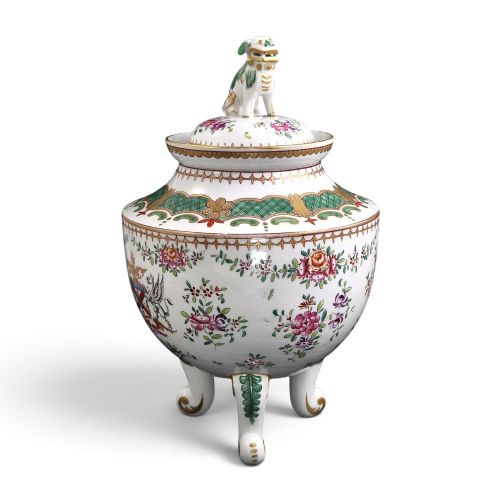
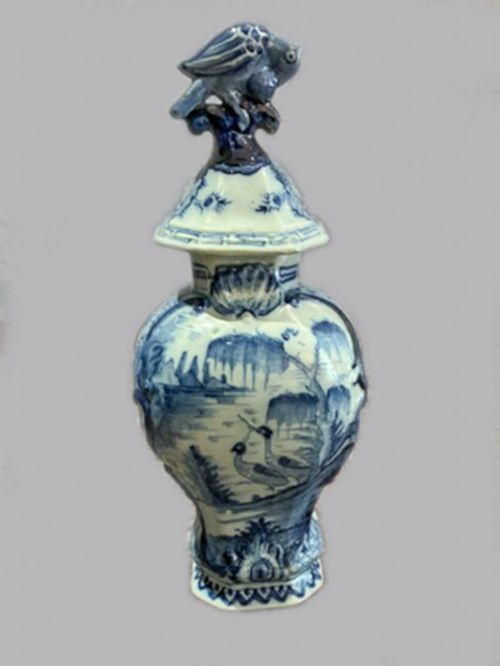
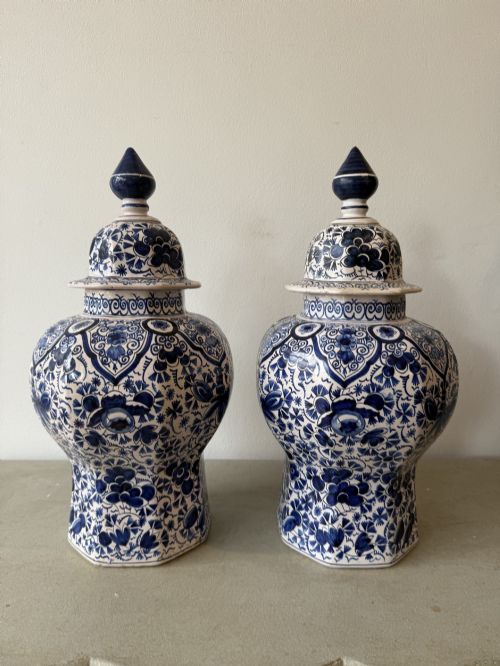
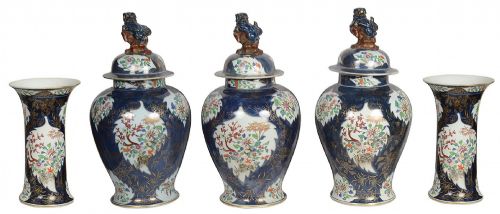
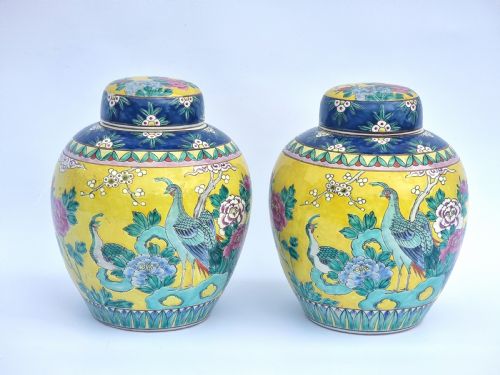
Chinoiserie lidded jars encompass covered vessels and ginger jars produced across the nineteenth and twentieth centuries in European and Asian workshops. These vessels combine ceramic forms with European interpretations of Chinese and Japanese decorative motifs, spanning domestic ginger jars, tea caddies and garniture vases.
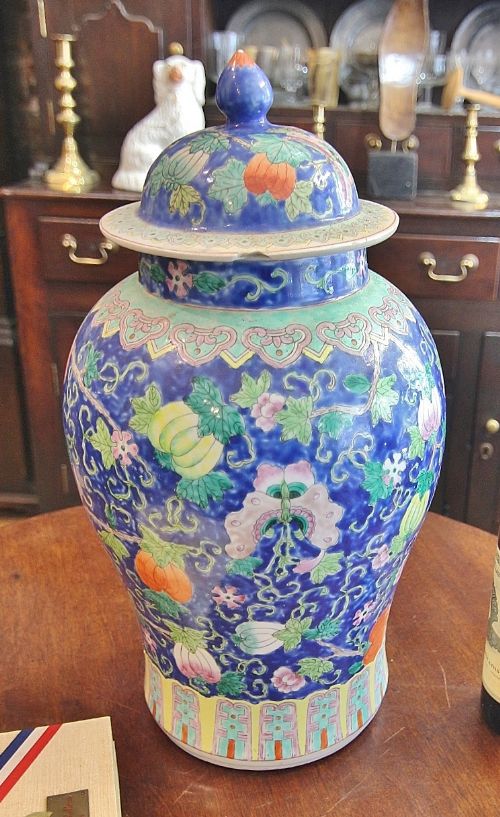
The selections on this page range from Victorian ironstone and tin-glazed earthenware to Samson porcelain and twentieth-century Chinese porcelain. Buyers encounter pieces styled after eighteenth-century Delftware, Famille rose palettes and blue and white export designs.
Form functions vary from storage containers such as tea caddies and ginger jars to decorative potpourri vases and lidded urns. Their shared characteristic is the presence of a matching lid atop a body decorated with figures, pavilions or floral patterns.
How they were made
Makers shaped these jars using ceramic, ironstone, porcelain and tin-glazed earthenware bodies, often formed in moulds or thrown on the wheel. Ironstone and stoneware provided heavy, durable structures, while porcelain offered finer, more translucent walls for delicate painted scenes.
Decoration relied on hand painting, underglaze blue and polychrome enamels, sometimes enhanced with gold leaf. Artisans applied tin glazes to earthenware to create an opaque white background suitable for painting, or utilised the raw glaze over blue and white pigments.
Object forms range from ginger jars and tea caddies to potpourri vases and garniture sets.
What varies in quality
Quality separates through the precision and depth of the hand-painted brushwork across the surface. Skilled artisans achieved finer details in figures, foliage and architectural elements, whereas lesser pieces show rushed or mechanical application.
The crispness of the ceramic moulding and the consistency of the glaze application distinguish superior wares. Well-balanced proportions between the jar body and its original lid indicate higher production standards.
Samson Paris·Mason s Ironstone·Meissen Porcelain·Herend·Carlton Ware
The Chinoiserie Lidded Jars Glossary
- Chinoiserie
- European artistic style reflecting Chinese and East Asian motifs. This aesthetic appeared prominently on ceramics, furniture and textiles from the seventeenth century onwards.
- Tin-Glazed Earthenware
- Pottery covered with a glaze containing tin oxide, which fires to an opaque white surface. It served as a ground for painted decoration in traditions such as Delftware.
- Ironstone
- A type of heavy, durable earthenware patented in the nineteenth century. It combined earthenware clay with feldspar and slag to imitate porcelain.
- Famille Rose
- A polychrome ceramic palette dominated by opaque pink or rose enamel. This palette gained prominence in Chinese export porcelain and later European imitations.
- Garniture
- A set of matching vases or jars designed to be displayed together on a mantelpiece or cabinet. These sets typically comprised three or five pieces.
Chinoiserie Lidded Jars: Frequently Asked Questions
What is a ginger jar?
A ginger jar is a wide-mouthed storage vessel with a domed lid, originally produced in China for transporting spices and oil. European makers later adopted the form for decorative display.
These jars feature rounded shoulders and straight or slightly tapered bases, often paired with matching covers that fit securely into the neck.
How do I date a lidded jar?
Dating relies on examining the ceramic body, glaze characteristics and bottom marks. Ironstone and tin-glazed earthenware point towards nineteenth-century or earlier European production, while specific factory stamps offer narrower chronological brackets.
Style provides another indicator, as Victorian interpretations differ significantly in weight and palette from twentieth-century reproductions of eighteenth-century designs.
Are these jars waterproof?
Most ceramic and porcelain jars hold water effectively due to their glazed interiors, though antique pieces warrant careful handling. Tin-glazed earthenware and porous bodies require gentle treatment when exposed to moisture.
Using a small glass insert inside decorative jars protects the antique interior from water damage and mineral deposits.
How do I display a garniture set?
Garniture sets look best arranged symmetrically along a mantelpiece, sideboard or top of a large cabinet. The tallest vases typically occupy the centre, flanked by matching pairs.
Maintaining adequate spacing between each piece allows the painted narratives and forms to remain visible without visual crowding.