


Chinoiserie Accent Side Tables
Chinoiserie accent side tables bring painted lacquer, gilt motifs and exotic forms into a room.
Chinoiserie Accent Side Tables
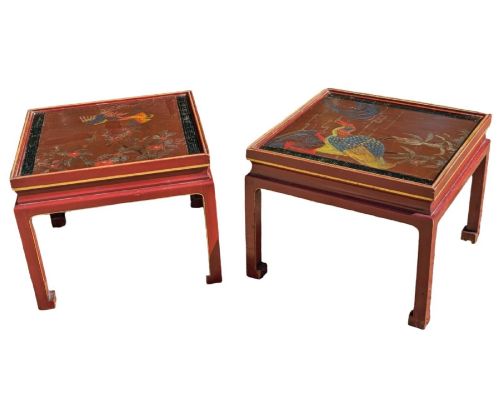
Chinoiserie accent side tables combine European furniture forms with decorative motifs inspired by East Asian art. The examples found here span the eighteenth, nineteenth and early twentieth centuries, reflecting changing interpretations of oriental design over successive periods.
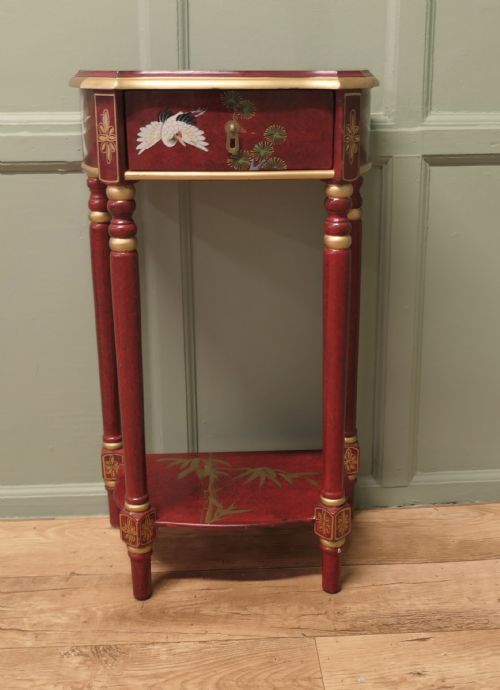
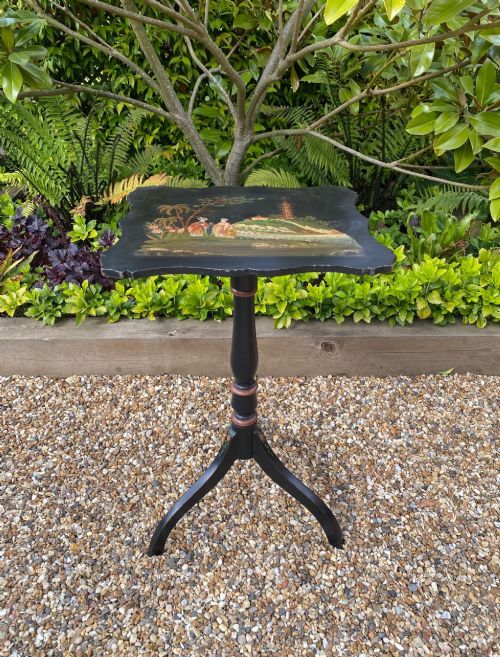
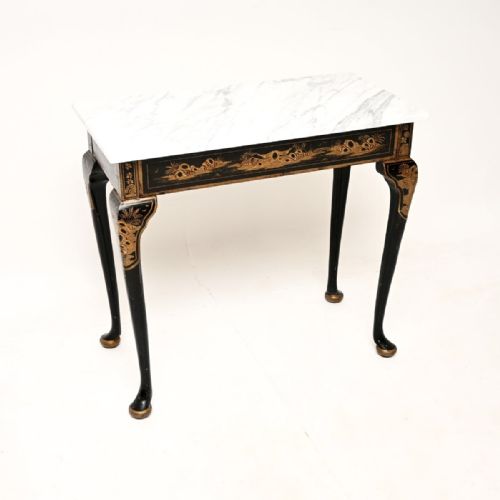
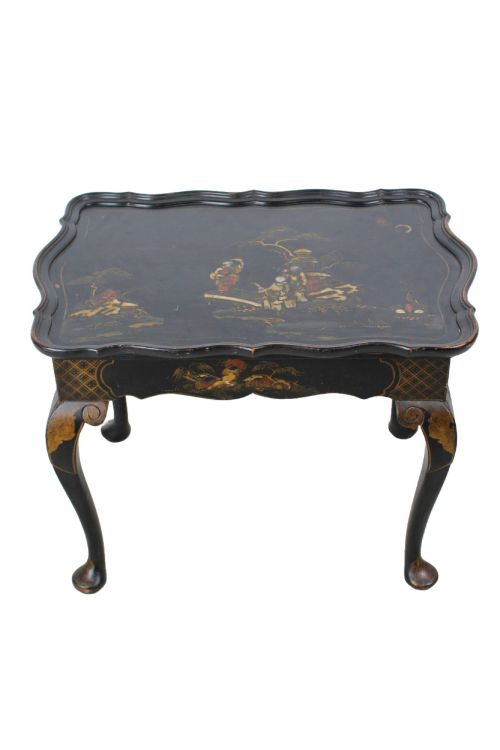
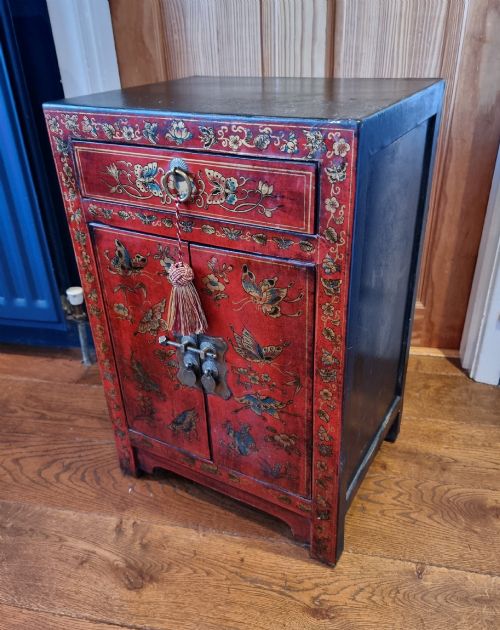
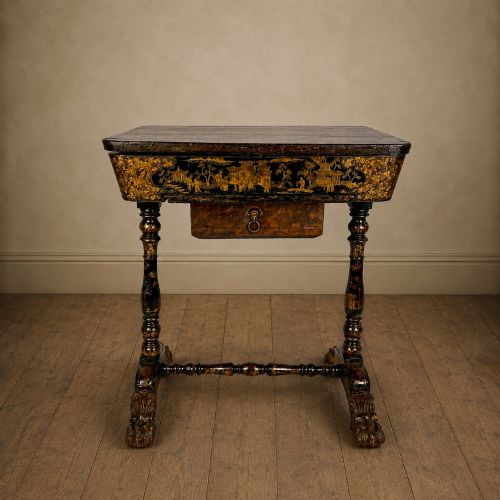
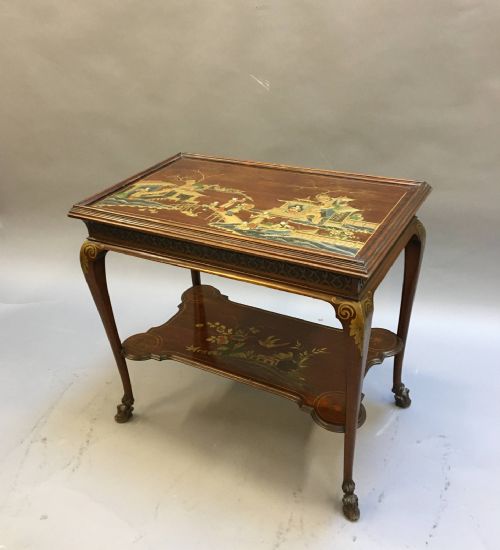
The pieces take many forms, including tripod tables, occasional tables, nests of tables, wine tables and writing tables. Buyers most frequently encounter nineteenth-century black and red lacquered wood examples decorated with hand-painted figures, landscapes and floral details.
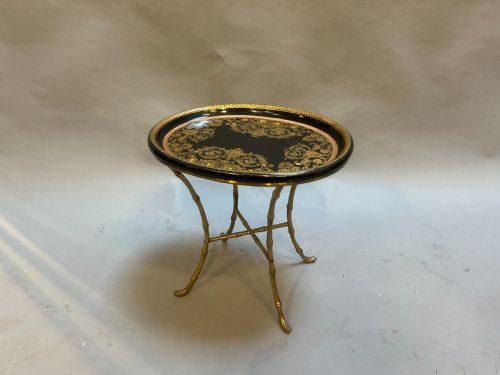
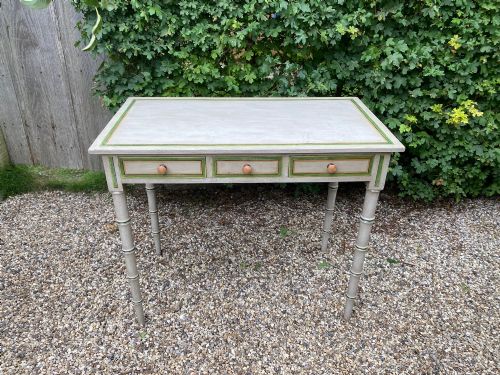
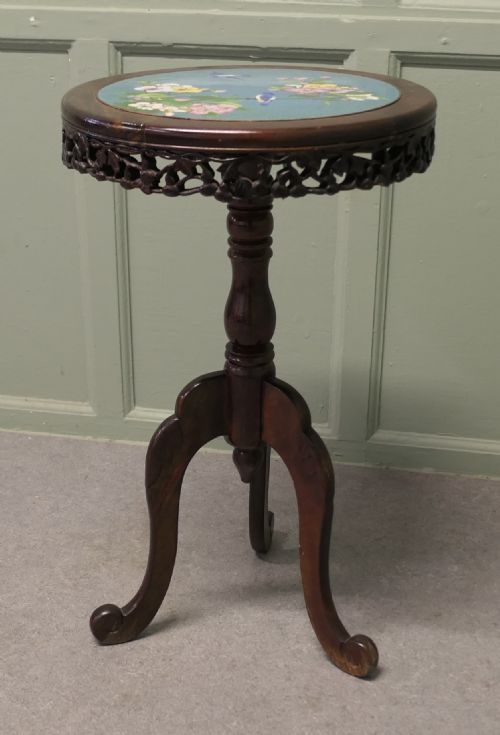
Variations extend to structural supports such as bamboo turning, faux bamboo frames, ebonised bases and tripod legs. Tops range from inset marble and glazed panels to removable lacquer trays designed for utility as well as display.
Materials and Construction
Makers built these tables using hardwoods, softwoods and papier-mâché, applying multiple coats of lacquer to achieve a smooth, deep ground. Artisans then hand-painted scenes using pigments and gold leaf, sometimes incorporating parcel-gilt details or boulle-work to highlight the ornamentation.
Surface decoration frequently relied on japanning, a European imitation of East Asian lacquerwork that involved layered varnishes cured by heat. Structural flourishes included turned faux bamboo frames, carved hardwood details and inset panels of marble or cloisonné.
Several tables feature convincing bamboo made entirely of turned wood.
Evaluating Quality
Quality rests upon the depth of the lacquer ground and the precision of the hand-painted ornament. Superior pieces display intricate, well-preserved brushwork with crisp detailing in the gold leaf and figural scenes, whereas lesser items show flat, simplified decoration with noticeable surface wear.
The integrity of the timber frame and the quality of secondary materials also dictate value. Tables featuring solid hardwood construction, stable tripartite or tripod bases, and well-fitted marble or tray tops represent the higher end of the range.
Gabriel Viardot
The Chinoiserie Accent Side Tables Glossary
- Chinoiserie
- European decorative style imitating East Asian artistic traditions. It appears across furniture, ceramics and textiles from the seventeenth century onwards.
- Tripod Table
- A small freestanding table supported by a central pillar above three legs. This form became popular during the eighteenth century for serving tea or holding decorative items.
- Cloisonné
- Enamelling technique where metal wire forms compartments on a surface to hold coloured pastes. These sections are fired to create decorative patterns on tabletops and inserts.
- Boulle-work
- Inlay technique utilising brass and tortoiseshell set into a wooden ground. It adds texture and reflective contrast to eighteenth and nineteenth-century furniture surfaces.
Chinoiserie Accent Side Tables: Frequently Asked Questions
How do I date a lacquer side table?
Dating relies on examining the timber construction, the type of lacquer ground and the style of painting. Eighteenth-century pieces often show Georgian proportions, while nineteenth-century examples display Victorian or Regency revival characteristics.
Hardware, joinery methods and the wear patterns on the lacquer surface also provide clues to the age and origin of the piece.
Where should I place a side table?
These tables suit hallways, drawing rooms and studies where their decorative surfaces can be appreciated. Their compact dimensions make them suitable for narrow spaces or alongside seating.
Avoid positioning lacquered surfaces in direct sunlight to protect the pigments and gold leaf from fading over time.
Are faux bamboo tables antique?
Many faux bamboo tables date from the nineteenth century, particularly the Regency and Victorian periods when exotic and botanical motifs gained popularity. Makers turned wood to mimic real bamboo, creating lightweight frames.
These pieces often feature painted or japanned finishes to complete the aesthetic of imported bamboo furniture.