
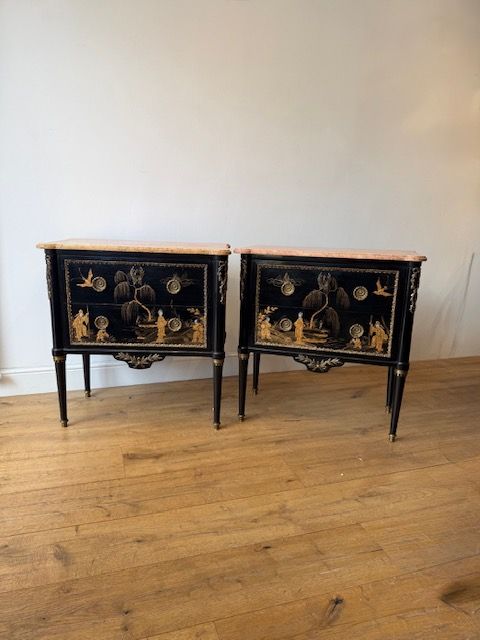
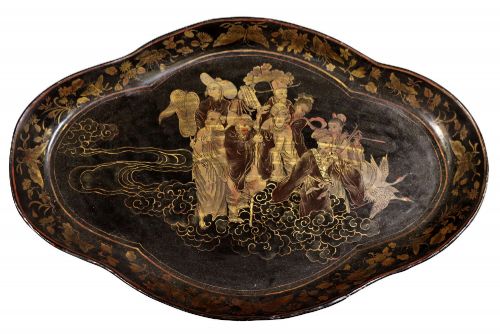


Black Gold Lacquer Tables
These black gold lacquer tables combine deep dark finishes with gilded detailing, bringing centuries of decorative Asian and European craftsmanship directly into a room.
Black Gold Lacquer Tables
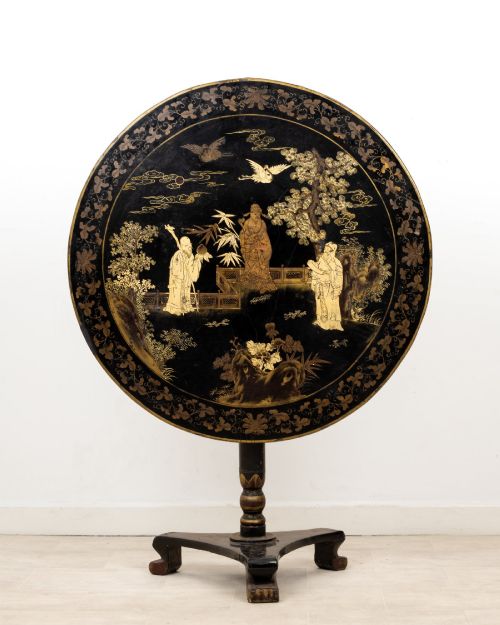
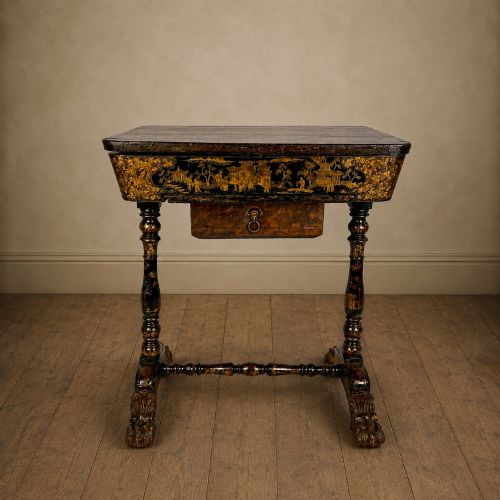
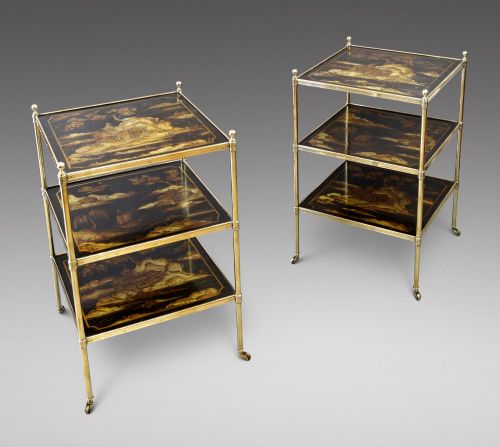
When searching for black gold lacquer tables, buyers encounter a variety of forms designed for daily utility and display. The selection includes occasional tables, nests of tables, tilt-top surfaces, coffee tables, and work tables originating from multiple periods.
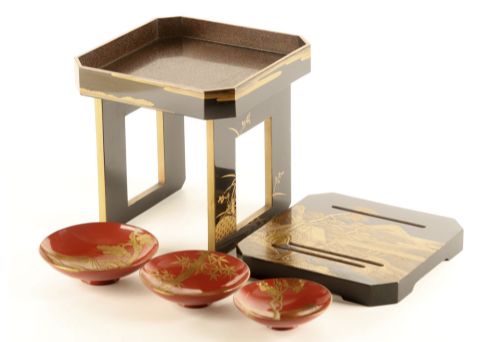
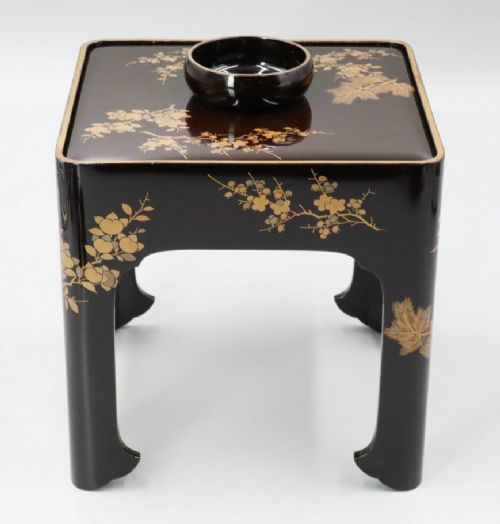
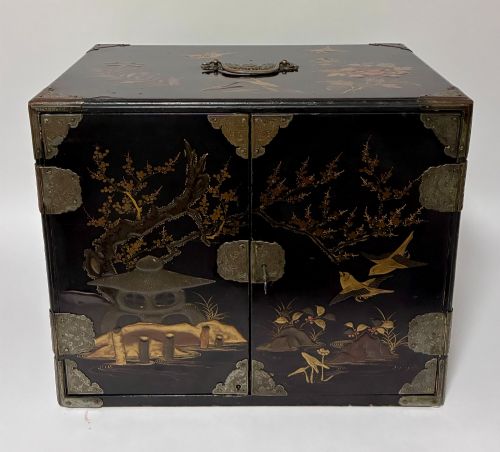
Most examples found on this page span the nineteenth and early twentieth centuries, drawing heavily upon Regency, Victorian, Edwardian, and Meiji aesthetics. Artisans produced these items in diverse regional styles such as Chinoiserie, Chinese Export, and Japanese traditions.
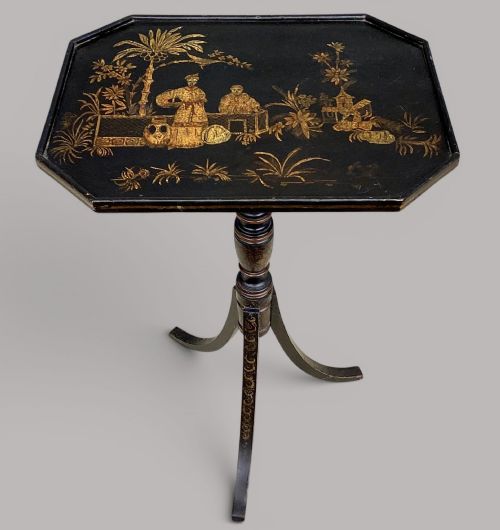
Occasional tables and nesting sets represent the most frequent forms meeting this search phrase. They utilise dark lacquered surfaces enriched with gold leaf or painted gilt motifs to create striking visual focal points.
How they were made
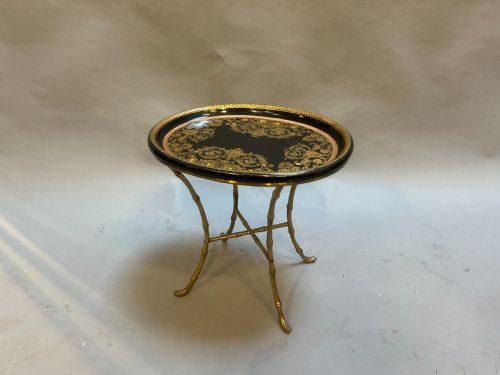
Cabinetmakers constructed the underlying carcases from wood or papier-mache, applying multiple coats of lacquer to achieve a durable and glossy foundation. Craftsmen then built up decorative schemes using gold leaf and hand-painted gilt decoration.
Many pieces incorporate brass details, fabric elements, or carved wooden supports to complement the lacquered surfaces. Artisans balanced traditional Eastern export techniques with Western furniture forms, particularly during the Regency and Victorian periods.
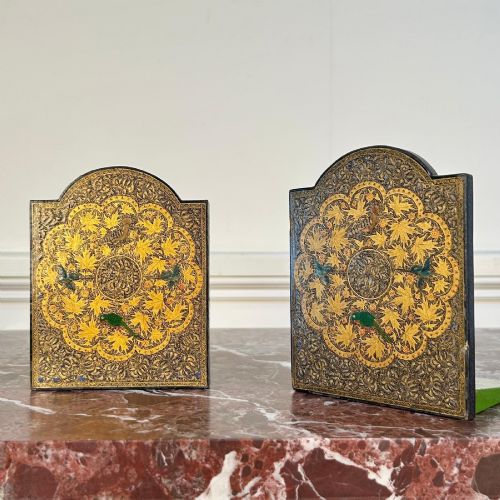
Listings feature items spanning the nineteenth century up to the 1930s, constructed from wood, papier-mache, lacquer, and brass.
What varies in quality
The sophistication of the hand-painted or gilded ornamentation largely separates standard items from exceptional examples. Finer pieces display crisp pictorial detail, intricate narrative scenes, and well-preserved gilt layers across the lacquer.
The integrity of the underlying wood or papier-mache structure and the smoothness of the original lacquer finish dictate the overall standard. Superior items maintain cohesive proportion across complex forms like nesting tables and tilt-top mechanisms.
Jennens & Bettridge
The Black Gold Lacquer Tables Glossary
- Lacquer
- A durable resin finish applied to wooden or papier-mache objects. It provides a hard, glossy surface that protects the material beneath.
- Chinoiserie
- European interpretations of Chinese and East Asian artistic traditions. This decorative style flourished during the eighteenth and nineteenth centuries on furniture and decorative objects.
- Papier-mache
- A composite material made from paper pulp or layers of paper bound with adhesive. Manufacturers moulded this substance into trays and tables before applying lacquer and gilt.
- Gilt
- Gold leaf or powdered gold applied to surfaces for decoration. It creates the bright metallic contrast seen against dark lacquer.
- Tilt-top table
- A small occasional table featuring a mechanism that allows the surface to pivot vertically when not in use. This design saved space in period interiors.
Black Gold Lacquer Tables: Frequently Asked Questions
How do I care for lacquer furniture?
Dust surfaces gently with a soft, dry cloth to protect the delicate finish. Avoid placing these pieces in direct sunlight or near heat sources to prevent cracking.
Keep moisture away from the lacquer and use protective pads beneath any objects placed on the table top.
What is a nest of tables?
A nest of tables consists of a set of graduating surfaces designed to fit neatly beneath one another. This arrangement provides extra table space when entertaining while occupying minimal floor area.
Examples on this page often feature coordinated black lacquer and gilt decoration across all individual tables.
How do I identify a Regency piece?
Regency items typically date from the early nineteenth century and reflect classical influences adapted through British design. Look for refined proportions, elegant pedestals, and precise gilt ornamentation.
Construction methods and materials like papier-mache trays on stands help distinguish this period from later Edwardian revivals.