



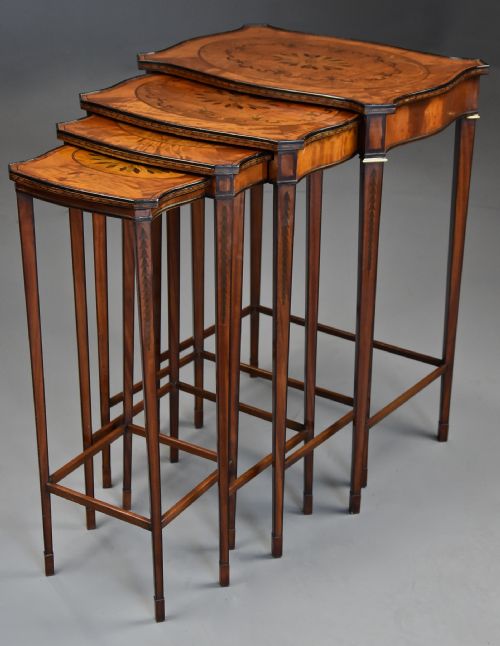


Edwardian Style Quartetto Nest
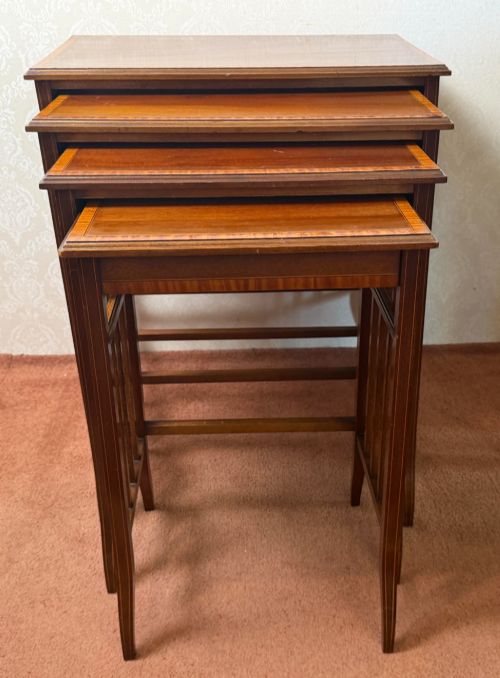
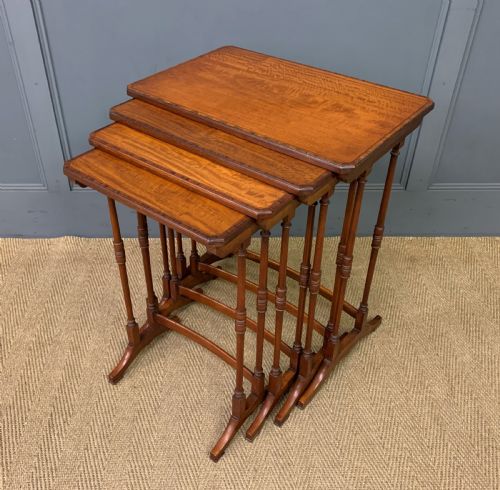
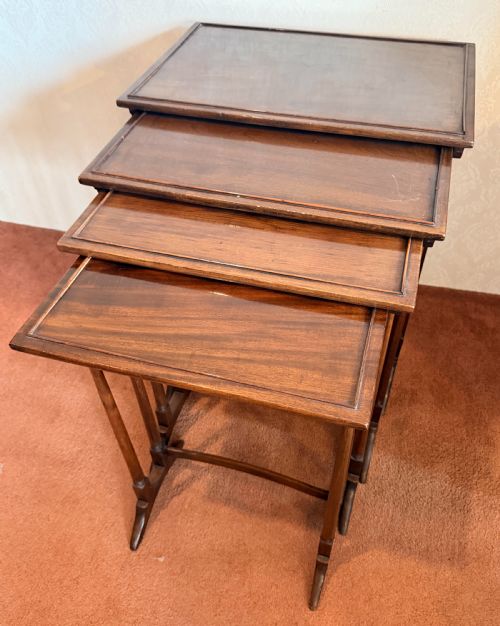
An Edwardian style quartetto nest brings four graduated tables together in one footprint, saving space with proper period grace.
Edwardian Style Quartetto Nest
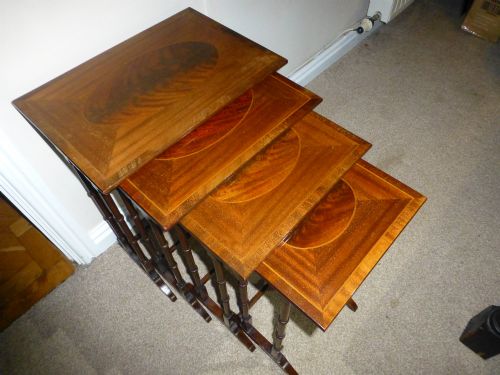
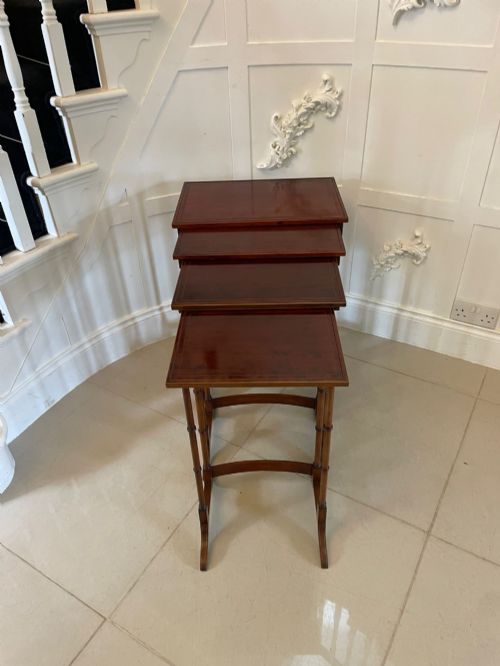
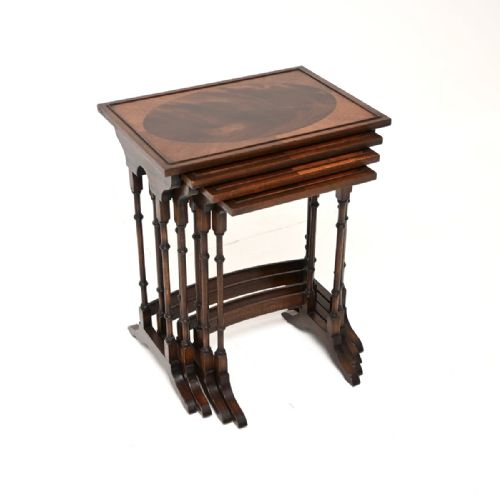
An Edwardian style quartetto nest provides a set of four stackable occasional tables designed to slide neatly beneath one another. These pieces emerge primarily from the Edwardian era, alongside related Victorian and Georgian style examples.
Most entries in this group take the form of a nest of four tables, though occasional sets of three appear. They serve as versatile lamp, wine, or side tables that deploy across a room when guests arrive.
The form relies on graduated sizing so that each smaller table fits precisely into the frame of the one above it. This clever design makes an Edwardian style quartetto nest a practical addition to sitting rooms and parlours.
Materials and construction
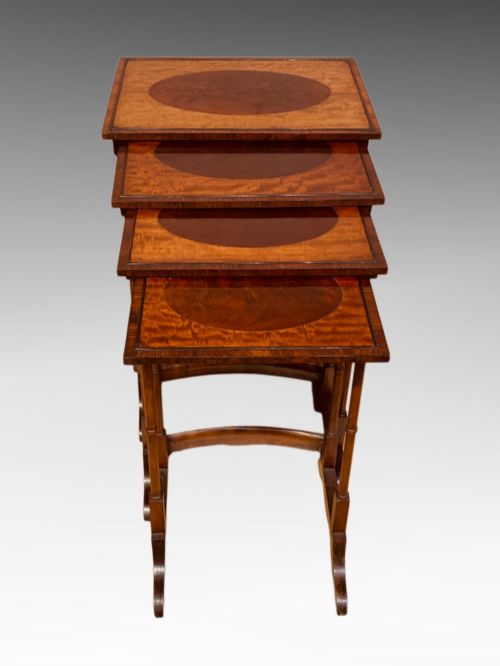
Decoration frequently includes delicate boxwood inlay, satinwood crossbanding, and occasional gilt painting to enhance the timber. Square tapered legs provide structural support while maintaining a slender profile.
Some tables are signed by the maker E. Daligny, proving that even modest coffee tables appreciate a quiet signature.
Distinctions in quality
Quality rests upon the crispness of the inlay work and the choice of timber figurations, where finely figured mahogany or satinwood elevates a piece. Superior examples exhibit precise joinery that allows the four tables to slide smoothly without binding.
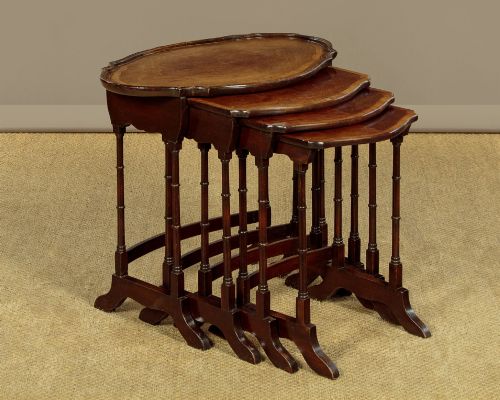
Design sophistication also marks the better pieces, such as serpentine forms executed in the Sheraton style rather than plain rectangular tops. Signed pieces or those retaining rich, polished patination stand apart from standard production.
E. Daligny
The Edwardian Style Quartetto Nest Glossary
- Quartetto nest
- A set of four stacking tables designed to fit inside one another. The term derives from the Italian word for a group of four.
- Crossbanding
- A strip of veneer applied to the border of a table top running perpendicular to the grain of the central panel. This technique creates a neat framed effect.
- Boxwood inlay
- Narrow lines of pale boxwood inserted into grooves cut into darker wood for contrast. It is common in Sheraton Revival pieces.
- Serpentine form
- A gently curving edge that undulates outward and inward in a wave-like line. This shape demands high skill from the cabinet maker.
- Tapered leg
- A leg that diminishes in thickness toward the foot. Square tapered variants are typical of late eighteenth and revival furniture styles.
Edwardian Style Quartetto Nest: Frequently Asked Questions
What is a quartetto nest?
A quartetto nest is a set of four tables designed to stack inside one another in a single column. They were created to save floor space until extra surfaces were needed.
In period interiors, these tables moved around the room for tea, sewing, or holding lamps. The nesting design kept the room uncluttered when the tables were not in use.
How do I date these tables?
Dating relies on timber choices, leg shapes, and inlay styles matched against the historical periods recorded. Edwardian and late Victorian pieces often revive earlier Sheraton or Georgian aesthetics.
Examining the underside, secondary woods, and construction methods helps separate original turn-of-the-century pieces from later revivals. Subtle shifts in edge moulding and veneer thickness also guide attribution.
Are all four tables the same size?
No, each table in the nest is progressively smaller than the one above it. This graduated sizing allows the second, third, and fourth tables to slide completely out of sight beneath the main table.
The largest table carries the primary surface top, while the smallest sits right at the bottom of the stack.
Where should I place them?
These tables suit sitting rooms, studies, or drawing rooms where flexible surface space matters. You can stack them beside a sofa or armchair as a single lamp table.
When visitors arrive, you simply lift them out and scatter them across the room to hold cups or books.