


Gilded Black Side Tables
These gilded black side tables bring dark surfaces and bright leaf together, offering practical display surfaces across Victorian, Edwardian and earlier periods.
Gilded Black Side Tables
Gilded black side tables appear in forms such as occasional tables, nest of tables, centre tables, coffee tables, tray tables and sewing tables. These pieces serve practical functions in sitting rooms and halls while introducing contrasting dark finishes and metallic highlights to an interior.
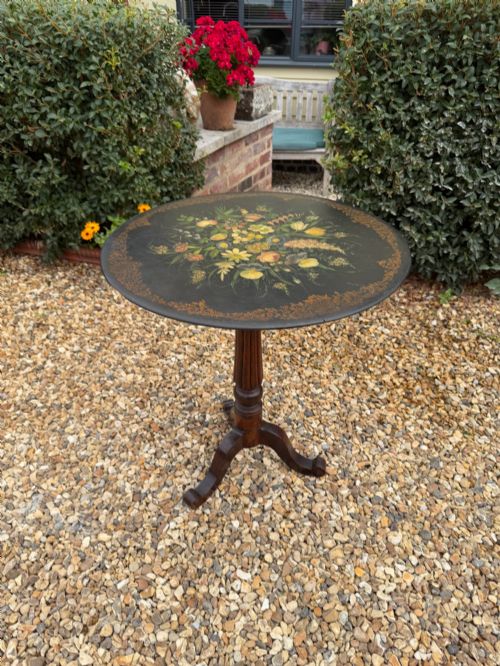
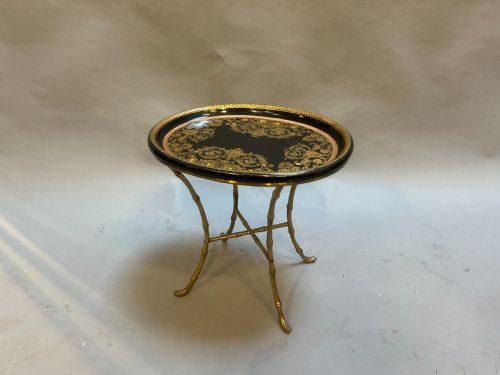
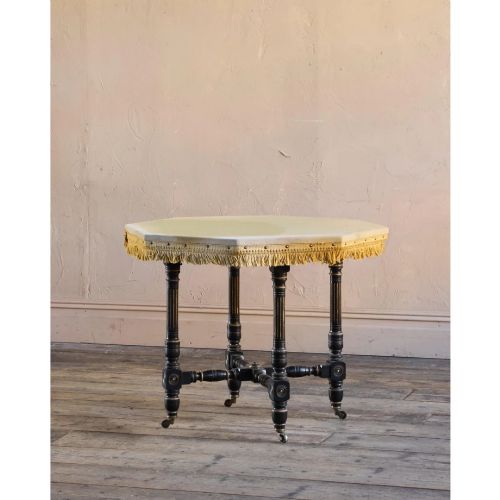
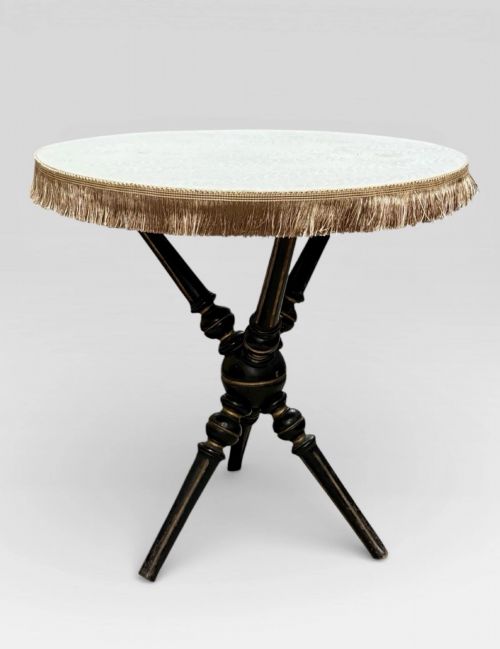
The selection includes Victorian, Edwardian and 19th-century examples alongside specific stylistic expressions like Chinoiserie, Aesthetic Movement, Queen Anne, Baroque Revival and Georgian. Buyers frequently encounter lacquered wood, ebonised timber and papier-mâché surfaces decorated with gold leaf or parcel gilding.
Origins span English workshops, Chinese export production and Venetian craftsmanship, demonstrating a wide geographical reach for these dark and gilded forms. Makers such as Hindley & Sons and Henry Clay appear among the historical attribution records.
Construction and surface methods
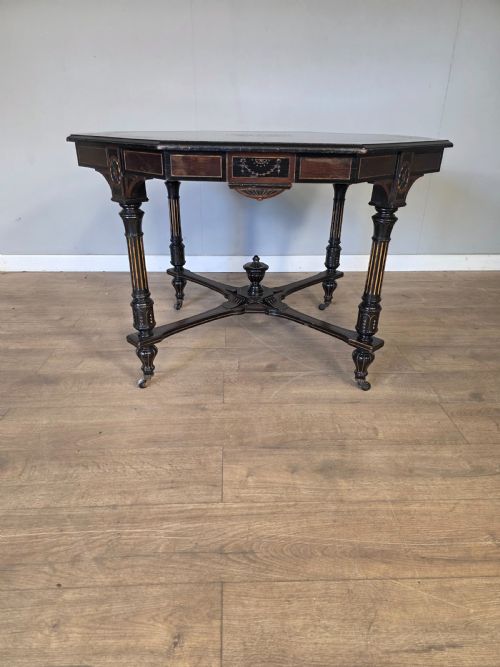
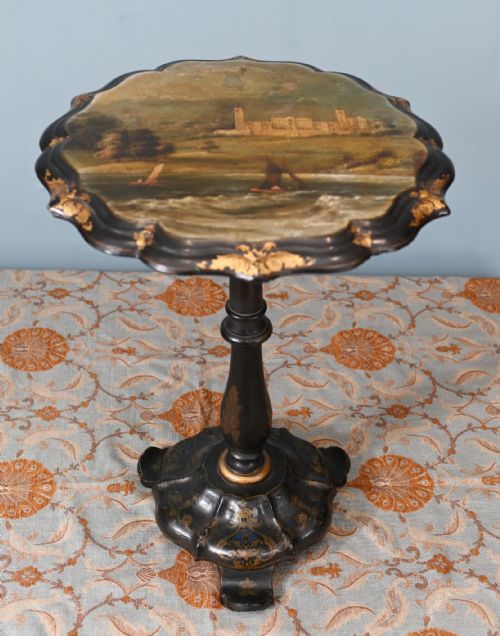
Wood serves as the primary structural material, frequently treated with ebonisation to imitate more expensive dark timbers or coated in black lacquer. Artisans built surfaces from solid timber or applied papier-mâché for lightweight tray tables and occasional pieces.
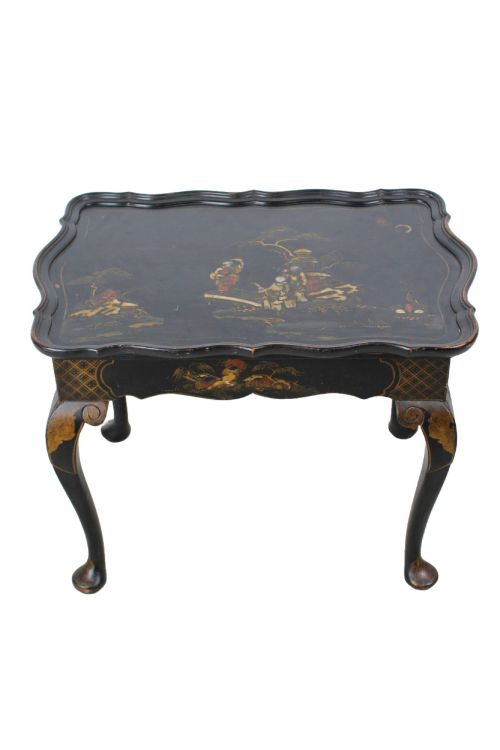
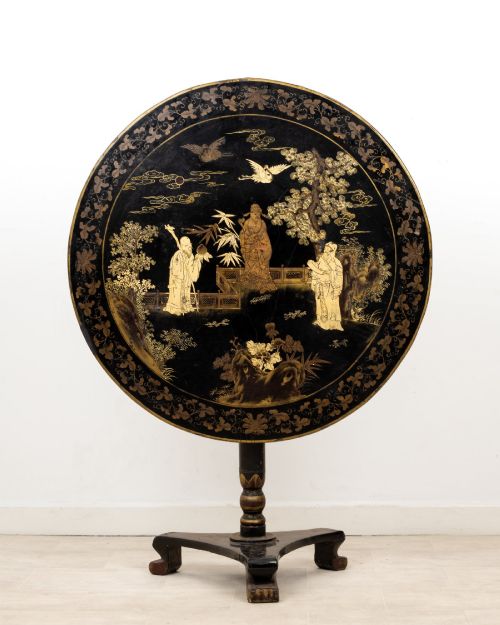
Gold leaf and parcel gilding highlight carved details, edges and painted motifs against the dark background. Chinoiserie and Japanned designs utilise hand-painted ornamentation, sometimes combined with Boulle-work brass detailing.
Joinery methods vary by period, ranging from traditional cabinet construction on centre tables to nesting configurations designed to save space.
Listings feature 19th-century, Victorian and Edwardian periods utilising lacquer, ebonised wood, brass and gold leaf across diverse table forms.
Factors determining quality
The finesse of the hand-painted decoration separates standard production from superior pieces, particularly within Chinoiserie and Japanned examples where intricate brushwork defines the surface narrative. High-grade items display crisp detailing in the gold leaf and refined execution of parcel gilding.
Material choice and structural integrity dictate longevity, with dense ebonised wood or stable papier-mâché providing robust foundations for daily use. Finer examples exhibit superior cabinetmaking, clean joinery and well-preserved original lacquer surfaces without excessive modern intervention.
Hindley & Sons·Henry Clay
The Gilded Black Side Tables Glossary
- Ebonised wood
- Timber treated with chemical stains or dark pigment to resemble genuine ebony. This finish provides a uniform black surface popular in Victorian and Aesthetic Movement furniture.
- Chinoiserie
- European decorative style reflecting Chinese artistic influences. Artisans applied this manner to lacquerwork and painted furniture across various centuries.
- Parcel gilding
- Application of gold leaf to specific portions of an object rather than the entire surface. This technique highlights carved details or edges against a dark background.
- Papier-mâché
- Composite material made from paper pulp or layers of paper mixed with glue and resin. Pressed and dried, it formed a rigid base for painted and lacquered trays and tables.
- Boulle-work
- Marquetry technique incorporating brass and tortoiseshell or dark materials. It appears on select high-end lacquered tables.
Gilded Black Side Tables: Frequently Asked Questions
What periods do these tables come from?
These pieces date from the 18th century through to the Edwardian era, spanning Victorian, Regency and 19th-century production.
Victorian and 19th-century examples form a significant portion of the available selection.
How were these tables used originally?
They functioned as occasional, centre, sewing or tray tables for serving, needlework or display in reception rooms.
Nesting tables provided flexible surface space that could be stored compactly when not in use.
What is Chinoiserie decoration?
Chinoiserie is a European interpretation of Chinese art and motifs, featuring painted landscapes, figures and pavilions on dark lacquer.
This aesthetic appeared frequently on tables from the 19th and early 20th centuries.
How do I distinguish ebonised wood from lacquer?
Ebonised wood is timber stained or painted black to show the underlying grain or a matte finish, whereas lacquer involves building up glossy resin layers.
Papier-mâché provides another distinct smooth base material often finished with dark lacquer.