








Chinese Tiered Side Table
A Chinese tiered side table brings functional display space and rich timber grain to a room.
Chinese Tiered Side Table
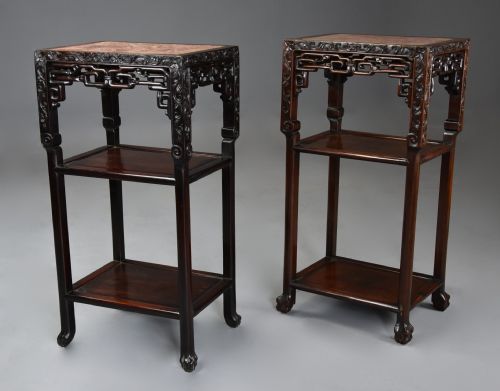
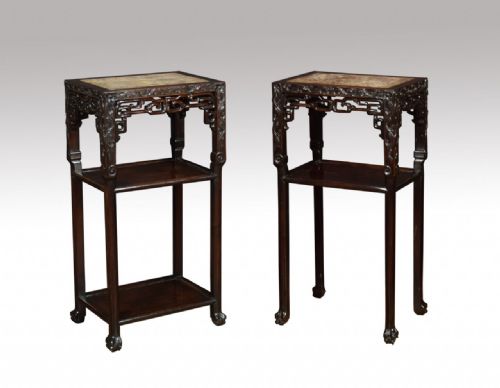
A chinese tiered side table sits alongside plant stands, occasional tables, and pedestals in this selection. These pieces primarily date from the nineteenth century, including specific years like 1880, 1890, and 1910.
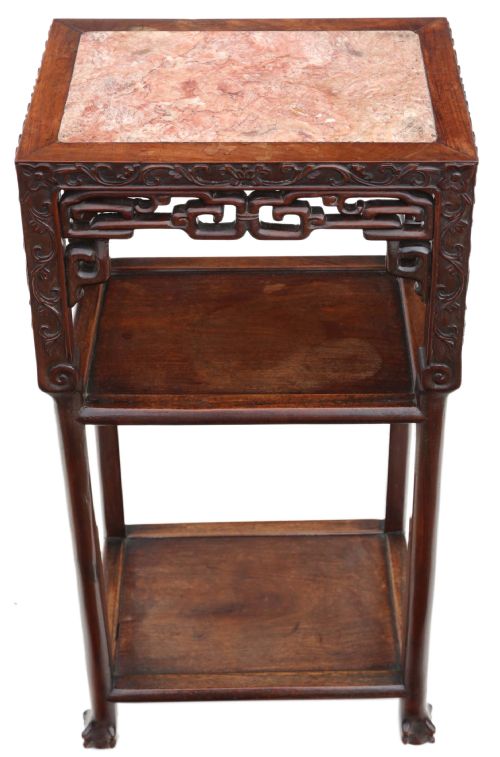
Forms range from simple rectangular pot stands to two-tier and three-tier occasional or lamp tables. Many reflect the aesthetic of the Qing dynasty and Chinese traditional styles.
How they were made
Workshops utilised dense timbers such as hardwood, rosewood, and hongmu to construct these multi-level surfaces. Artisans frequently integrated carved wooden frames with inset marble panels or mother-of-pearl details.
Joinery and carving techniques matched the structural demands of supporting heavy vases, urns, and lamps across multiple tiers. Surfaces received careful finishing to highlight the natural grain of the wood.
Chinese Tiered Side Table Retail Price Guide 2026
Typical asking prices for chinese tiered side table among the pieces listed under this phrase on Sellingantiques today, from the lower quarter to the upper quarter. They describe what is for sale here now, not the wider market.
Listings span the nineteenth century into the early twentieth, featuring hardwood, rosewood, hongmu, marble, and mother-of-pearl.
What varies in quality
Distinctions in quality often rest upon the selection of timber and the depth of the carving. Dense hardwoods like hongmu and rosewood command attention for their weight and grain.
The integration of materials such as marble inserts and mother-of-pearl inlay separates standard production from superior examples. Crisp execution in carved details dictates the standing of an individual piece.
The Chinese Tiered Side Table Glossary
- Hongmu
- A category of dense, fragrant tropical hardwoods prized in Chinese furniture making. It translates literally to red wood and provides a heavy, durable structure.
- Qing Dynasty
- The final imperial dynasty of China, spanning from 1644 to 1912. Pieces from this era often exhibit intricate carvings and traditional joinery.
- Pot Stand
- A specialised small table or pedestal designed to elevate plants, vases, or decorative urns. These often feature multiple tiers to maximise display space.
- Occasional Table
- A versatile small table intended for light, flexible use around a room. They appear in square and rectangular formats across these listings.
Chinese Tiered Side Table: Frequently Asked Questions
What is a Chinese tiered side table used for?
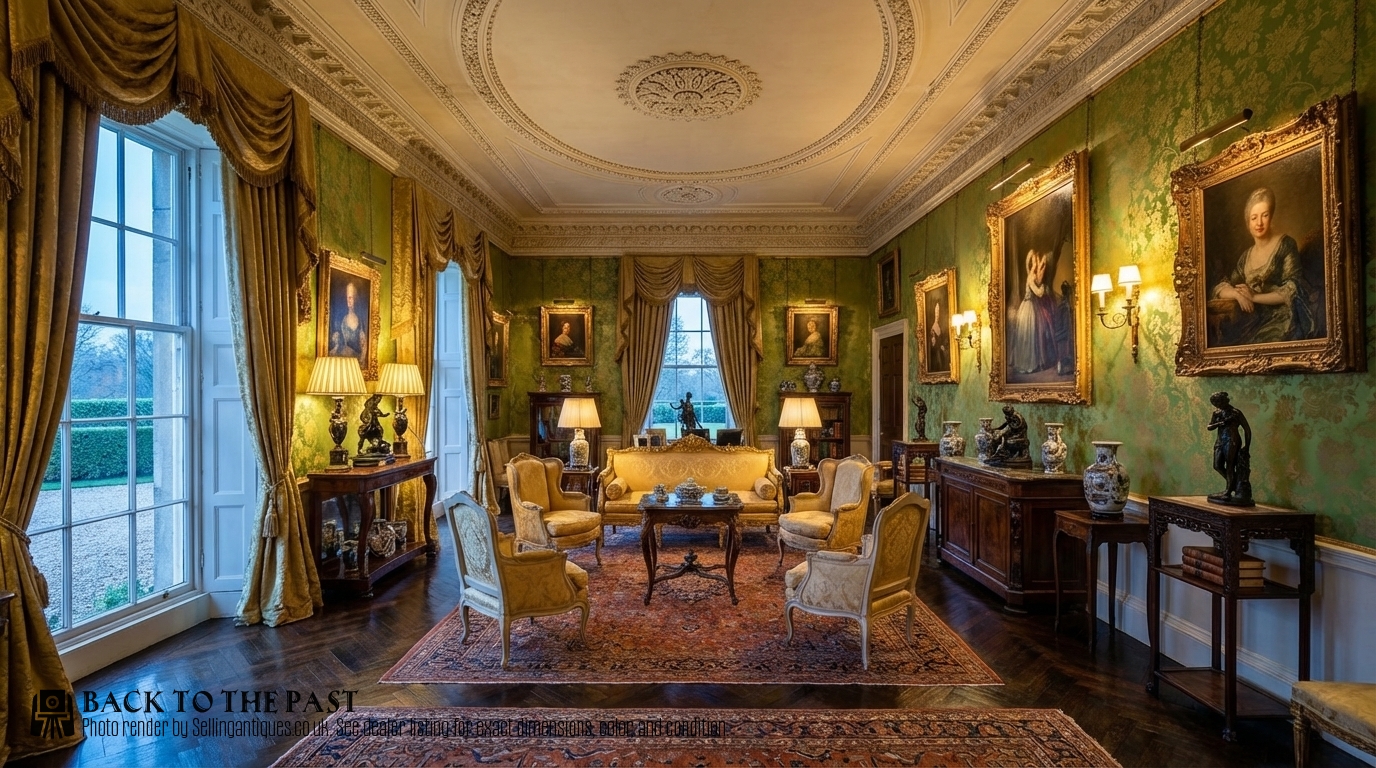
These pieces serve primarily as display surfaces for decorative objects, lamps, and plants. Multiple tiers allow owners to utilise vertical space efficiently in a room.
They function well beside seating or as standalone pedestals in hallways and corners. Their sturdy construction traditionally accommodated heavy ceramic urns and bronze vessels.
How can I date a Chinese side table?
Dating relies heavily on recorded periods such as the nineteenth century or specific years like 1880 and 1890. Stylistic markers associated with the Qing dynasty also provide chronological context.
Examination of the timber, such as hongmu or rosewood, and construction methods help confirm the era of manufacture. Surviving examples frequently reflect nineteenth-century workshop traditions.
What materials are common in these tables?
Hardwoods form the primary structural material, with specific mentions of rosewood and hongmu. These dense timbers offer both durability and rich natural colour.
Inland panels frequently incorporate marble or mother-of-pearl accents. These contrasting materials enhance the visual texture of the multi-tiered surfaces.
Are these tables freestanding?
Yes, listings explicitly describe items such as freestanding hardwood pot stands. Their balanced construction allows placement away from walls.
Multi-tiered designs remain stable on flat flooring while supporting items on upper and lower shelves. This makes them adaptable for various interior layouts.