


Chinese Kang Coffee Table
A Chinese kang coffee table brings low, horizontal living to a modern room with centuries of regional craftsmanship behind it.
Chinese Kang Coffee Table
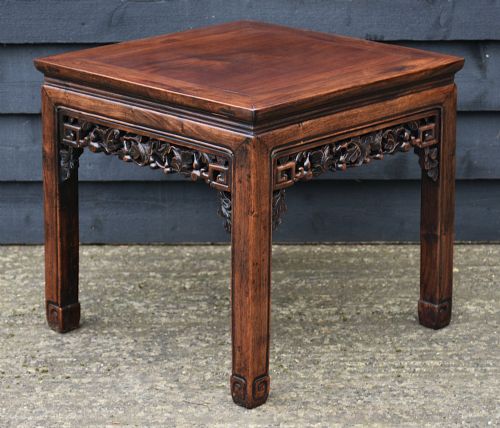
A Chinese kang coffee table adapts a traditional platform bed used on heated brick platforms into a low surface suited for modern rooms. These low tables appear in various forms, from rustic elm pieces to formal rosewood scholar stands.
The version most commonly met on this page is the low rectangular timber table dating from the nineteenth or early twentieth century. These pieces often carry alternative descriptors such as opium tables or low occasional tables.
Makers shaped these surfaces for sitting close to the floor, utilising dense hardwoods or painted finishes. Surviving examples reflect both formal Qing Dynasty aesthetics and simpler regional country styles.
Materials and construction
Joinery forms the backbone of these pieces, allowing timber frames to expand and contract without metal fasteners. Artisans selected durable species such as elm, rosewood, hongmu, padouk, and general hardwoods to withstand daily use.
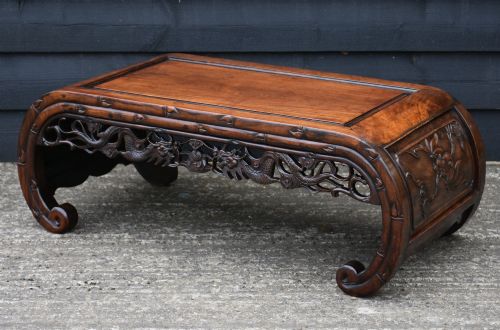
Surface treatments vary between natural wood grains showing deep patinas and mineral pigments applied beneath clear coats or coloured lacquers. Carved details occasionally appear along aprons and scroll ends, utilising traditional hand tools.
Several tables retain traces of mineral pigment beneath generations of polish, reminding us these low surfaces once lived very colourful lives.
Variations in quality
Quality rests upon the choice of timber and the crispness of any carved ornament, such as dragon details or scroll ends. Dense hardwoods like hongmu and figured rosewood command greater attention than utilitarian softwoods.
The integrity of the surface finish and the depth of the natural patina dictate visual success. Pieces retaining original red or black lacquer with mineral pigment details show superior preservation.
The Chinese Kang Coffee Table Glossary
- Kang
- A heated brick sleeping platform in northern Chinese homes where low tables were originally placed for dining and writing. These tables were scaled specifically for use upon such raised platforms.
- Hongmu
- A traditional Chinese term for dense, heavy hardwoods that include various species of rosewood and padouk. It translates literally as red wood and is prized for its rich tone.
- Patina
- The surface sheen and texture developed through age, handling, and waxing over decades. A good patina indicates genuine period use rather than modern chemical distressing.
- Scroll-end
- A structural feature where the tabletop ends curve outward or upward in a scroll profile. This style appears frequently on formal Qing Dynasty low tables.
Chinese Kang Coffee Table: Frequently Asked Questions
What is a Chinese kang coffee table?
A Chinese kang coffee table is a low timber surface originally designed for use on a heated sleeping platform. Today, these pieces function as low coffee tables in contemporary living spaces.
They appear in various woods and lacquers, spanning rustic elm country furniture to formal rosewood scholar tables.
How do I style a low coffee table?
A low table sits close to the floor, making it ideal for pairing with low seating arrangements or floor cushions. Keep decorative objects minimal to highlight the proportions of the timber and any carved aprons.
Allow the natural grain or red lacquer finish to serve as the focal point within the room.
How old are these tables?
The pieces seen here generally date from the eighteenth century through the early twentieth century. Many originate from the Qing Dynasty and the subsequent Republic period.
Construction details and timber selections help distinguish earlier nineteenth-century examples from later twentieth-century interpretations.
What woods were used for kang tables?
Carpenters utilised a range of regional timbers depending on the intended function and status of the table. Hardwoods such as rosewood, hongmu, and padouk provided dense material for formal scholar pieces.
Elm and general timber served for rustic country tables, while others received applications of lacquer and mineral pigments.