
Asian Carved Hardwood Table
An asian carved hardwood table brings distinctive regional craftsmanship into a room, offering functional surfaces fashioned from dense timbers.
Asian Carved Hardwood Table
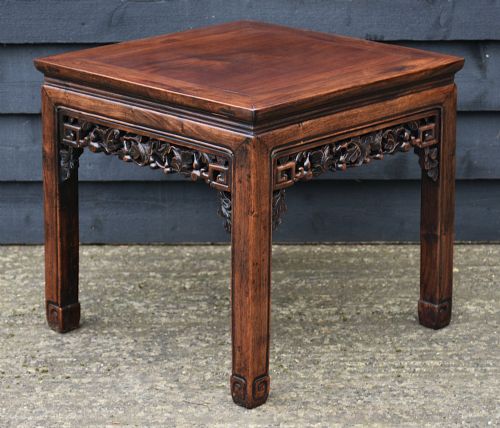
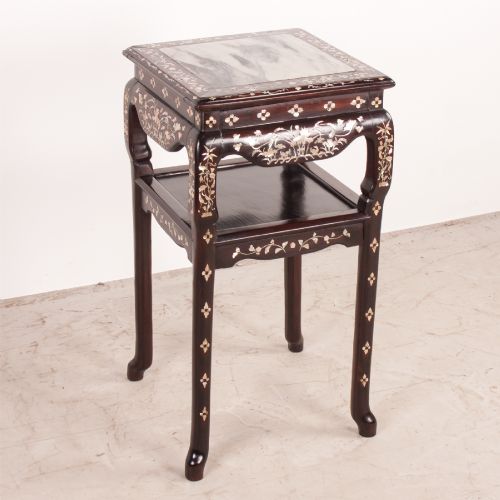
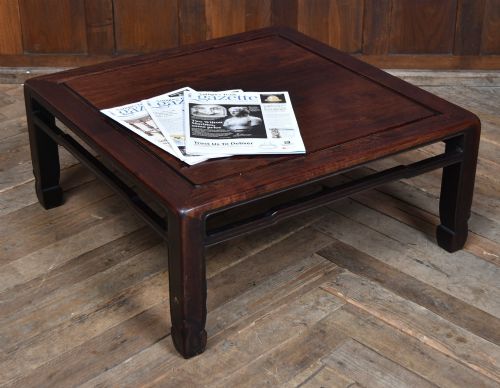
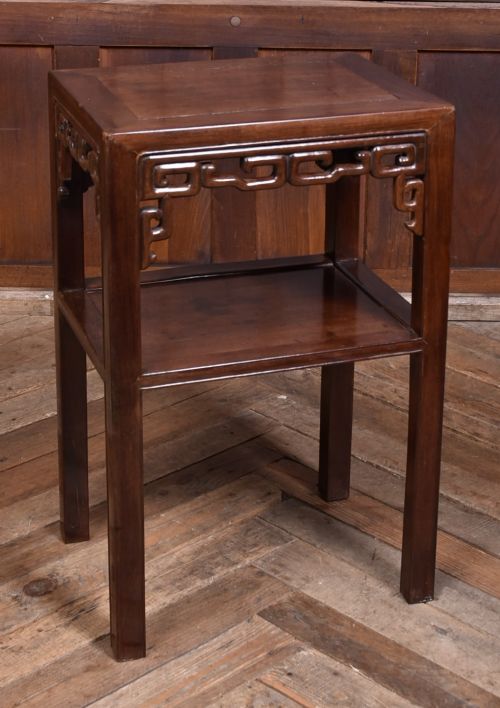
When you search for an asian carved hardwood table, you encounter a varied selection of nineteenth-century furnishings originating primarily from China and Japan. These pieces range from compact plant stands and nests of tables to low coffee tables and altar benches, reflecting traditional forms and overseas export designs.
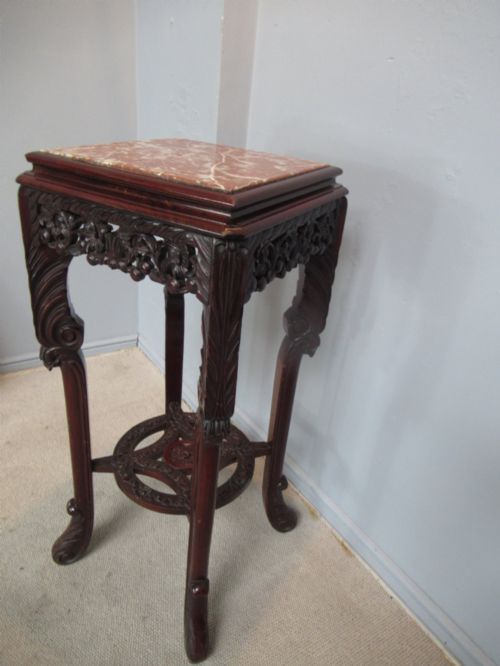
The version you are most likely to meet on this page is a nineteenth-century plant stand or occasional table featuring carved detailing. Many examples incorporate inset marble tops or mother of pearl inlay, aligning with Qing Dynasty aesthetics and Meiji period craftsmanship.
How they were made
Craftsmen utilised dense timbers such as rosewood, padouk, huanghuali and general hardwood, often combining them with contrasting materials like brass, glass and timber. Structural joinery frequently bypassed modern fasteners, relying instead on traditional interlocking joints suited to heavy tropical woods.
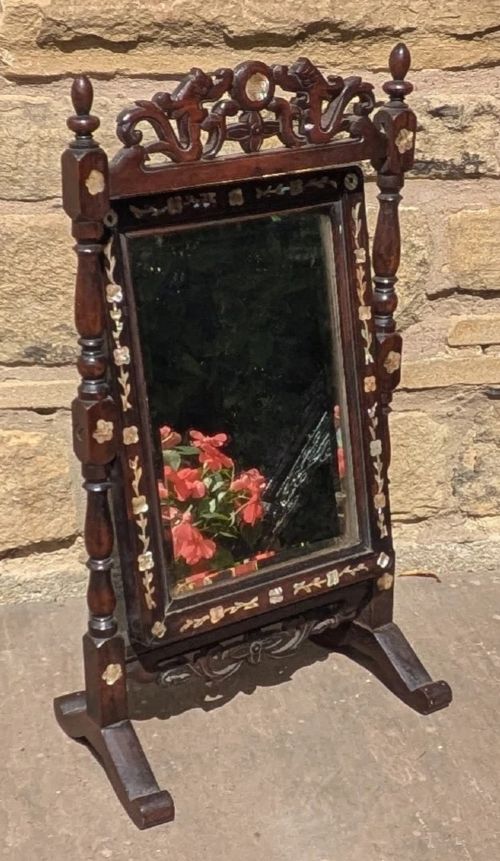
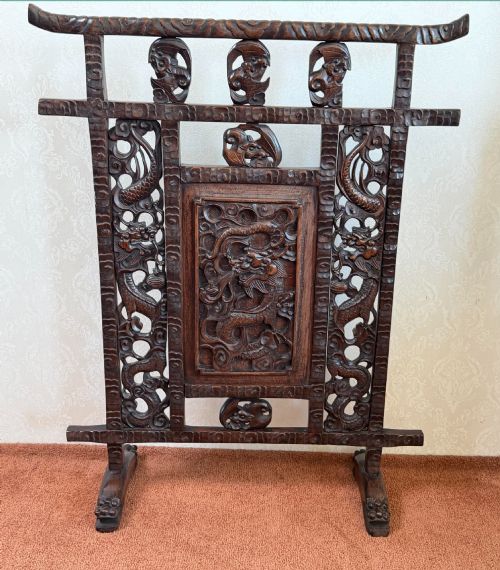
Decorative surfaces gained visual texture through intricate hand carving and the meticulous placement of mother of pearl inlay. Inset marble slabs provided durable, cool-to-the-touch centrepieces for stands and tables designed to display vases or plants.
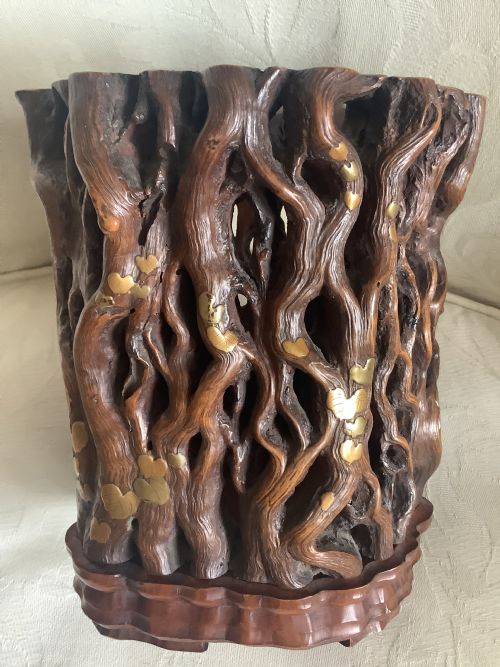
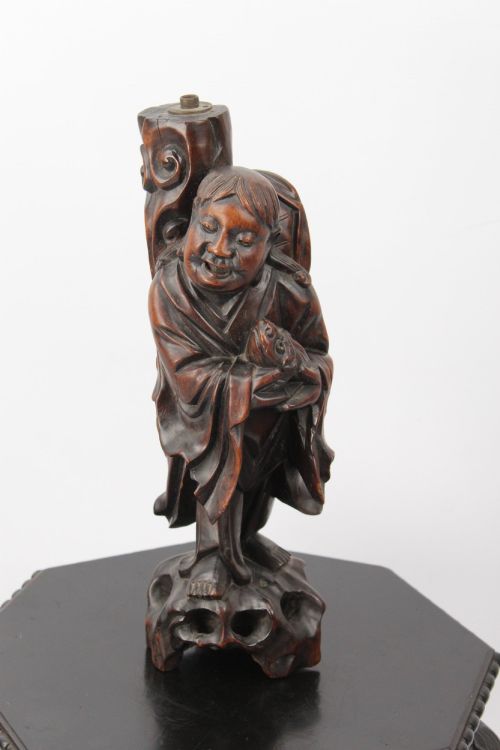
Root wood lamp bases on this page prove that ancient craftsmen could look at a knotted stump and decide it desperately needed a light bulb.
What varies in quality
The distinction between standard examples and exceptional works lies largely in the depth and crispness of the hand carving. Superior pieces display fluid, confident relief work where motifs retain sharp edges and harmonious proportions.
Material selection also dictates overall merit, with dense grains in woods like huanghuali or rosewood commanding attention. Furthermore, the precision of inlaid mother of pearl and the snugness of inset marble tops reveal the competence of the original workshop.
The Asian Carved Hardwood Table Glossary
- Hardwood
- Dense timber derived from broad-leaved trees, providing the structural foundation for traditional Asian furniture. These heavy woods resist wear and allow for intricate, micro-detailed carving.
- Mother of Pearl
- Iridescent inner shell layer used to create shimmering inlaid motifs across table surfaces and screens. Artisans cut thin sections to fit precisely into hand-dued channels in the wood.
- Altar Table
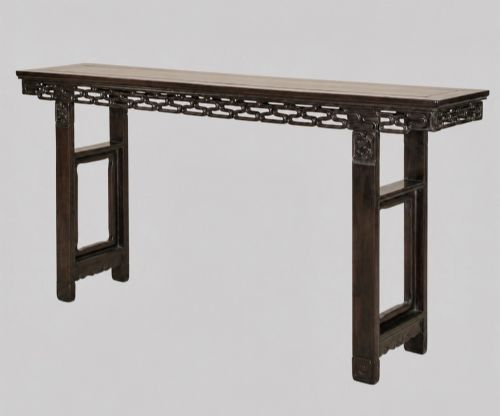
- Long, narrow furnishing traditionally used for display or ceremonial purposes in Chinese interiors. These tables often feature upturned flange ends and openwork carved aprons.
- Opium Table
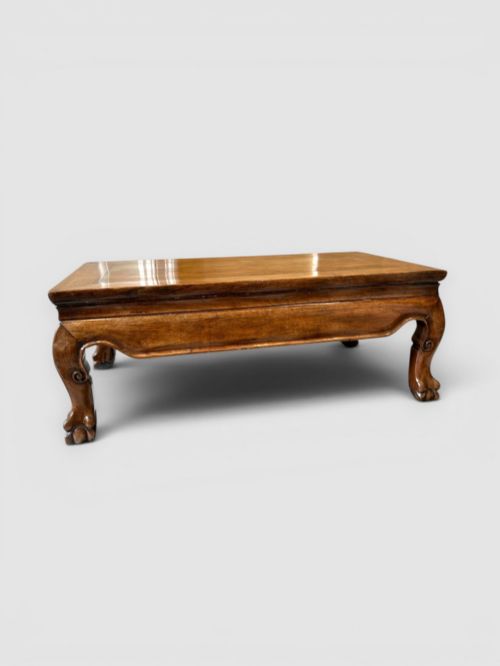
- Low rectangular or square surface traditionally used for resting items while reclining. These low tables frequently showcase straightforward joinery alongside subtle edge carving.
- Shibayama
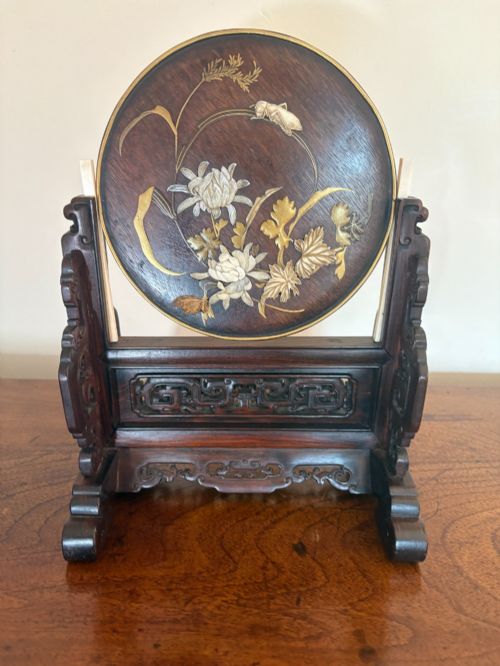
- Japanese decorative technique involving inlay of ivory, shell and coral to depict detailed scenes. This method appears on specialist table screens and ornamental items.
- Hongmu
- A category of dense, dark Asian rosewoods valued for rich colour and heavy weight. Furniture constructed from this material often exhibits deep reddish-brown tones.
Asian Carved Hardwood Table: Frequently Asked Questions
What is an opium table used for?
These low surfaces historically served as convenient tables positioned near seating areas for resting small objects or refreshments.
Today, they function well as compact coffee tables in modern living spaces due to their low profile and detailed woodwork.
How do I identify a Qing Dynasty table?
Qing period pieces often feature dense hardwoods, traditional mortise and tenon joinery, and motifs rooted in Chinese symbolism.
Look closely at the carved aprons and leg shapes to spot recurring regional designs associated with late nineteenth-century production.
Are marble top stands waterproof?
The inset marble sections provide a durable, heat-resistant surface originally intended to support heavy porcelain vases and potted plants.
While the stone withstands moisture well, spills should be wiped promptly to protect the surrounding wooden frame from staining.
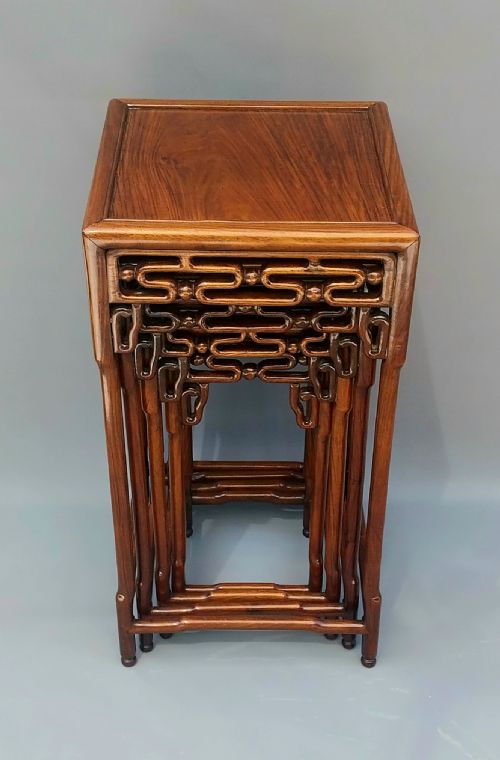
How do nests of tables work?
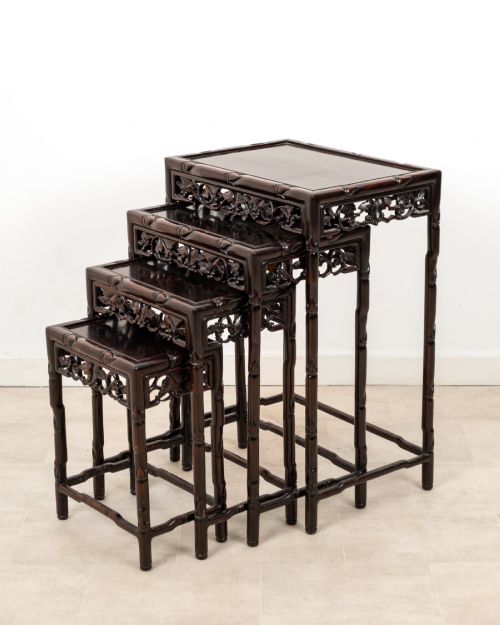
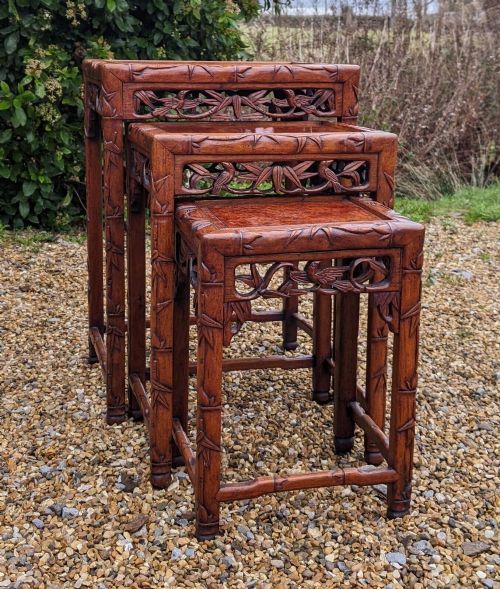
A nest comprises several graduated tables designed to slide neatly beneath one another when not in use.
This clever configuration provides flexible surface space for entertaining while occupying the footprint of a single small table.