


Traditional Oriental Coffee Table
These traditional oriental coffee table pieces bring low-profile timber surfaces into modern rooms.
Traditional Oriental Coffee Table
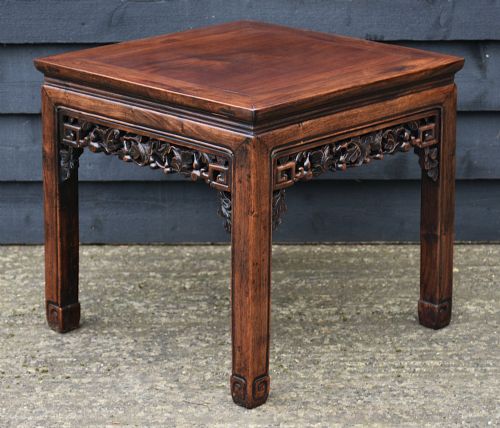
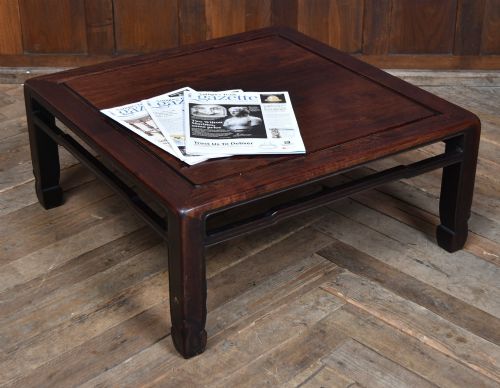
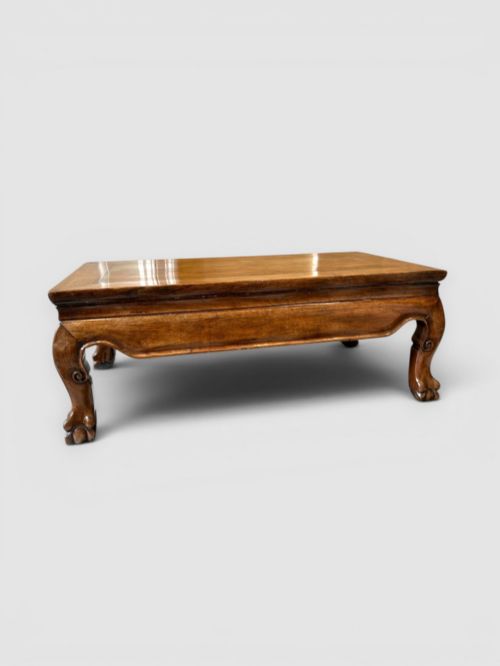
When you search for a traditional oriental coffee table, you encounter low timber furniture originating from various Asian traditions and periods. The selection here leans heavily towards nineteenth century and early twentieth century Chinese forms, including kang tables, opium tables, and occasional low tables.
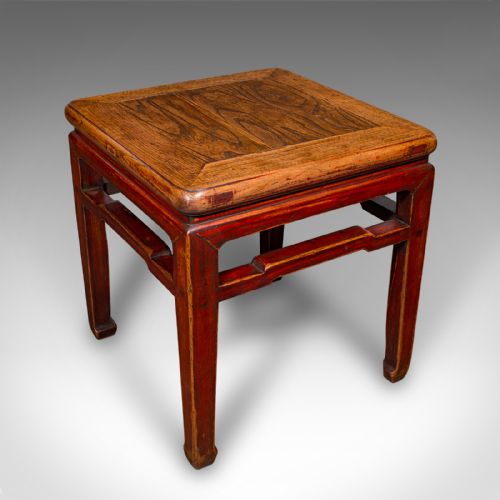
Beyond single low tables, the forms extend to nests of tables, side tables, low stools, and occasional chests. These pieces sit low to the floor, reflecting their historical use for kneeling or low seating arrangements.
The materials and styles span rustic elm country pieces to carved rosewood and padouk Qing dynasty designs. You also find lacquered surfaces and occasional Japanese or Middle Eastern examples mixed into the broader oriental grouping.
Materials and Construction
Carpenters utilised dense regional timbers such as rosewood, padouk, Hongmu, and elm to build these low tables. These hardwoods provided the structural strength needed for slender legs and carved scroll ends without requiring heavy framing.
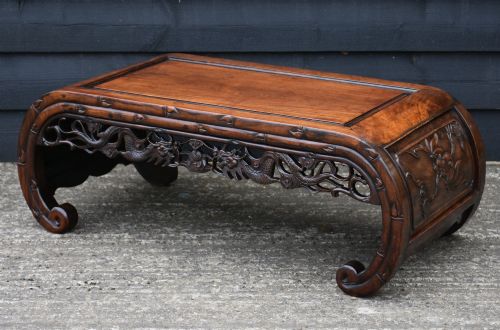
Surface treatments included clear polishing to highlight the natural grain and deep patina of the timber, alongside black or red lacquer finishes. Some pieces incorporated carved dragon details, gold leaf accents, or inlaid elements.
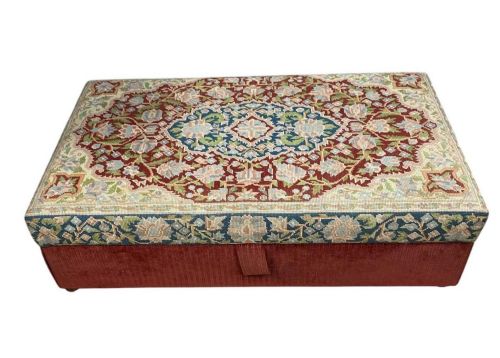
Pig skin chests occasionally sneak into the line-up, proving that antique luggage loves a second career as a coffee table.
Judging Quality and Character
The distinction between average and exceptional pieces lies in the crispness of the carving and the selection of the timber. Dense rosewood and figured huali display richer grain patterns than plain utility timbers.
Proportion and joinery integrity dictate the enduring appeal of each low table. Well-executed scroll ends and balanced proportions separate utilitarian country pieces from finer scholarly items.
The Traditional Oriental Coffee Table Glossary
- Kang table
- A low platform table traditionally placed on a heated brick bed in northern China for dining or writing. These form the direct precedent for many low coffee tables found today.
- Opium table
- A common trade term for a low rectangular or square table with recessed legs and scrolled feet. They were originally used for various domestic activities.
- Padouk
- A heavy, durable tropical hardwood prized for its reddish hue and stability. It appears frequently in nineteenth century tables.
- Huali
- A traditional Chinese term for fragrant rosewood varieties prized for decorative grain figures. Pieces utilising this material command attention for their visual depth.
- Chabudai
- A short-legged Japanese traditional table used for partaking in meals or tea. These occasionally appear alongside Chinese low tables in oriental collections.
Traditional Oriental Coffee Table: Frequently Asked Questions
How were traditional oriental coffee tables originally used?
These low tables served domestic functions close to the floor, including dining, writing, and serving tea. People sat on cushions or knelt around them in traditional interiors.
Over time, their proportions adapted well to modern Western living rooms as low coffee tables placed in front of sofas.
What is a kang table?
A kang table is a low-standing piece designed to sit upon a heated sleeping platform in traditional Chinese homes. They provided a stable surface for daily tasks within a confined space.
Today, these tables function as coffee tables due to their modest height and balanced rectangular proportions.
How do I distinguish elm from rosewood on these tables?
Elm typically displays a prominent, sweeping grain pattern with a lighter rustic warmth. It was often employed for country pieces and simpler furniture.
Rosewood and padouk are much heavier timbers with denser, darker grains that take a high polish. They usually indicate more formal or scholarly workshop origins.
Can I use a nest of tables as individual coffee tables?
A nest of tables provides multiple surfaces that slide neatly together when floor space is required. You can separate them around a room to hold drinks or books.
This modular flexibility makes them practical alternatives to a single large coffee table.