


Vintage Chinese Opium Table
A vintage chinese opium table brings low, grounded lines to a room, offering compact surface space rooted in traditional Chinese craftsmanship.
Vintage Chinese Opium Table
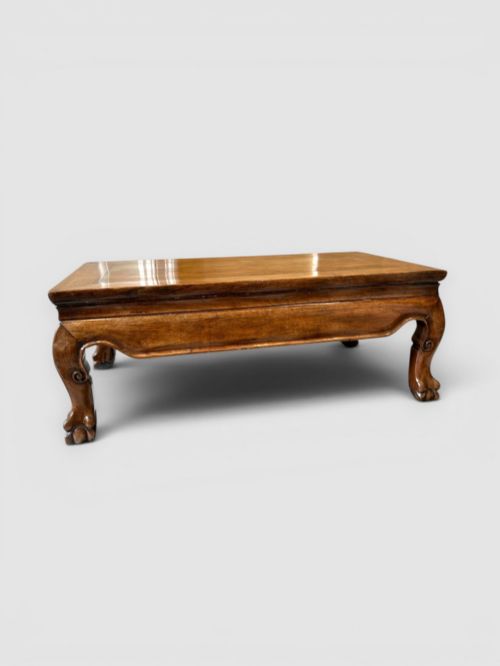
A vintage chinese opium table is a low, horizontal surface designed for sitting or kneeling near the floor. These pieces frequently appear in forms such as low tables, coffee tables, and kang tables.
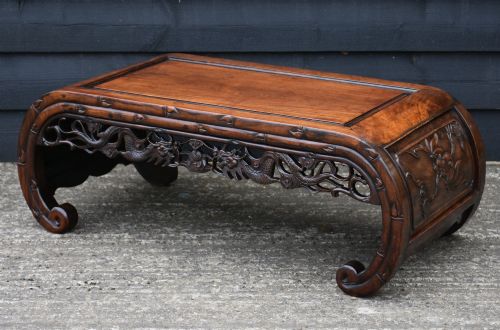
Buyers will encounter both plain functional surfaces and richly detailed versions featuring carved motifs. These low tables serve readily as modern coffee tables while retaining their distinct Asian heritage.
How they were made
Makers built these tables using dense timbers such as rosewood, elm, and hongmu, often grouping them simply as hardwood or wood. These heavy materials provided the structural strength required for low furniture subject to daily use.
Surface treatments included clear finishes to highlight the natural grain of figured rosewood alongside dark lacquer applications. Some examples incorporate mineral pigment details to accent carved panels and structural edges.
Joinery techniques allowed timber frames to bear weight without heavy metal fasteners. Carvers added decorative elements directly into the wood, including dragon details and low-relief patterns.
Object forms on this page are strictly low coffee tables and kang tables.
What varies in quality
The choice of timber creates a primary distinction between tables, with figured rosewood and dense hongmu sitting above standard domestic woods like elm. Grain selection and natural coloration dictate the visual weight of each piece.
Carving depth and execution separate standard surfaces from finer workshop output. Crisp lines on dragon motifs and floral panels demonstrate superior control by the original artisan.
Proportion and stance define the architectural success of a low table. Balanced leg placement and clean joinery ensure the piece maintains visual harmony at floor level.
The Vintage Chinese Opium Table Glossary
- Kang table
- A low platform or table traditionally used on a heated brick bed in northern China. These pieces share the low proportions and compact footprint of opium tables.
- Hongmu
- A category of dense, heavy Asian hardwoods translated literally as red wood. This material was favoured for fine traditional furniture due to its rich colour and durability.
- Rosewood
- A heavy, highly figured timber prized for rich grain patterns and natural oily lustre. It forms the primary material of the finer tables on this page.
- Lacquer
- A durable natural resin applied in multiple layers to seal and protect wood surfaces. It provides a smooth, glossy finish found on select decorative examples.
- Mineral pigment
- Natural colourants applied to wood or lacquer surfaces to highlight carved details. These pigments add subtle contrast to specific decorative elements.
Vintage Chinese Opium Table: Frequently Asked Questions
What is a vintage chinese opium table used for today?
These pieces function primarily as low coffee tables in contemporary living spaces. Their compact height makes them suitable for placing in front of low seating or pairing with floor cushions.
Beyond surface utility, they serve as focal points that introduce traditional Asian craftsmanship into a room without dominating the floor plan.
How do I identify a qing dynasty piece?
Qing dynasty pieces often display characteristic carving styles, denser hardwoods like hongmu or rosewood, and traditional construction methods. Examining the joinery and timber weight helps indicate the period.
Stylistic cues such as traditional Chinese motifs and dragon details further point toward late nineteenth or early twentieth-century workshop origins.
Are these tables made of solid wood?
The listings on this page consist of dense timbers including rosewood, elm, and hongmu. These materials provide the structural integrity needed for low furniture forms.
Makers relied on solid hardwood construction rather than veneers to achieve the weight and durability expected of traditional Chinese tables.
How do I care for a lacquered wood table?
Lacquered and hardwood surfaces require basic dusting with a soft cloth to prevent particle buildup. Avoiding direct sunlight and extreme humidity protects the finish and the timber beneath.
Applying mild furniture wax periodically helps maintain the natural sheen of rosewood without harming the underlying grain.