
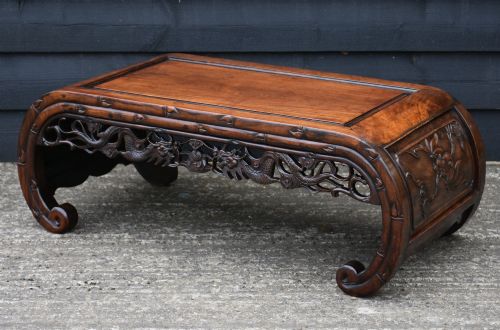


Hand Carved Low Table
These hand carved low table pieces bring global craftsmanship into the room, offering low surfaces shaped by traditional woodworkers from various eras.
Hand Carved Low Table
A hand carved low table spans several distinct regional traditions, bringing together Asian, African, and European influences from the nineteenth and twentieth centuries. Buyers seeking a hand carved low table will encounter forms ranging from low coffee tables and occasional pieces to ceremonial beds and stools.
The selection includes Chinese rosewood opium tables with dragon details, round occasional tables, and heavy hardwood surfaces from diverse origins. Pieces styled as Chinese traditional, Anglo-Indian, Victorian, and African tribal appear frequently across the inventory.
Makers utilised various regional forms, such as Kashmiri tables, Burmese designs, and ebonised Indian coffee tables with inlaid details. These surfaces function readily as modern coffee tables while retaining their original cultural and period characteristics.
How they were made
Makers constructed these tables from dense timbers such as rosewood, teak, walnut, hardwood, elm, and ebonised wood. Artisans applied intricate carving techniques directly to the timber, incorporating bone inlay, brass tops, and marquetry details.
Regional workshops relied on traditional joinery methods suited to each specific style, from Chinese export techniques to African tribal carving. Surfaces often feature detailed figural work, including elephant motifs and dragon carvings executed by hand.
Several elephants make an appearance here, carved faithfully into occasional tables and centre pieces.
What varies in quality
The depth and crispness of the hand carving distinguish finer examples from simpler production, particularly where dragon details or figural motifs are rendered in relief. Superior pieces display precise joinery and well-preserved surface inlays such as bone, brass, or marquetry.
The choice of material alters the character and weight of the table, with dense rosewood and teak offering greater durability than softer varieties of hardwood. Original patination on older timbers contributes significantly to the visual presence of the piece.
The Hand Carved Low Table Glossary
- Marquetry
- The art and craft of applying pieces of veneer to a structure to form decorative patterns. Victorian walnut tables frequently employ this technique alongside hand-carved bases.
- Opium table
- A traditional low table design originating in China, often featuring recessed legs and detailed surface carvings. These pieces function well as modern coffee tables.
- Ebonised
- Wood finished to resemble ebony through a dark staining or painting process. This treatment appears on specific Indian tables listed in the inventory.
- Anglo-Indian
- A style reflecting the fusion of British design preferences with traditional Indian craftsmanship during the colonial period. These pieces often incorporate elaborate floral or animal carvings.
Hand Carved Low Table: Frequently Asked Questions
How do I style a low table?
These low surfaces work effectively as coffee tables in contemporary living spaces, pairing well with low seating arrangements. Their carved details provide a focal point without overwhelming the room.
Consider the height and footprint of the piece to ensure it balances with surrounding furniture. Placing them on a rug helps define the seating area.
What periods do these tables come from?
The inventory spans the nineteenth century through the early twentieth century, including Victorian examples alongside pieces from the nineteen-twenties and thirties.
Stylistic markers and material choices generally indicate the era of production, reflecting regional workshops from China, India, Japan, and Africa.
How do I clean carved wood?
Dust carved surfaces regularly with a soft, dry cloth to prevent dirt accumulation within the detailed recesses. Avoid harsh chemical cleaners that might strip the original finish.
Apply a suitable beeswax periodically to nourish older timbers like teak and rosewood without building up a heavy residue.
Are these tables sturdy enough for daily use?
Constructed from dense hardwoods such as rosewood, teak, and elm, these tables were built for functional domestic service. Their solid construction handles everyday placement of objects reliably.
Heavier items should be distributed evenly across the surface, particularly on pieces with inlaid brass or bone tops.