
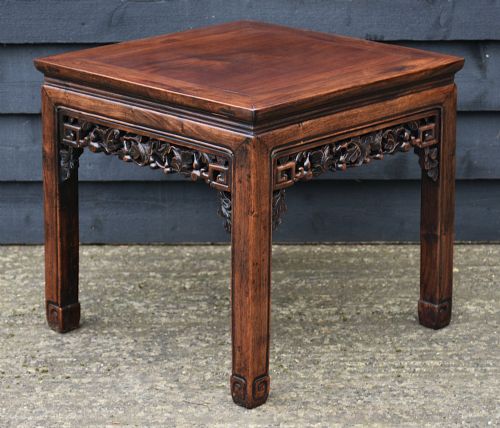
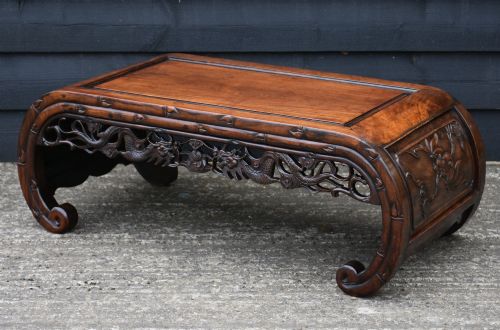


Carved Chinese Kang Table
These low platforms, known as a carved chinese kang table, offer a grounded surface designed originally for sitting or sleeping on heated brick beds.
Carved Chinese Kang Table
A carved chinese kang table is a low-set surface shaped for placement on a traditional northern heating platform or directly on the floor as a small table. Pieces span from the 18th century through the Qing Dynasty and the early 20th century, emerging in forms such as scroll-end designs, miniature altar tables, and low coffee tables.
Most examples met here date to the 19th century and the turn of the 20th century, often described historically as opium tables. They function today as low coffee tables or occasional surfaces in contemporary rooms, retaining their compact proportions and heavy timber construction.
Materials and Construction
Construction relies heavily on dense timbers such as rosewood, hongmu, padouk, elm, and general oriental hardwood. These heavy woods allow for crisp carving, stability, and durable joints without the need for excessive hardware.
Surface treatments range from natural wood finishes showing a deep patina to red or black lacquer accented with gilding. Detail work includes dragon carvings and scroll ends executed during the Qing Dynasty and Republic periods.
Listings feature timbers including rosewood, hongmu, padouk, and elm, spanning periods from the 18th century to the early 20th century.
Judging Quality
The distinction between standard items and superior examples lies in the depth and crispness of the carving, particularly around dragon motifs and scroll ends. Heavier, denser timbers like hongmu or figured rosewood command greater respect than softer woods like elm.
Patina and proportion dictate the standing of a piece, with well-preserved lacquered finishes or natural timber surfaces showing age gracefully. Miniature altar forms and matched pairs represent a higher tier of craftsmanship than standard utility tables.
The Carved Chinese Kang Table Glossary
- Kang
- A traditional brick sleeping platform in northern China that was heated from below during colder months. Low tables were placed upon it for dining, writing, or smoking.
- Hongmu
- A category of dense, heavy Asian hardwoods highly prized for traditional furniture making. It translates literally to red wood.
- Padouk
- A sturdy tropical timber known for its rich colour and stability, used frequently in fine Chinese low tables. It ages to a deep, warm brown over time.
- Scroll-end
- A structural feature where the short ends of a table top curl outward or upward in a scroll profile. This style adds visual grace to low kang tables.
- Patina
- The surface sheen and soft lustre developed by wood or lacquer over decades of handling and use. A good patina indicates genuine age and care.
Carved Chinese Kang Table: Frequently Asked Questions
What is a kang table used for now?
These pieces serve primarily as low coffee tables or display surfaces in modern living spaces. Their compact height and long proportions sit well in front of low sofas.
Historically, they held tea sets, writing scholar objects, or smoking equipment on heated platforms. Today they bring traditional low-profile seating surfaces into contemporary rooms.
How do I tell a kang table from a coffee table?
A traditional kang table is built significantly lower to the ground than a standard Western coffee table. This low stance stems from its original use on a raised brick sleeping bed.
Many examples share identical proportions and are sold interchangeably as coffee tables. The key marker is the presence of traditional joinery, scroll ends, or dragon carvings associated with Chinese furniture.
What woods were used to make these tables?
Maker workshops utilised a range of regional and imported timbers, most notably dense rosewood, hongmu, padouk, and Asian elm. Hardwoods provided the structural strength required for slender legs and intricate carved aprons.
Some pieces feature softer woods coated in red or black lacquer, occasionally highlighted with gilding. The choice of timber generally reflects the workshop region and the intended quality of the finished item.
Are these tables from the Qing Dynasty?
Many examples date back to the late 19th century during the Qing Dynasty, while others cross over into the early 20th century and the Republic period. Qing pieces often feature formal dragon carvings or classic scroll-end designs.
Dating relies on timber characteristics, construction methods, and surface patina rather than explicit maker signatures. Pieces span from the 18th century up through the 1920s.