
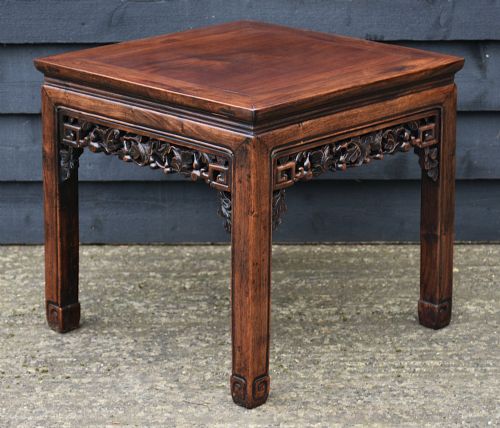
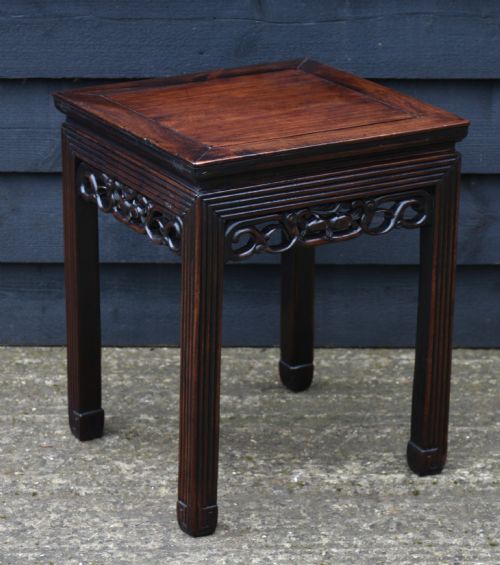


Chinese Carved Apron Table
A Chinese carved apron table brings low, sculptural lines and rich timber into a room, offering both surface space and traditional Asian form.
Chinese Carved Apron Table
The version you are most likely to meet on this page is a low coffee table or an opium table made of dense hardwood. Alongside these, you will find nesting tables and console tables shaped by Chinese export and Republic period traditions.
What varies in quality
Quality rests in the selection of the timber and the depth of the carving around the apron and legs. Dense rosewood and padouk provide a heavier, more stable structure than softer woods.
The crispness of the joinery and the preservation of the original patina distinguish finer pieces from simpler utilitarian examples.
Several tables listed as low opium surfaces find a second life holding art books instead of pipes.
The Chinese Carved Apron Table Glossary
- Opium table
- A traditional low table design originally used for resting or dining while seated on mats or platforms. These are frequently sought as modern coffee tables.
- Huanghuali
- A prized Chinese hardwood known for its rich colour and distinctive grain patterns. It is used in high-status traditional furniture.
- Padouk
- A heavy, durable exotic timber with a reddish hue used in fine Chinese cabinetmaking. It takes a high polish and resists wear.
- Nesting tables
- A set of graduated tables designed to fit neatly beneath one another when not in use. They appear in sets of three or four.
Chinese Carved Apron Table: Frequently Asked Questions
What is a Chinese carved apron table?
It is a low wooden table featuring a decorative carved panel, known as an apron, beneath the top surface. These pieces range from nineteenth-century coffee tables to nests and console tables.
They reflect traditional Chinese and Qing Dynasty designs, using hardwoods like rosewood and padouk.
How were these tables used?
Many low variants served as opium or kang tables for resting and dining close to the floor. Larger examples functioned as side tables, consoles or occasional surfaces.
In modern homes, they work well as low coffee tables placed before a sofa.
How do I care for a hardwood table?
Keep the timber away from direct heat sources and strong sunlight to prevent the wood from drying out. Dust regularly with a soft, dry cloth and avoid harsh chemical polishes.
Applying a traditional wax occasionally helps maintain the patina.
How can I tell the period?
Dating relies on timber selection, joinery methods, and the style of the carving. Nineteenth-century and Victorian pieces often display deep hand-carved aprons and aged patinas.
Early twentieth-century and Republic period examples show similar traditional forms adapted for export.