


Carved Floral Coffee Table
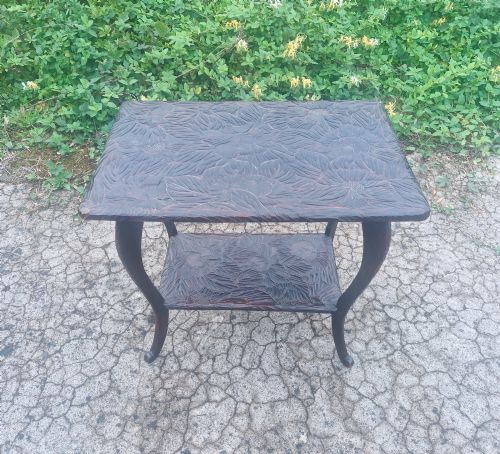
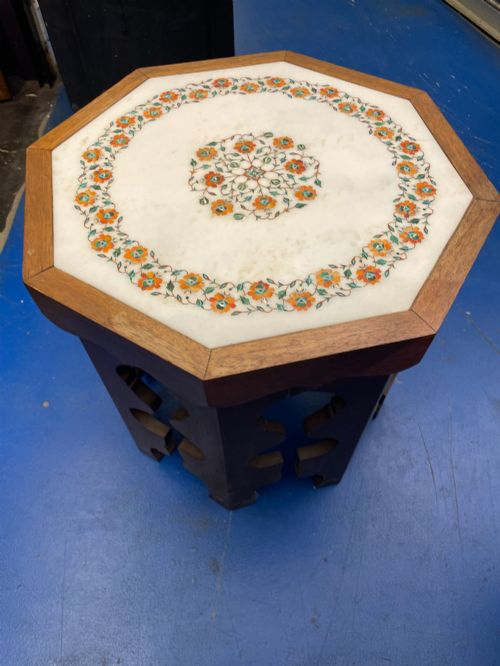
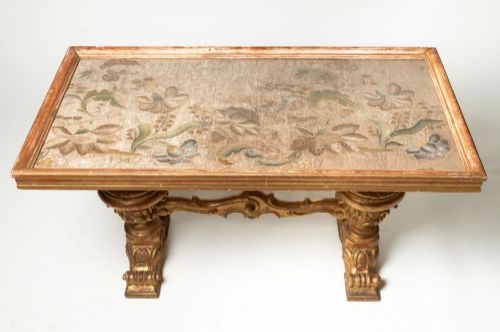
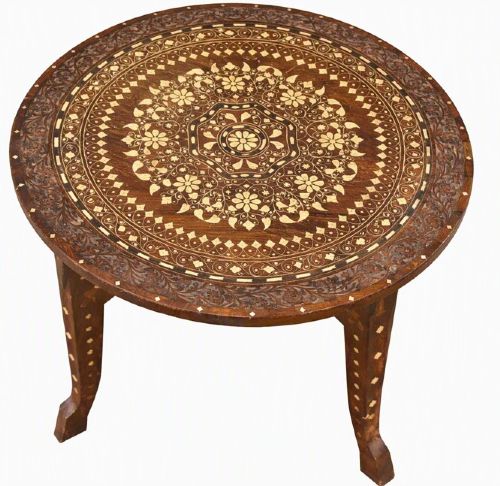
These carved floral coffee tables bring together intricate hand-carved woodwork, bone inlay and marquetry across periods from the nineteenth century to the early twentieth.
Carved Floral Coffee Table
A carved floral coffee table encompasses low occasional tables, opium tables, and side tables adapted for modern living, originating from diverse global traditions such as Anglo-Indian, Chinese, and Victorian workshops. You are most likely to encounter pieces fashioned from dense hardwoods featuring botanical motifs, alongside examples incorporating bone inlay or marble tops.
The selection ranges from nineteenth-century centre tables and chess tables to early twentieth-century low coffee tables and trays on stands. Makers such as Liberty of London appear among the offerings, reflecting the turn-of-the-century appetite for imported craftsmanship.
Forms vary from circular occasional tables with elephant-form supports to rectangular low tables and marble-topped specimens. Each piece serves as a functional surface that displays elaborate floral carving or marquetry inlay across walnut, teak, rosewood, and general hardwood.
What varies in quality
Quality reveals itself in the crispness of the hand-carving and the precision of the botanical motifs across the wood surface. Finer examples display deep, three-dimensional relief work where every petal and leaf is sharply defined.
The choice of materials and the integrity of the secondary elements, such as genuine bone inlay or fitted marble and pietra dura tops, distinguish higher-grade productions. Well-executed marquetry and stable timber construction further elevate a piece above standard utility items.
Several tables in the selection feature carved elephant legs, adding an unexpected colonial touch to the floral motifs.
Liberty of London
The Carved Floral Coffee Table Glossary
- Marquetry
- Decorative veneer work where pieces of wood, bone, or other materials are fitted together to form pictorial designs. This technique is frequently seen on Victorian and early twentieth-century table tops.
- Pietra dura
- An inlay technique using cut and fitted polished coloured stones to create images. It appears on select nineteenth-century marble table tops.
- Opium table
- A low-profile wooden table traditionally used in East Asia for social gatherings and resting. These forms are frequently adapted as low coffee tables in modern interiors.
- Anglo-Indian
- A style describing furniture made in India during the British colonial period, often combining British furniture forms with local Indian carving traditions and materials.
- Bone inlay
- The practice of embedding small pieces of carved animal bone into wooden surfaces to create contrasting patterns. It is a defining characteristic of specific Anglo-Indian and Kashmiri tables.
Carved Floral Coffee Table: Frequently Asked Questions
How do I style a carved table in a modern room?
These low and occasional tables work well as central anchor points in a sitting room, providing contrast against contemporary sofas and neutral textiles.
Keep surface styling minimal to allow the intricate floral carving and inlaid details to remain the primary focus of the interior.
What is an opium coffee table?
An opium table is a traditional low-slung furniture form originating from China, designed for sitting close to the floor during social activities.
Today, their low height makes them suited for use as coffee tables in living spaces with contemporary or eclectic seating arrangements.
How do I clean wooden carvings and inlay?
Dust the carved recesses regularly with a soft brush to prevent dirt accumulation within the detailed floral motifs.
Avoid liquid cleaning products, especially on pieces with bone inlay or marquetry, and consult a professional restorer for specialised maintenance.
What periods are represented in these tables?
The selection spans from the mid-nineteenth century through the Victorian era and into the early decades of the twentieth century.
This timeframe includes Victorian productions, colonial Indian pieces, and the Arts and Crafts influence associated with Liberty of London.