



Chinese Hongmu Stands
Chinese hongmu stands are dense hardwood pedestals and low tables that elevate ceramics and plants with quiet architectural authority.
Chinese Hongmu Stands
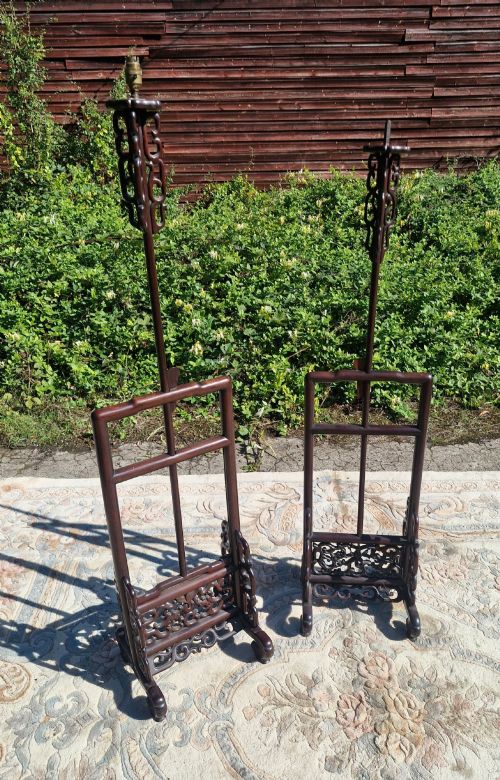
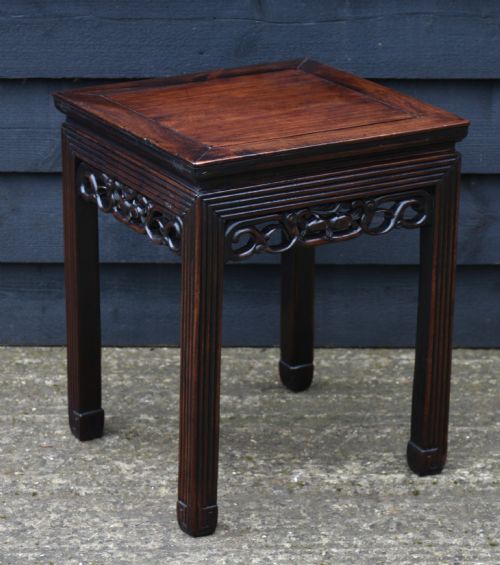
Chinese hongmu stands include plant stands, urn pedestals, low occasional tables, and nests of tables originating primarily from the nineteenth century and the Qing Dynasty. You will encounter tall jardiniere stands alongside low barrel-form tables and multi-tiered display pieces designed to hold decorative objects.
The selection ranges from traditional Qing Dynasty scholarship furniture to Chinese Export pieces and Republic Period examples. Plant stands and marble-topped pedestals dominate the current inventory, reflecting the historic demand for sturdy platforms to display heavy porcelain and bronze vessels.
Materials and Technique
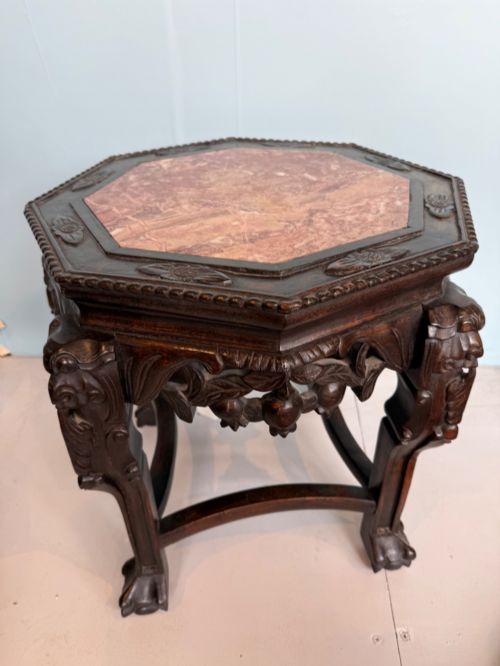
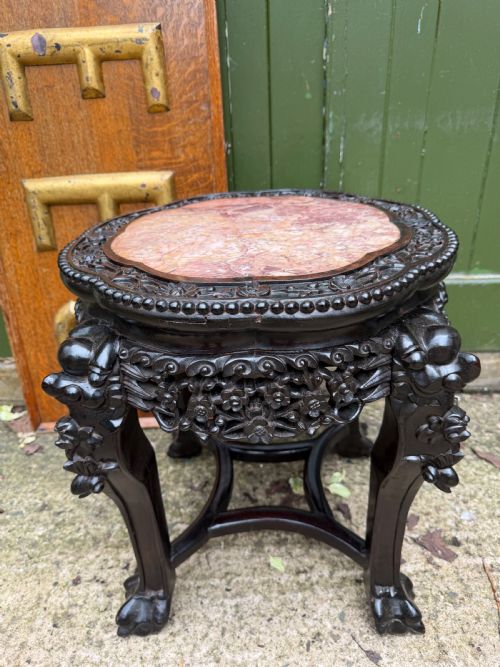
These pieces are constructed from dense hongmu and rosewood, frequently incorporating inset panels of variegated rouge marble or decorative burrwood. Joinery relies on traditional interlocking techniques that accommodate the natural movement of dense tropical hardwoods without metal fixings.
Carving is executed directly into the hardwood frame, creating intricate floral or geometric motifs, occasionally augmented with mother-of-pearl inlay or brass elements. The wood is finished to reveal the deep natural grain and dark tone of the timber rather than painted or heavily gilded.
Distinctions in Execution
Quality rests in the crispness of the wood carving and the weight of the timber, where superior examples display deep, undercut relief rather than shallow surface incisions. The stability of the frame and the precise fit of inset marble tops separate masterwork pieces from standard workshop output.
Proportion and form dictate the upper tier of the range, seen in unusual structural geometries like barrel shapes or multi-tiered arrangements. The integration of contrasting materials such as mother-of-pearl or burrwood requires exact placement to maintain visual balance across the piece.
The Chinese Hongmu Stands Glossary
- Hongmu
- A categorical term for dense, heavy Chinese hardwoods, translating literally as red wood. It encompasses several dense timber species valued for dark heartwood and high durability.
- Jardiniere stand
- A tall pedestal or low table specifically proportioned to support a ceramic flower pot or plant bowl. These pieces often feature water-resistant marble inserts to protect the wood surface.
- Qing Dynasty
- The final imperial dynasty of China, spanning from sixteen-forty-four to nineteen-twelve. Furniture from this era is characterised by confident carving and formal adherence to traditional motifs.
- Scholar's table
- A smaller form of table or low stand used in a scholar's studio for writing, painting, or displaying single contemplative objects. They exhibit refined proportions and restrained ornamentation.
- Nest of tables
- A set of graduated tables designed to slide neatly beneath one another when not in use. They appear in groups of four in both rosewood and hongmu variants.
Chinese Hongmu Stands: Frequently Asked Questions
What were chinese hongmu stands used for?
These pieces served primarily as elevated platforms for heavy porcelain urns, bronze vessels, and potted plants within traditional interiors. They protected polished floors and positioned decorative items at an optimal height for viewing.
In scholar's studios and reception rooms, lower variants functioned as side tables or writing surfaces for handling scrolls and writing implements. Their structural strength allowed them to bear significant weight despite delicate outward appearances.
How do I clean hongmu and marble surfaces?
Dust the hardwood regularly with a soft, dry cloth to prevent particulate accumulation in carved recesses. Avoid silicone-based polishes that can penetrate the timber grain and attract future dirt.
For inset marble tops, use a damp cloth followed by immediate drying to prevent moisture seepage into the surrounding wooden rebate. Keep these stands away from direct heat sources and strong sunlight to protect the timber's natural moisture balance.
How do I identify a Qing Dynasty piece?
Look for dense, heavy timber weight combined with deep, hand-chiseled relief carving typical of nineteenth-century production. Construction methods should utilise traditional joinery without modern metal screws or industrial adhesives.
Surface patination develops naturally over decades through handling and exposure, displaying a soft lustre rather than a high-gloss synthetic finish. Proportion and decorative motifs generally align with traditional imperial aesthetic standards.
Can these stands support heavy modern objects?
Solid hongmu and rosewood possess immense structural integrity, making them exceptionally strong for daily domestic utility. Marble-topped plant stands and pedestals were engineered specifically to bear the substantial weight of large ceramic planters.
Ensure weight is distributed evenly across the platform, particularly on adjustable or tripod variants. Their robust hardwood construction handles heavy lamps, sculptures, and large planters with ease.