

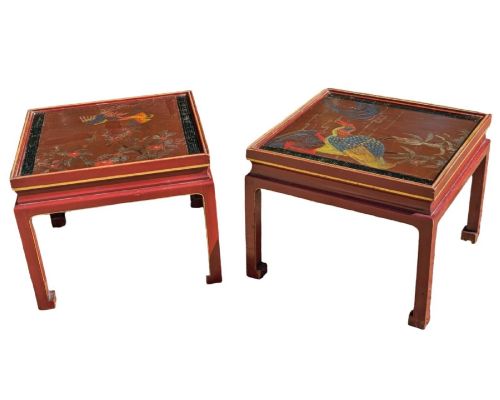

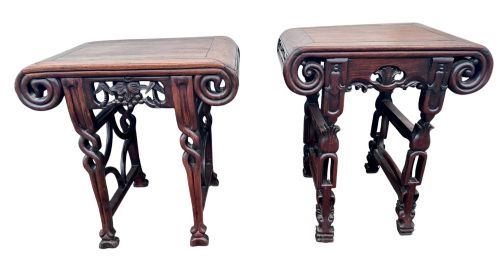


Pair Qing Dynasty Stools
Pair qing dynasty stools bring traditional seating and display pieces into modern rooms, offering matched symmetry from nineteenth-century workshops.
Pair Qing Dynasty Stools
These items comprise matched sets of seating and surface furniture originating from the Qing dynasty and nineteenth-century Chinese traditions. Buyers searching for pair qing dynasty stools encounter forms ranging from low low tables and plant stands to garden seats and barrel-shaped stools.
Originating within Chinese antique traditions, the pieces demonstrate dual purposes for interior placement or garden use. Surviving examples reflect styles catalogued as Qing Dynasty, Chinese Qing Dynasty, Chinoiserie, nineteenth-century Asian, and Chinese Traditional.
Materials and construction methods
Constructed primarily from timber, the furniture utilises dense hardwoods such as hongmu and huali, alongside ebonised wood and general wood. Carving techniques define the structural woodwork, shaping dish tops and supporting inset panels.
Decorative surfaces incorporate porcelain panels, cloisonne enamel, and lacquer work. Specific examples feature inset rouge marble tops and painted finishes alongside Famille Rose and Rose medallion porcelain glazes.
Pair Qing Dynasty Stools Retail Price Guide 2026
Typical asking prices for pair qing dynasty stools among the pieces listed under this phrase on Sellingantiques today, from the lower quarter to the upper quarter. They describe what is for sale here now, not the wider market.
Barrel-shaped ceramic garden seats double happily as impromptu side tables for a cup of tea.
Evaluating the standard of execution
Quality rests upon the precision of the carved woodwork and the integration of inset materials like marble and porcelain. Superior examples display crisp relief carving in dense hardwoods alongside stable joints and well-fitted surface inlays.
The refinement of the glaze work on porcelain garden seats and the depth of lacquer or cloisonne enamel separate standard production from finer pieces. Consistency across both items in a matched pair dictates the visual harmony of the set.
The Pair Qing Dynasty Stools Glossary
- Hongmu
- A dense tropical hardwood used in traditional Chinese furniture making. The term translates to red wood and denotes heavy, durable timber capable of fine carving.
- Huali
- A prized Chinese hardwood noted for its attractive grain and rich tone. Craftsmen utilised this timber for high-status stands and stools.
- Cloisonne
- A metalwork technique where enamel is applied within wire compartments on a surface. This method creates colourful decorative patterns on stands and tables.
- Famille Rose
- A palette of opaque enamels dominated by pink or rose colours used in Chinese porcelain decoration. It appears on nineteenth-century garden seats.
- Rouge marble
- A decorative red-toned marble variety. Slabs of this stone are set into the tops of carved wooden tables.
Pair Qing Dynasty Stools: Frequently Asked Questions
How were these stools used?
Stools and barrel-shaped seats functioned both as moveable seating within domestic spaces and as decorative supports for plants and jardinieres.
Garden seats also served outdoor settings, utilising durable ceramic construction to withstand exterior placement.
What is a garden seat?
A garden seat is a ceramic barrel-shaped form designed for use in courtyards, gardens, and interior rooms. These pieces feature glazed porcelain surfaces decorated with traditional motifs.
Examples double as occasional tables or decorative pedestals for displays.
How do I style these in a modern interior?
Matched pairs offer symmetry when placed flanking a sofa, bed, or fireplace as side or occasional tables. Hardwood stands function effectively to elevate plants or sculptures.
Porcelain garden seats introduce colour and texture as standalone accents or low display surfaces.
How do I distinguish nineteenth-century pieces?
Nineteenth-century items exhibit hand-carved hardwood construction methods consistent with workshops from periods like the Qing dynasty. Specific datings span from 1860 through 1900.
Material combinations such as inset rouge marble, cloisonne enamel, and Rose medallion porcelain characterise this era of production.