


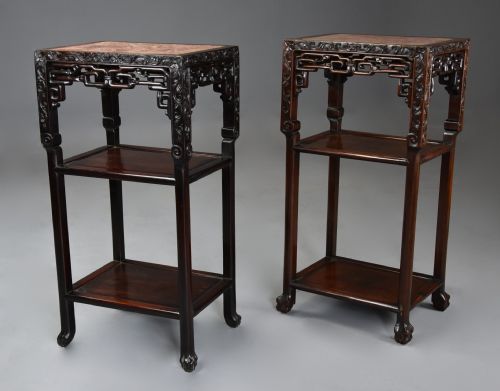
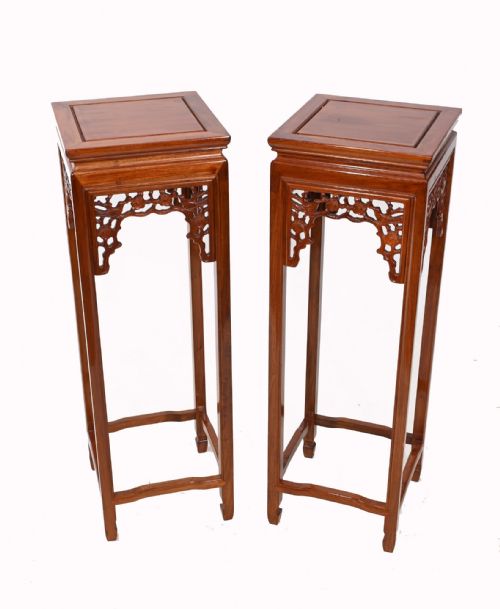


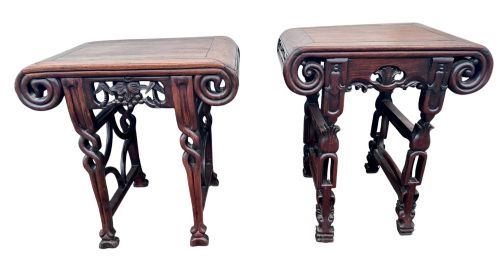


Chinese Accent Tables Pair
These chinese accent tables pair are matched decorative items built for display, offering symmetry and traditional craft to interior spaces.
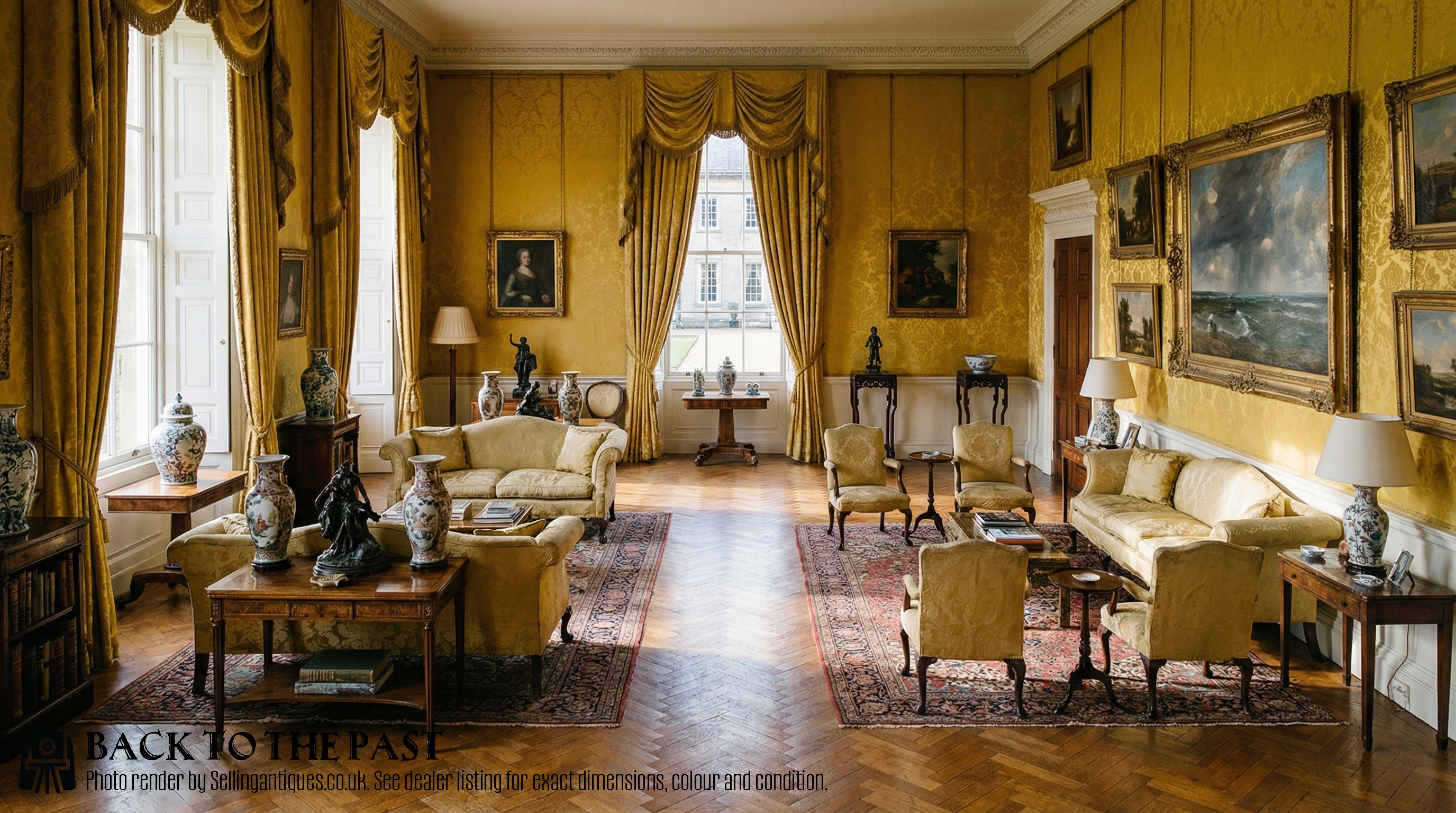
Chinese Accent Tables Pair
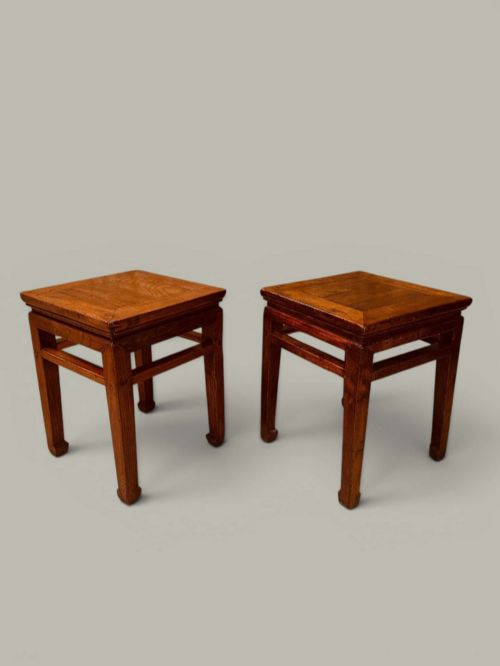
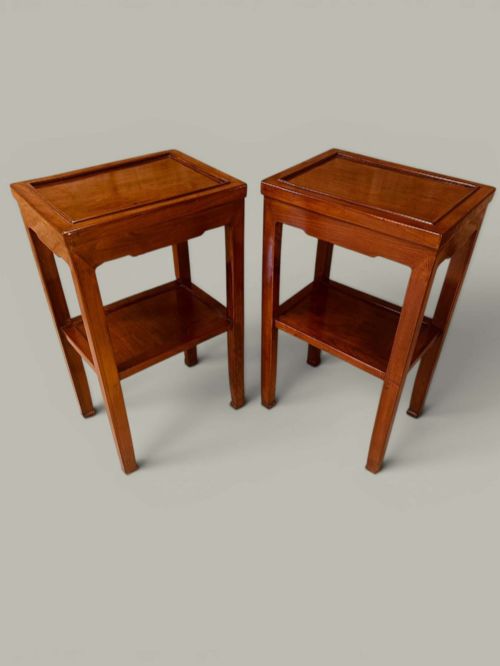
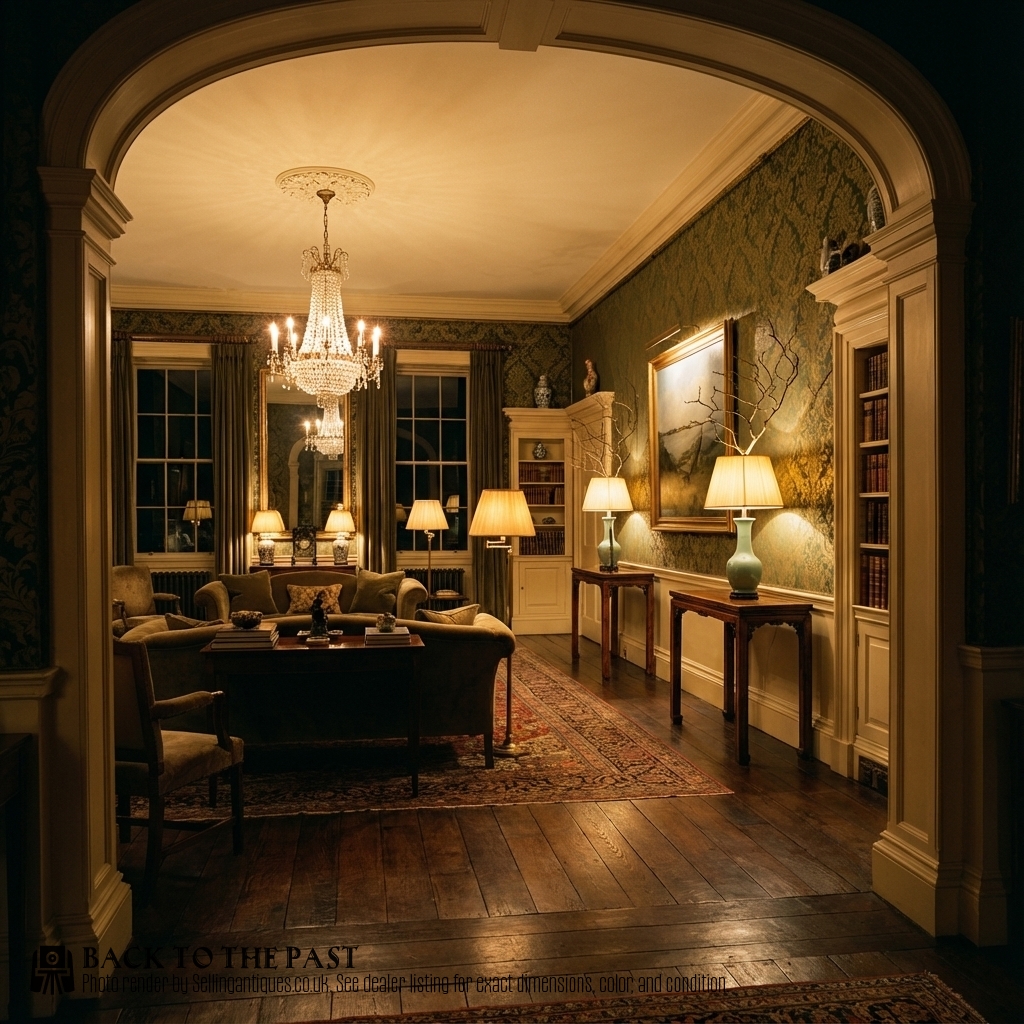
When you search for chinese accent tables pair, you are looking at matched sets of small furniture designed for display and utility within traditional and eclectic interiors. The selections found here span the nineteenth century through the early twentieth century, taking forms such as plant stands, pot stands, side tables, and low tables.
You are most likely to meet hardwood plant stands and side tables originating from the Qing dynasty and the Republic period. These pieces frequently feature carved details and paired arrangements intended to balance a room or display decorative objects symmetrically.
Materials and construction
Makers utilised dense timbers such as hardwood, elm, and hongmu, often shaping them through traditional joinery without reliance on metal fasteners. Carved surfaces reveal intricate floral or geometric motifs worked directly into the timber.
Other examples incorporate contrasting materials, combining wood frames with marble inserts, brass mounts, enamel, or red lacquer finishes. These layered finishes provide both texture and durability to the surfaces of the tables.
Chinese Accent Tables Pair Retail Price Guide 2026
Typical asking prices for chinese accent tables pair among the pieces listed under this phrase on Sellingantiques today, from the lower quarter to the upper quarter. They describe what is for sale here now, not the wider market.
Several tables were clearly built to pamper heavy porcelain pots rather than people, proving that botanical obsession predates modern houseplant trends by centuries.
Distinctions in quality
Quality rests upon the crispness of the wood carving and the selection of dense, figured timbers such as hongmu or huali. Pieces at the upper end display tight, purposeful joinery and well-balanced proportions that maintain stability across the matched pair.
The integrity of secondary materials also dictates value, such as the smooth setting of marble tops or the even application of lacquer and cloisonne work. Lesser examples may show hurried carving or mismatched grain patterns within the pair.
The Chinese Accent Tables Pair Glossary
- Hongmu
- A dense tropical hardwood prized in Chinese furniture making for its rich colour and ability to hold fine detail. It is frequently seen in nineteenth century stands and tables.
- Cloisonné
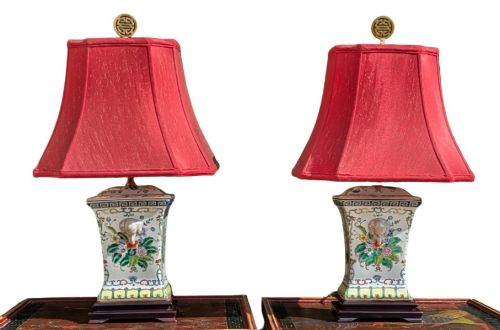
- An enamelwork technique where metal wire forms compartments on a base, which are then filled with paste and fired. This technique appears on decorative elements integrated with the tables or lamps.
- Huali
- A fragrant and highly figured rosewood utilised in high status Qing dynasty furniture. Carved stands in this material exhibit notable grain patterns.
- Demi lune
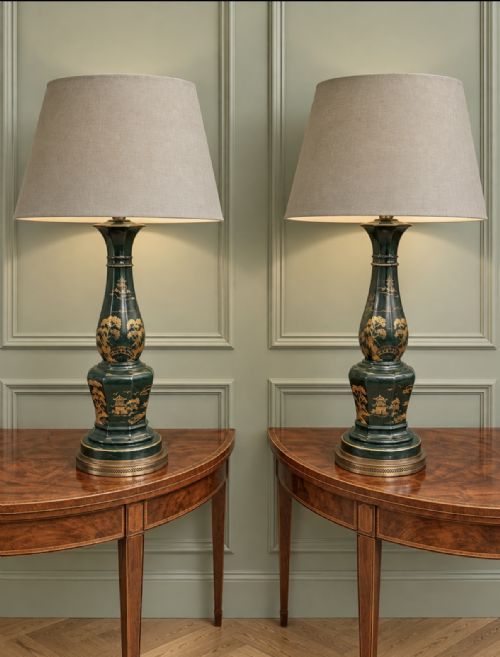
- A half moon shape used for console or side tables designed to sit flush against a wall. This form offers a compact footprint for narrow spaces.
Chinese Accent Tables Pair: Frequently Asked Questions
How were chinese accent tables pair used historically?
These tables served primarily as elevated surfaces for displaying prized possessions such as urns, bronze vessels, and large plants within formal rooms. Their paired nature allowed for balanced, symmetrical arrangement around a reception space or altar.
Over time, smaller variants functioned near seating areas to hold lighting or tea implements, adapting traditional forms for daily domestic convenience.
How do I care for antique hardwood tables?
Maintain these surfaces by keeping them away from direct heat sources and rapid humidity shifts, which can cause timber to split or warp. Dust regularly with a dry cloth and avoid commercial silicone polishes that build up over time.
Apply a traditional wax sparingly when the wood appears dry, buffing gently to preserve the natural sheen of the hardwood.
Can I use plant stands for lamps?
Plant stands and pot stands provide an ideal height and sturdy base for supporting table lamps, particularly ceramic or bronze vessels. Their compact tops keep the focus on the lighting fixture while ensuring adequate stability.
Ensure the base dimensions of your lamp match the surface area of the stand to prevent tipping.
How can I tell Qing dynasty pieces apart?
Qing dynasty pieces often display heavier proportions, dense timbers like hongmu, and deep, hand carved relief work reflecting traditional symbolism. Later Republic period examples may show leaner proportions or different surface treatments such as bright red lacquer.
Examine the construction joints underneath the top to understand the age and the manual techniques employed by the workshop.