


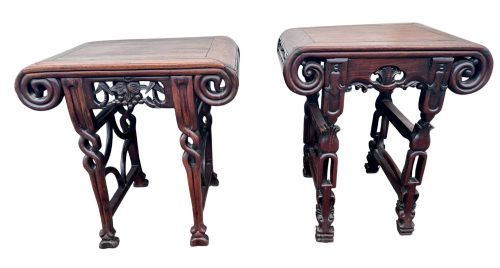


Dark Hardwood Stool
A dark hardwood stool is a sturdy seat or low support crafted from dense timber, sought after for grounding a room with deep, rich grain.
Dark Hardwood Stool
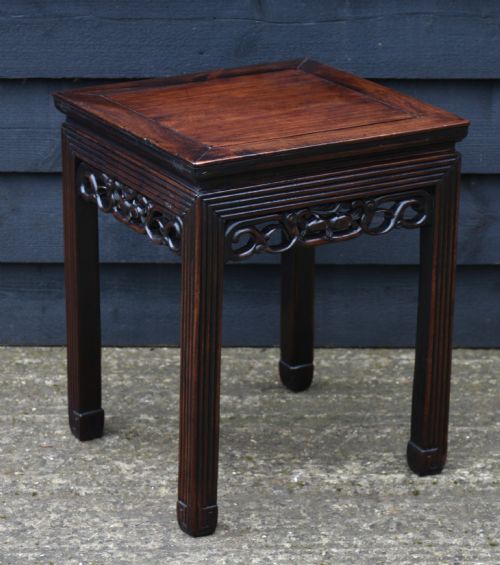
A dark hardwood stool encompasses seating and low supports originating from the nineteenth century, including Victorian, Qing Dynasty, and Anglo-Indian colonial periods. These items range from simple dressing stools and window seats to low occasional pieces, benches, and footstools.
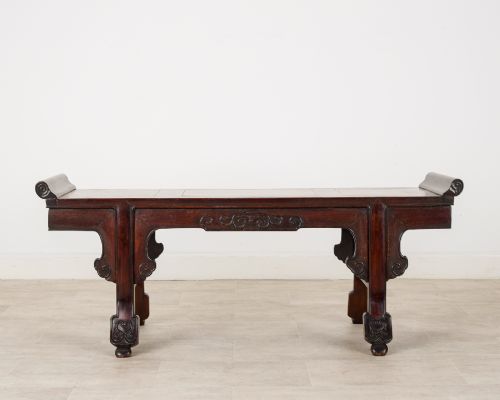
The pieces appear in various distinct forms such as square low tables, dish-top stools, barrel or drum-shaped tables, and carved footstools. Many derive from Chinese export and domestic traditions, utilising dense timbers like hongmu, huali, and rosewood.
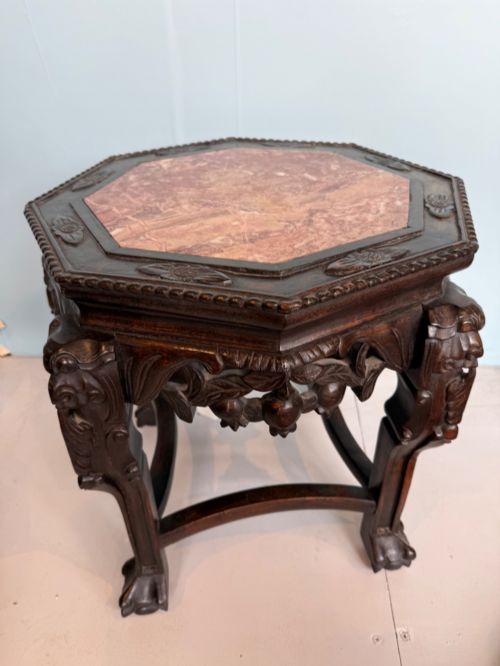
Buyers encountering this selection will find domestic furniture designed for utility and display, often combining deep-toned timber with marble inserts or intricate carved motifs. The forms bridge the gap between functional seating and decorative occasional stands.
Materials and Technique
Makers utilised dense timbers such as rosewood, hongmu, huali, and elm, relying on their natural weight and dark coloration to provide structural integrity. These woods were frequently carved in deep relief, showing floral or figural motifs associated with Qing Dynasty and Anglo-Indian workshops.
Construction techniques often incorporated traditional joinery alongside inset panels of rouge marble, bone inlay, or lacquer. Surface finishes emphasised the natural grain of the timber, allowing the dark polish to highlight the precision of the hand-carved detailing.
Listings feature nineteenth-century furniture spanning Qing Dynasty, Anglo-Indian, and Victorian styles, constructed from rosewood, hongmu, marble, and bone.
Assessing Quality
Quality rests in the depth and sharpness of the carving, where crisp linework separates superior workshop output from simpler production. The choice of timber also dictates standard, with dense, heavy hardwoods like hongmu and rosewood commanding greater visual and physical weight.
Integration of secondary materials, such as precisely fitted rouge marble tops or careful bone inlay, marks the upper tier of execution. Structural cohesiveness and the preservation of the original dark finish without heavy restoration further distinguish finer examples.
The Dark Hardwood Stool Glossary
- Hongmu
- A traditional Chinese term for dense, red-black hardwoods used in fine furniture making. It translates literally to red wood and develops a deep patina over time.
- Huali
- A prized Chinese hardwood noted for its distinctive grain patterns and rich coloration. It was frequently utilised for Qing Dynasty seating and display stands.
- Anglo-Indian
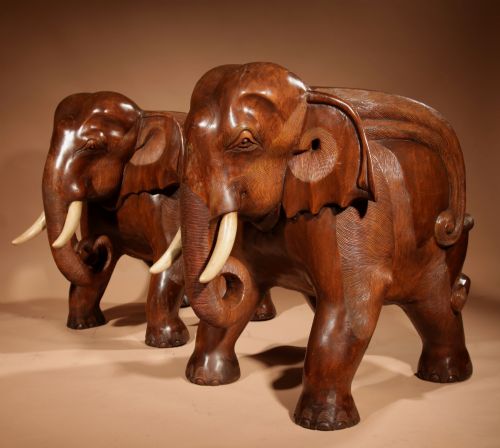
- A style of furniture produced during the British colonial period in India, blending traditional Indian carving techniques with European forms. These pieces often feature elephant motifs and dense floral patterns.
- Batavian baroque
- A regional style of furniture originating from colonial Batavia, combining Dutch domestic forms with local Southeast Asian cabinet-making traditions and dense tropical timbers.
- Dish-top
- A tabletop or stool surface with a raised, concave rim carved directly from the solid timber. This profile prevents items from sliding off the edge.
Dark Hardwood Stool: Frequently Asked Questions
How were dark hardwood stools used originally?
These pieces served as functional seating in domestic spaces, acting as dressing stools, window seats, or footstools. Their sturdy construction also allowed them to function as low supports for lamps and decorative objects.
In colonial and export contexts, they bridged the gap between utility and display. Wealthy households utilised them in reception rooms to elevate plants, porcelain, or tea services.
What is the difference between a stool and a plant stand?
Stools are constructed primarily for seating, featuring lower profiles and stable proportions designed to bear human weight. Plant stands and pedestals are generally taller and narrower, intended solely for the display of decorative items.
However, the evidence shows considerable crossover, with certain flat-topped pieces serving interchangeably as stools, lamp tables, or jardiniere stands depending on the room.
How do I date a nineteenth-century hardwood stool?
Dating relies on examining the timber species, carving style, and construction methods. Pieces marked by Qing Dynasty aesthetics or Victorian colonial influence typically display hand-carved details specific to their region of origin.
The integration of materials like inset marble or mother-of-pearl inlay also points to specific late nineteenth-century production standards common between eighteen-eighty and nineteen-hundred.
How do I care for antique hardwood furniture?
Maintain the timber by keeping pieces away from direct heat sources and sudden humidity changes, which can cause dense hardwoods to split. Regular dusting with a soft, dry cloth preserves the polished surface without the need for heavy chemical polishes.
If the stool incorporates marble tops or bone inlay, take care to clean those specific areas gently. Avoid abrasive cleaners that might damage the surrounding carved wood grain.