
Chinese Hardwood Plant Table
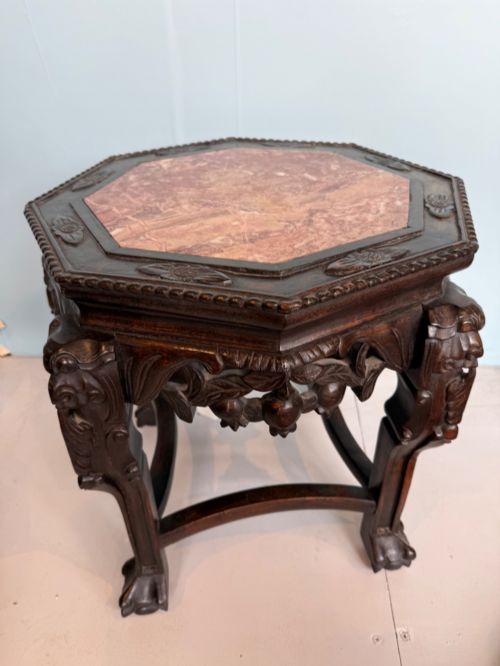
A Chinese hardwood plant table brings dense timber, carved detail, and inset marble into a room to elevate a pot or vessel.
Chinese Hardwood Plant Table
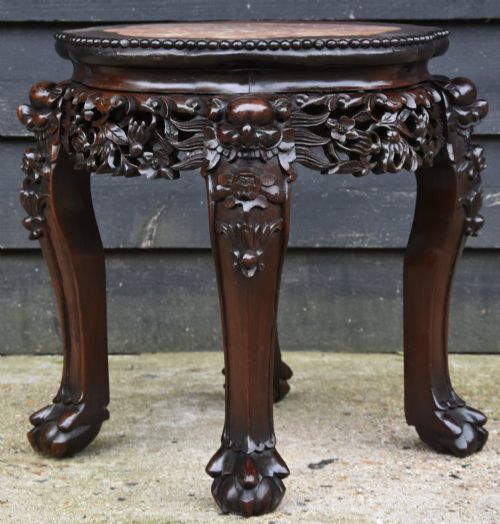
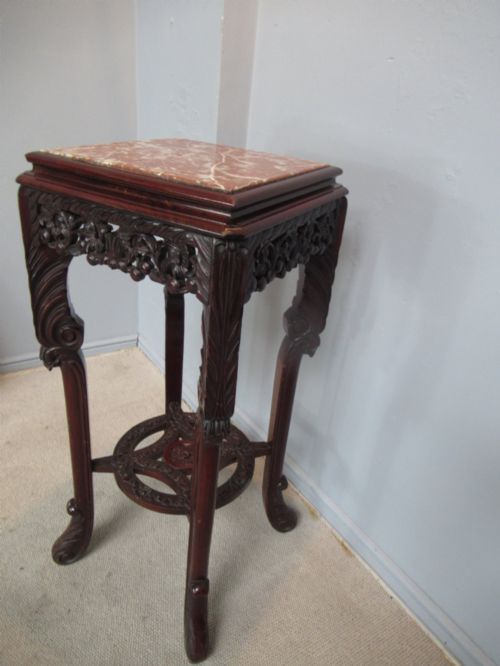
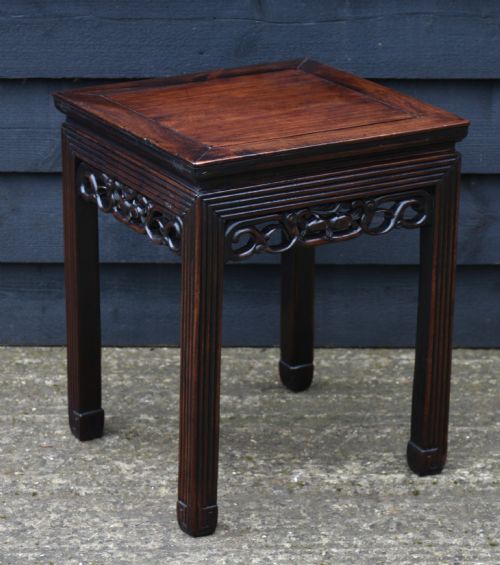
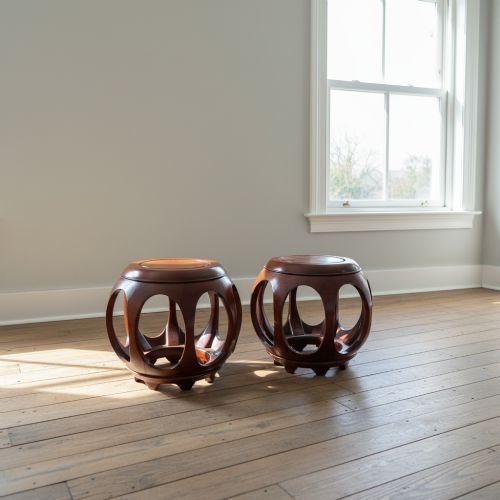
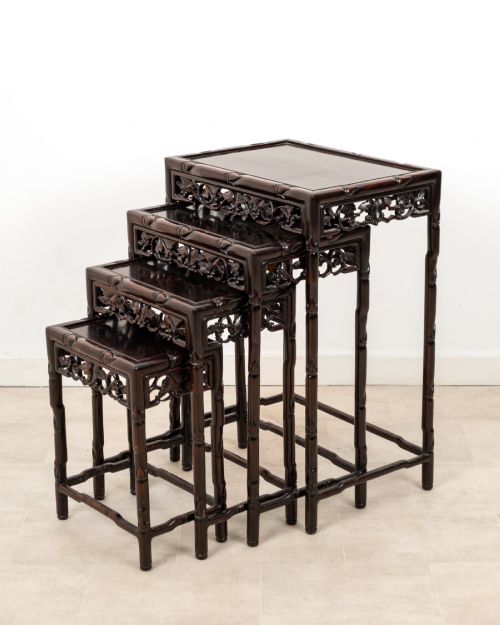
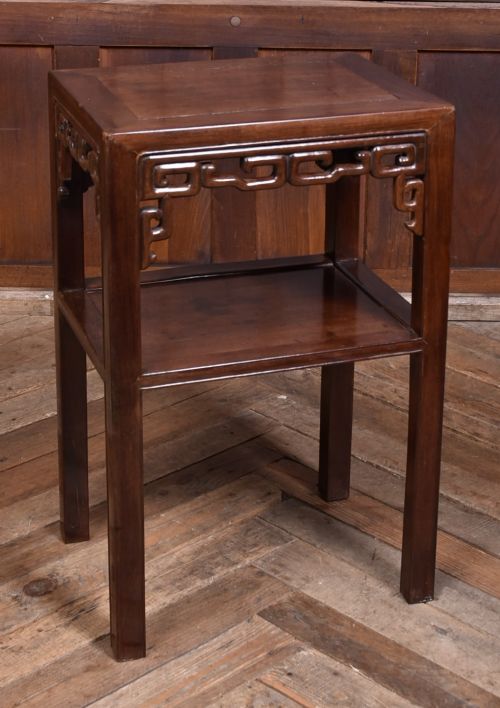
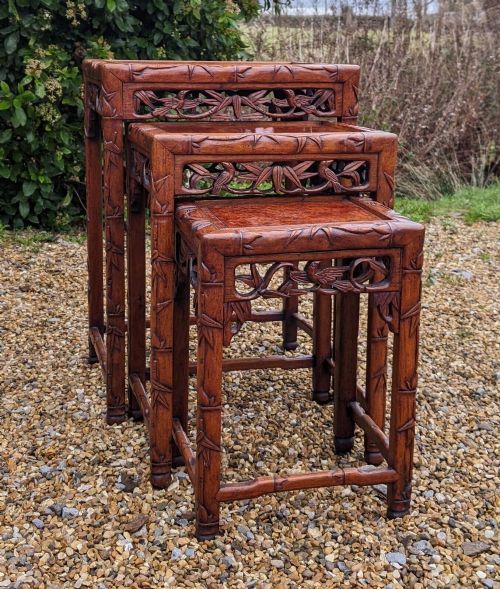
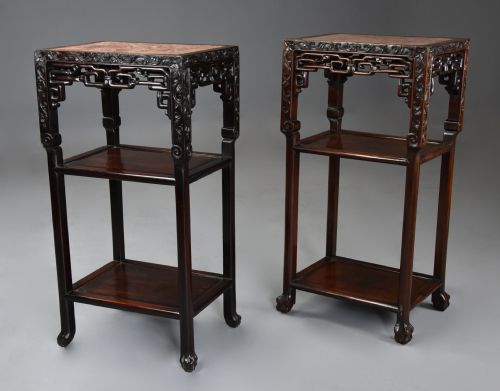
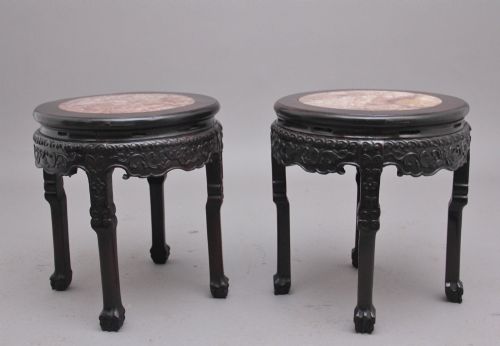
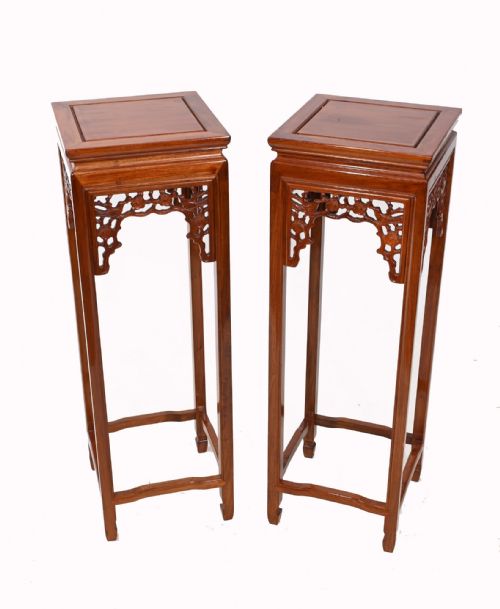
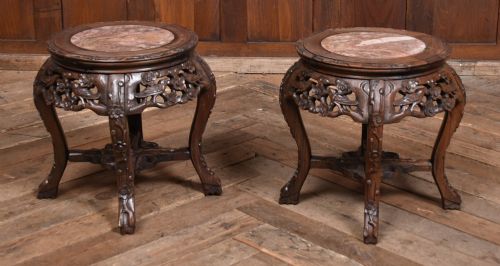
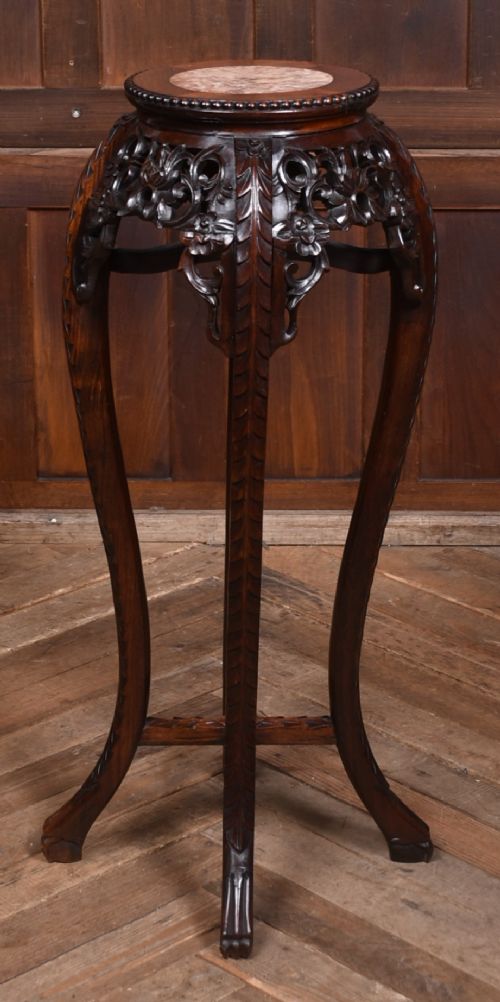
A chinese hardwood plant table is a sturdy, compact furnishing designed to display jardiniere pots, vases, and decorative objects. These pieces appear in forms such as low tables, tall pedestals, barrel stools, and nests of graduated side tables. Most examples date from the nineteenth century and the early decades of the twentieth century, often reflecting Qing dynasty traditions or export styles.
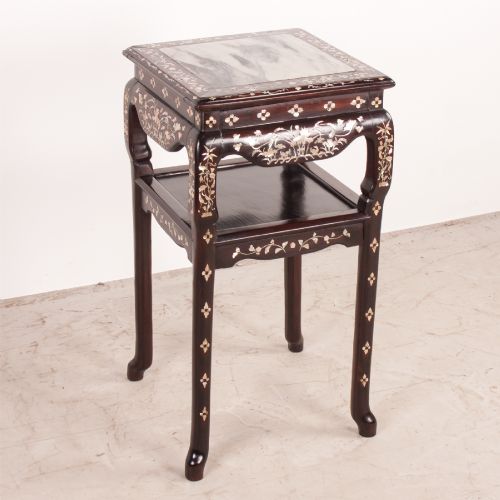
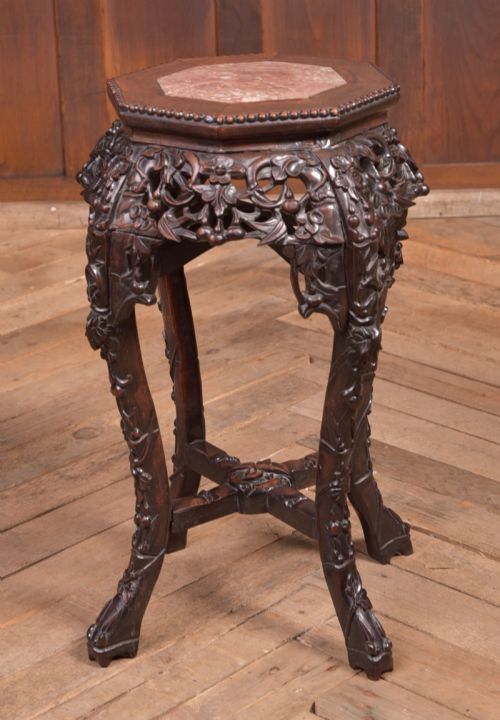
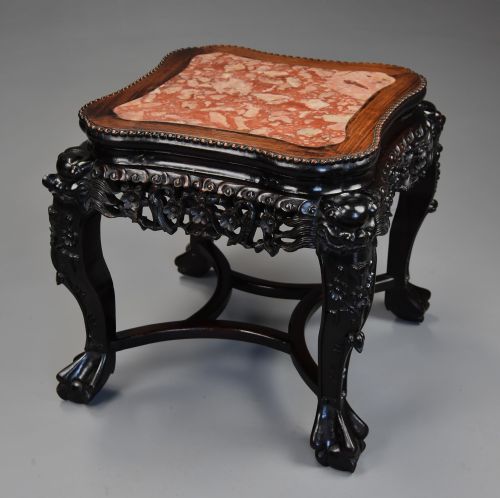
Buyers encounter stands shaped as squares, rectangles, and round vessels with carved aprons and legs. Many pieces incorporate inset marble, burr wood, or mother-of-pearl inlay within the timber frame. They function as versatile occasional surfaces, lamp tables, or dedicated pot stands in traditional and contemporary interiors alike.
Materials and construction
Craftsmen built these tables using dense timbers such as rosewood, padouk, hongmu, and huanghuali wood. These heavy hardwoods provided the structural strength required for intricate hand-carved floral, dragon, and geometric motifs. Joinery traditions relied on precise framing to support stone panels without splitting the surrounding wood.
Surfaces frequently incorporate inset sections of variegated rouge marble, porcelain panels, or mother-of-pearl inlay. The natural grain of the timber receives polish to highlight the depth and colour of the material. Burr wood and amboyna additions introduce contrasting textures to specific panels.
Distinctions in standard
Quality rests upon the crispness of the hand-carving and the selection of the timber. Dense, well-figured rosewood or huanghuali with strong grain patterns marks out superior execution. The choice and fit of the inset marble or mother-of-pearl also determine the refinement of the piece.
Construction solidity separates standard production from finer workshop output. Robust joinery in the aprons and legs ensures stability for heavy ceramic planters. Clean lines and symmetrical carving demonstrate the skill of the maker.
The Chinese Hardwood Plant Table Glossary
- Hongmu
- A category of dense, dark tropical hardwoods prized in Chinese furniture making. This heavy timber takes a fine polish and supports deep relief carving.
- Jardiniere stand
- A tall or low surface specifically built to hold a large plant pot or ceramic jardiniere. These stands often feature water-resistant stone insets.
- Padouk
- A heavy, durable reddish-brown hardwood utilised for carved stands and occasional tables. Its dense nature resists warping under heavy loads.
- Rouge marble
- A deep red or variegated stone inserted into the top of tables and stands. This smooth surface provides a cool base for resting ceramic vessels.
Chinese Hardwood Plant Table: Frequently Asked Questions
What is a chinese hardwood plant table used for?
These pieces serve primarily to elevate ceramic pots, jardiniere bowls, and ornamental vases above floor level. Their sturdy construction also allows them to function as small side tables, lamp stands, or display pedestals.
In living spaces, collectors place them beside seating or in corners to introduce height and carved detail. The inset stone or timber tops provide a stable surface for holding everyday items.
How do I identify a nineteenth-century piece?
Nineteenth-century examples display dense tropical hardwoods like rosewood or padouk combined with traditional hand-carved motifs. The weight of the timber and the depth of the relief work offer clear indicators of age.
Construction details such as traditional joinery and aged patination on the timber surface help distinguish these older pieces from later reproductions. Inset marble tops in these items often show natural variation and minor wear consistent with age.
Are these tables suitable for heavy planters?
Solid hardwood construction makes these tables exceptionally strong and capable of supporting substantial weight. The dense nature of rosewood, padouk, and hongmu prevents the frame from buckling under heavy ceramic vessels.
Tables with inset marble tops offer the added benefit of a moisture-resistant surface. This prevents water damage from potted plants from soaking into the surrounding wooden structure.
What styles are common in these listings?
Listings feature pieces spanning the Qing dynasty and Chinese export traditions. Carvings range from formal geometric designs to naturalistic floral patterns and dragon motifs.
Forms vary from low pot stands and barrel stools to tall pedestal tables and nested sets. This variety reflects the diverse requirements of historical interiors across Asia and Europe.