

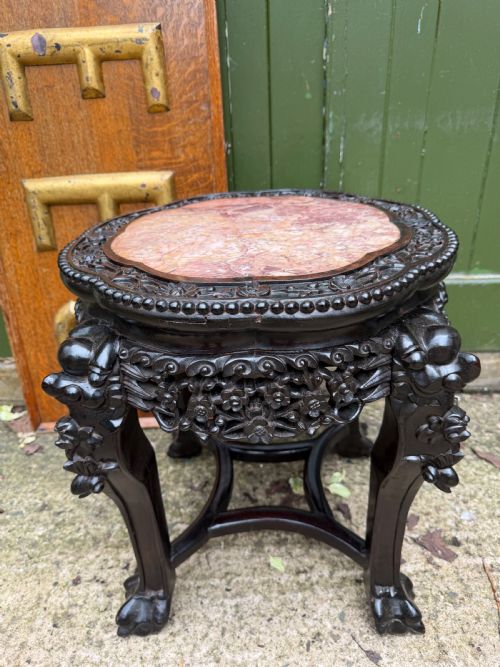


Antique Oriental Marble Stands
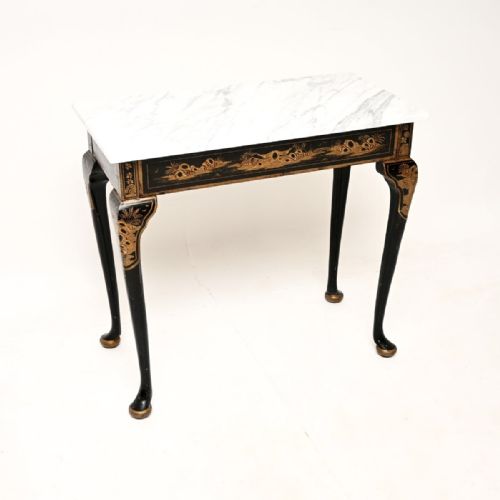
Antique oriental marble stands bring carved dense timber and cool stone together to elevate plants and display vases in a room.
Antique Oriental Marble Stands
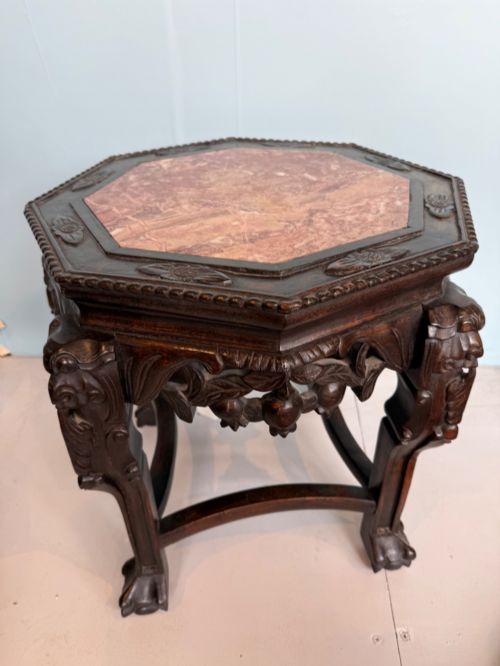
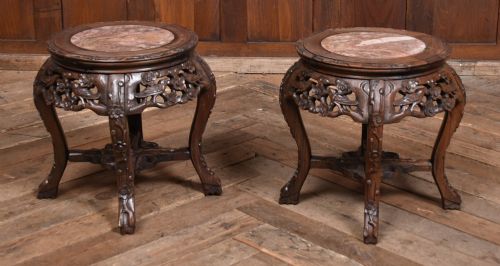
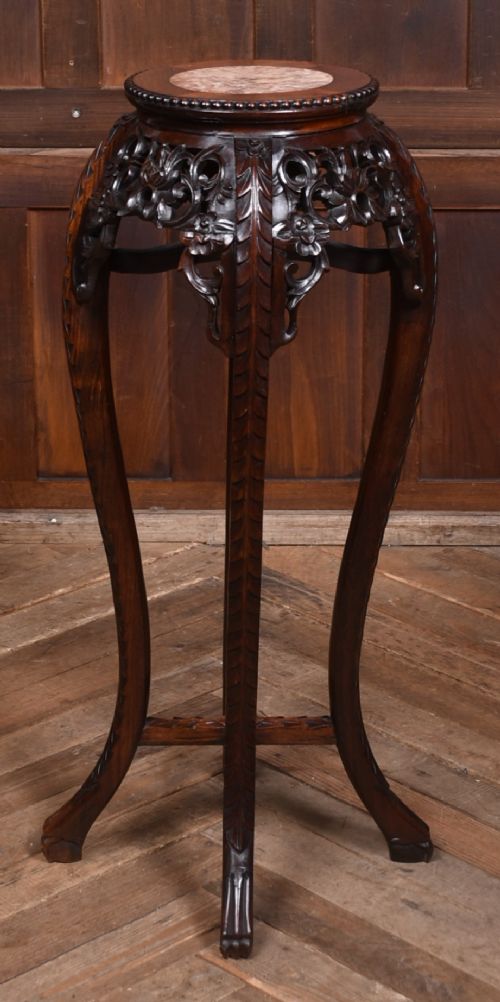
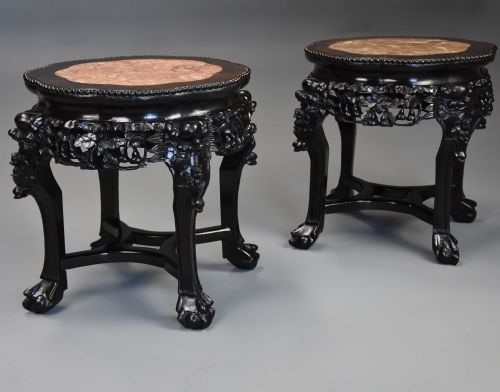
Antique oriental marble stands are low tables, jardiniere stands, and pedestal tables designed to hold decorative planters, vases, and lamps. When searching this phrase, a buyer encounters pieces primarily from the nineteenth century, including Qing Dynasty and Meiji period examples.
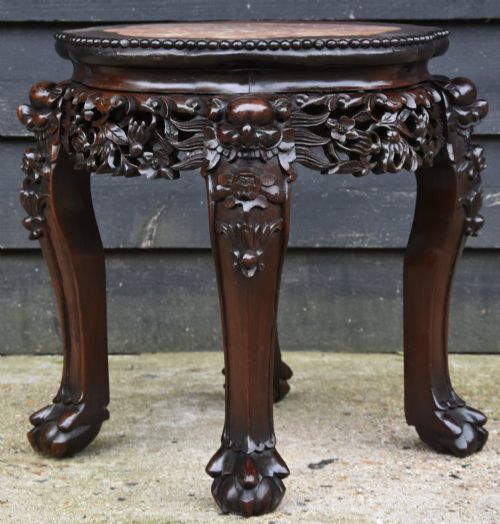
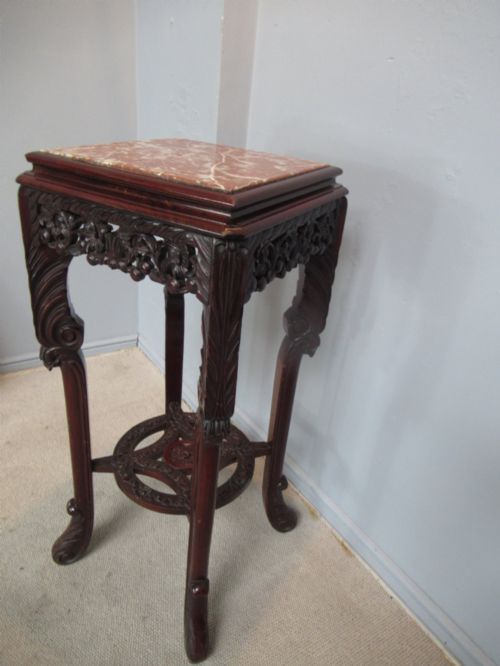
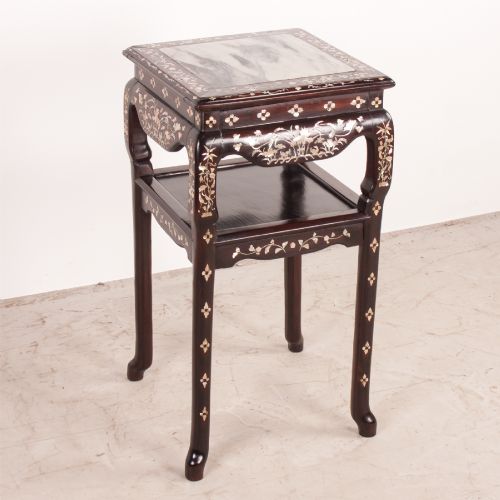
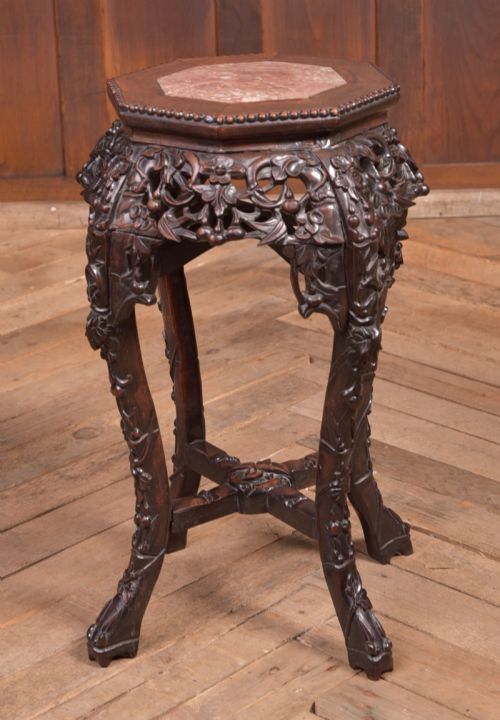
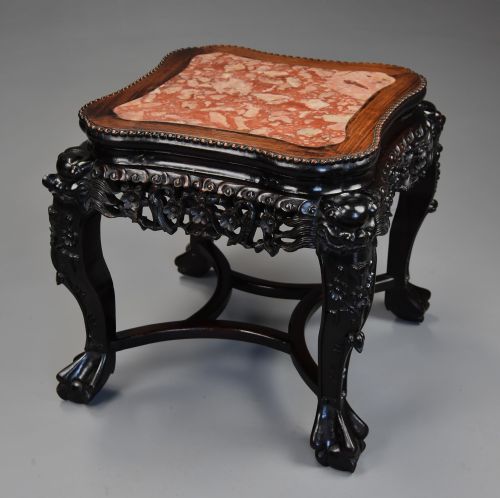
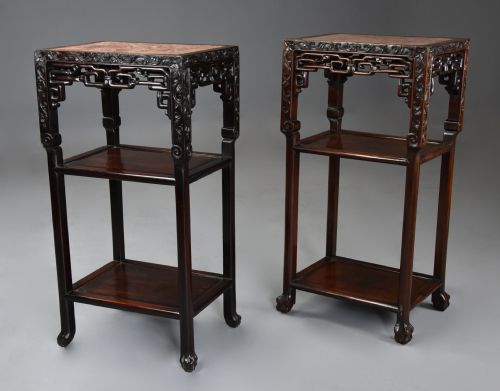
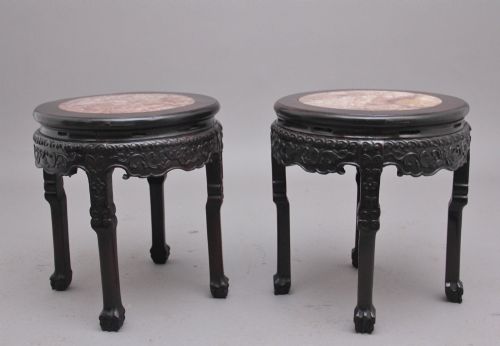
The forms span tall pedestal supports, low pot stands with shaped aprons, and occasional side tables. Most variations integrate a smooth marble inset into a heavily carved wooden frame.
Originating largely from Chinese export workshops or Japanese makers, these pieces served both functional and decorative roles in nineteenth-century interiors. The inventory here reflects this heritage through substantial hardwood constructions and traditional carved motifs.
How they were made
Makers utilised dense Asian hardwoods including rosewood, padouk, and hongmu, often ebonised or finished with clear lacquer. These heavy timbers provided the necessary structural strength to support weighty stone insets without warping.
The central feature is a fitted marble inset, frequently in rouge or variegated stone, held flush within a rebated wooden channel. Frames incorporate traditional joinery combined with deep relief carving depicting floral and natural subjects.
Materials recorded across the current inventory include rosewood, padouk, hongmu, lacquer, and quartz alongside standard hardwood and marble.
What varies in quality
Quality rests in the crispness of the timber carving and the selection of the stone inset. Superior pieces display deep, undercut foliage and grain alignment that complements the natural markings of the marble.
Construction methods also separate standard examples from finer works, notably the tightness of the joints and the use of heavy-gauge padouk or rosewood rather than lighter secondary timbers.
The Antique Oriental Marble Stands Glossary
- Hongmu
- A dense tropical hardwood favoured by Chinese cabinetmakers for traditional furniture and stands. It translates directly to red wood and ages to a deep, dark tone.
- Jardiniere
- A large ornamental pot or container for plants. These stands were specifically proportioned to elevate such planters.
- Padouk
- A heavy, durable timber with a reddish hue used extensively for carved oriental furniture. It resists shrinkage and holds intricate detail well.
- Rouge marble
- A deep reddish stone with contrasting veining used for decorative tabletops. It provides a striking visual break against dark hardwoods.
Antique Oriental Marble Stands: Frequently Asked Questions
What were antique oriental marble stands used for?
These pieces served primarily to elevate heavy porcelain fishbowls, large planters, and decorative bronze vases off the floor. Raising the vessels protected fine flooring and placed the flora closer to light.
Over time, western interiors adopted them as lamp tables, wine tables, or bedside surfaces. Their sturdy frames accommodated heavier objects while adding sculptural interest to a corner or hallway.
How do I tell Chinese export pieces from Meiji period ones?
Chinese export pieces from the nineteenth century frequently employ dense hardwoods like rosewood or hongmu with deep, organic carvings associated with Qing Dynasty aesthetics. The motifs often include prunus, dragons, or formal key-fret borders.
Meiji period stands originating from Japan display subtle variations in carving styles and wood finishes. Examining the structural joinery and regional timber choices helps clarify the specific origin.
How should I clean a marble inset top?
Use a soft, damp cloth with mild, pH-neutral soap to wipe away dust and light marks from the stone surface. Avoid acidic cleaners, vinegar, or harsh detergents that can etch or dull the polish of the marble.
Dry the stone thoroughly with a soft microfiber towel immediately after cleaning. Take care to prevent excess water from seeping into the wooden rebate surrounding the inset.
Can these stands support heavy lamps?
Nineteenth-century hardwood stands were engineered to carry the significant weight of large ceramic jardinieres and stone vessels. A heavy table lamp or bronze sculpture sits securely on the reinforced top.
Ensure the floor beneath the stand is level, as heavy stone tops can make tall pedestal versions prone to tipping if placed on deep carpet.