
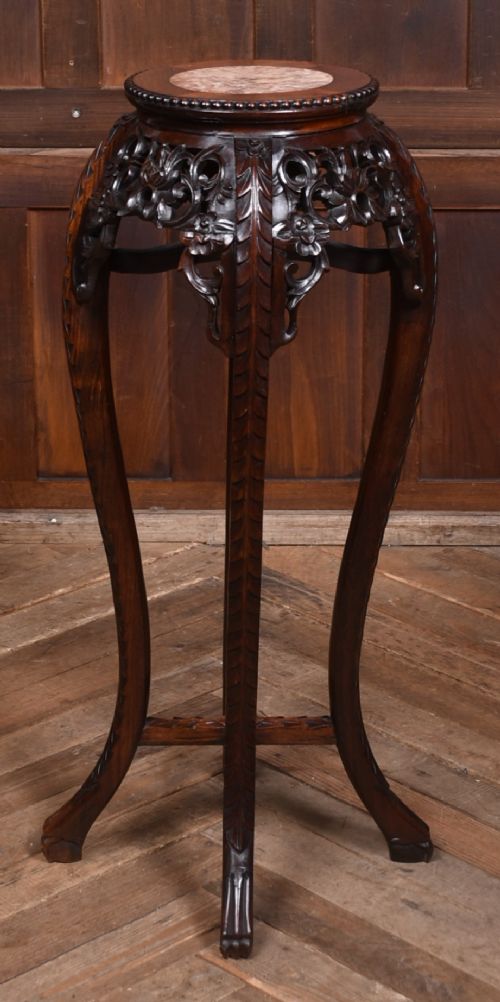
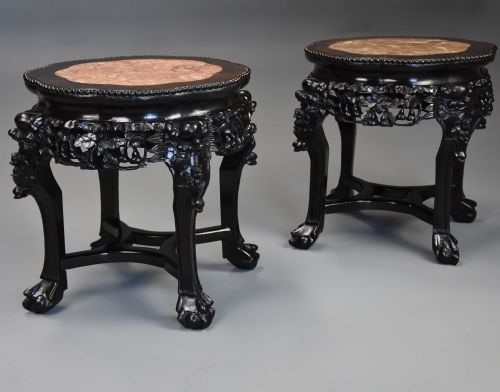

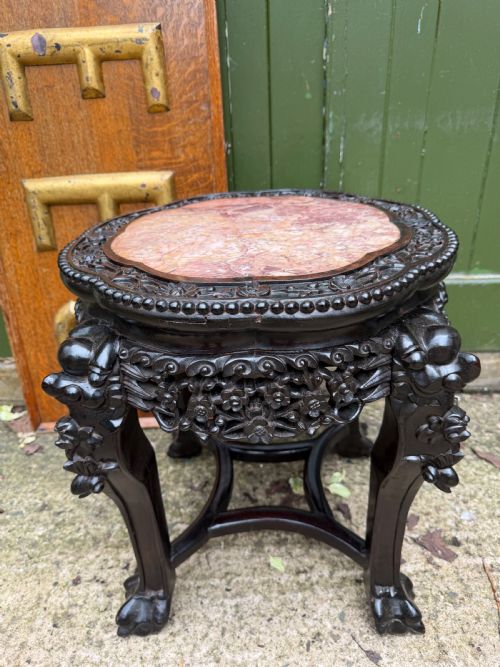


Qing Dynasty Marble Stands
Qing dynasty marble stands bring together dense exotic hardwoods and cool stone panels to elevate urns, plants and vases in traditional interiors.
Qing Dynasty Marble Stands
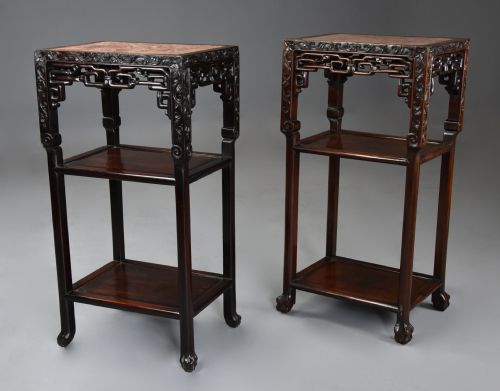
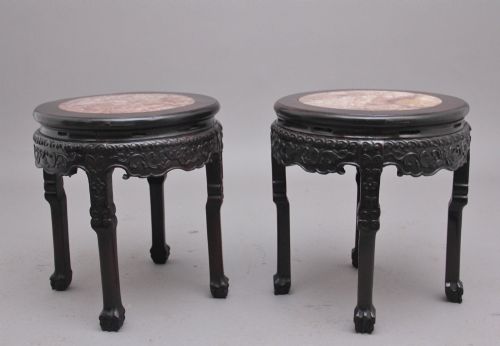
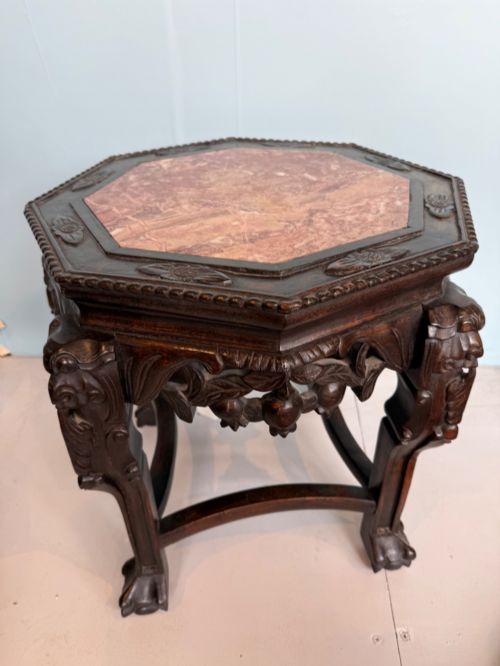
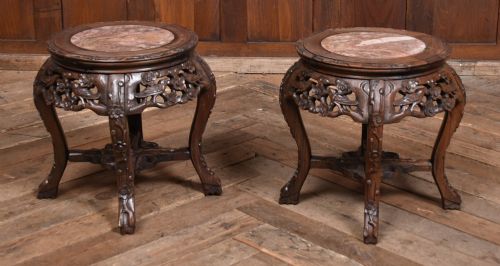
Qing dynasty marble stands comprise low tables, tall pedestals and jardiniere supports designed to hold heavy decorative items in the home. The forms span rectangular, square and multi-sided shapes intended for plants, vases, lamps and urns.
Most examples found here date from the nineteenth century, including late nineteenth-century pieces alongside traditional Chinese and export designs. Buyers encounter everything from small pot tables to substantial matching pairs intended for formal reception rooms.
How They Were Made
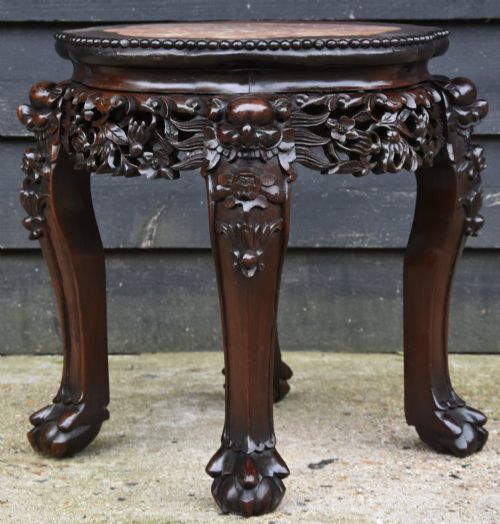
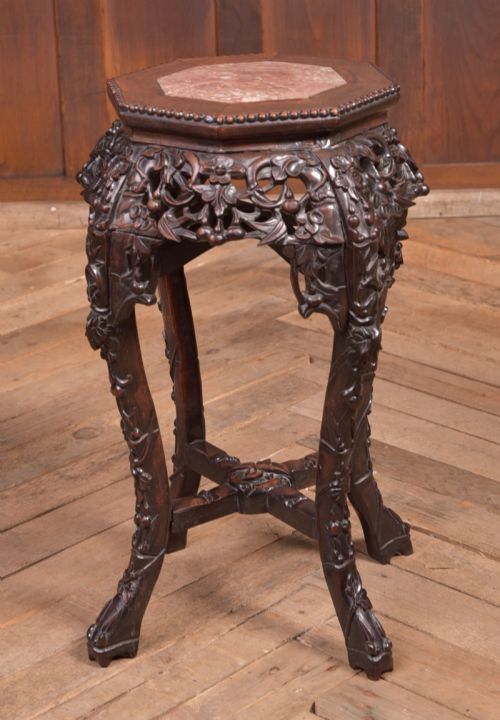
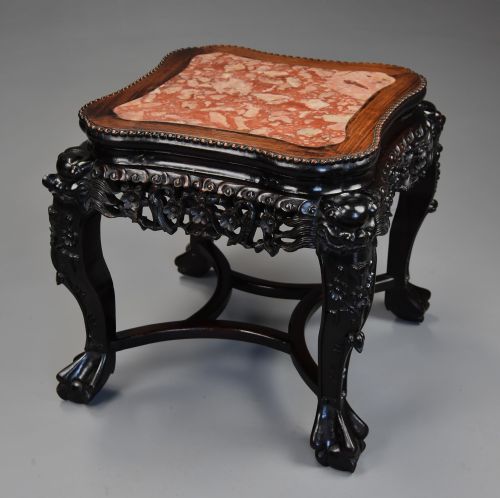
Craftsmen built these supports using dense Asian hardwoods such as rosewood, padouk, hongmu and rootwood, often carved with deep relief details. Each frame incorporates a tightly fitted central panel of natural marble or variegated rouge stone.
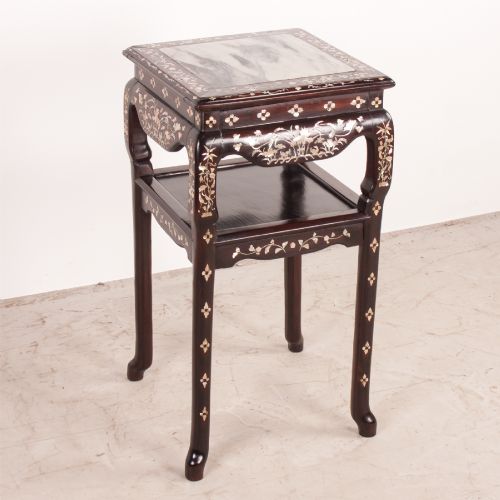
Construction relied on traditional joinery techniques to accommodate the weight of the stone insert and the heavy vessels placed upon it. Occasional examples incorporate mother-of-pearl inlay or ebonised finishes alongside standard timber surfaces.
Listings span the nineteenth century through the Edwardian era, featuring materials like rosewood, padouk, rootwood and mother-of-pearl.
What Varies in Quality
Quality rests in the crispness of the wood carving and the depth of relief work across the apron and legs. Sculpted floral and scroll motifs show varying degrees of hand-carved precision between basic utility items and formal salon furniture.
The choice of stone also distinguishes different grades of manufacture, particularly the colour variation and figuring within the inset marble top. Matched pairs and unusual timbers like rootwood or hongmu represent higher tiers of production.
The Qing Dynasty Marble Stands Glossary
- Hongmu
- A dense, heavy Chinese hardwood translated as red wood, commonly used for fine furniture and decorative stands.
- Jardiniere
- A large ornamental pot or container for plants and flowers, which these stands were specifically built to elevate.
- Padouk
- A durable tropical timber with a reddish-brown tone utilised in traditional Chinese furniture making.
- Rouge marble
- A decorative limestone featuring deep reddish and grey tones, frequently selected for table and stand inserts.
- Rootwood
- Natural timber burl or root material shaped into rustic furniture forms with organic contours.
Qing Dynasty Marble Stands: Frequently Asked Questions
What were qing dynasty marble stands used for?
These supports held heavy porcelain vessels, bronze urns and potted plants inside traditional rooms. Their elevated surfaces protected delicate flooring and displayed valued objects at eye level.
Craftsmen adapted the heights and widths to suit different display purposes, ranging from low bowl tables to tall floor pedestals.
How do I clean a marble top stand?
Wipe the stone surface gently using a soft, damp cloth without harsh chemical detergents. Natural marble absorbs liquids easily, so immediate drying prevents staining.
Treat the surrounding hardwood frame with appropriate wax polish to maintain the timber grain without touching the stone insert.
Are these stands sturdy enough for heavy plants?
The dense hardwoods and mortise-and-tenon joinery provide exceptional structural strength. They were specifically engineered to support heavy stone and ceramic vessels.
Even so, checking the stability of the lower stretcher joints ensures the frame remains secure under significant weight.
How can I tell the period of these tables?
Dating relies on timber characteristics, tool marks and the specific style of carving associated with nineteenth-century production. Late nineteenth-century examples often feature dense rosewood or hongmu alongside variegated marble panels.
Comparing the construction methods with documented export pieces helps confirm the era of manufacture.