

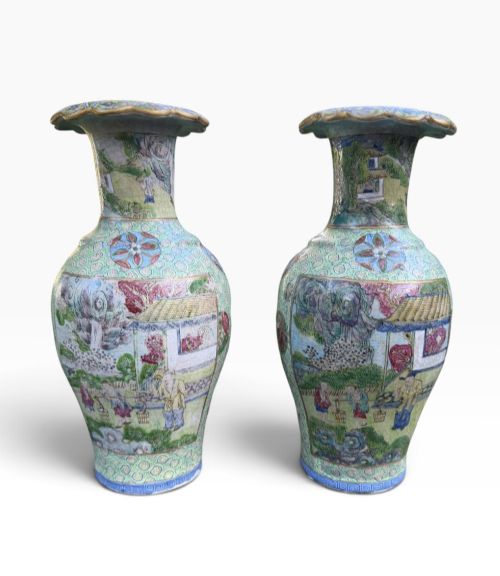
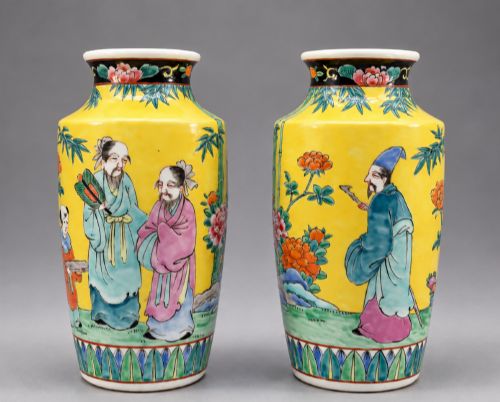
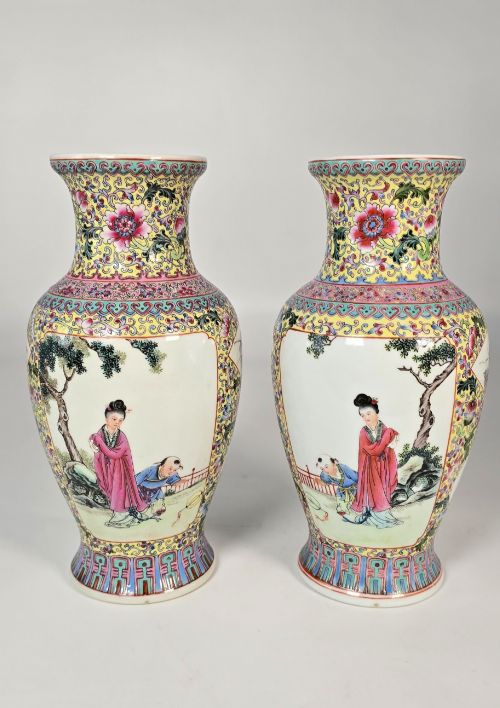
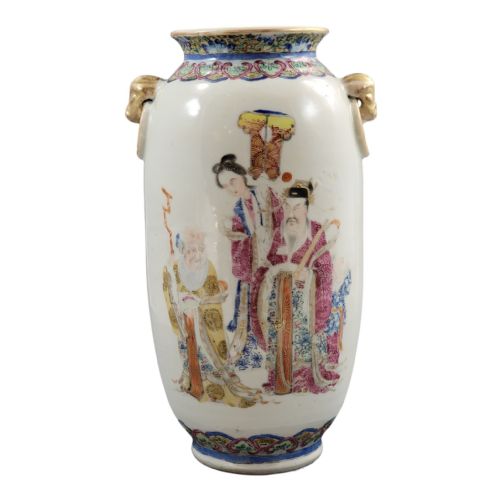


Chinese Figural Porcelain Vase
A chinese figural porcelain vase brings narrative and vibrant colour into a room, depicting scholars, ladies, and immortals across porcelain surfaces.
Chinese Figural Porcelain Vase
A chinese figural porcelain vase presents painted scenes of figures, officials, scholars, and ladies across glazed ceramic forms. These pieces span the nineteenth century and the Republican period around nineteen thirty, taking shapes such as baluster vases, ginger jars, and brush pots.
Buyers frequently encounter nineteenth century works decorated in famille rose and famille verte palettes, alongside blue and white pieces following Kangxi styles. Many examples incorporate mounts in brass, bronze, or rest upon wooden stands as table lamps or decorative jars.
Materials and Construction
Vessels are formed from vitreous porcelain and painted with mineral enamels or cobalt blue glaze before firing. Artisans applied hand-painted details including polychrome pigments and gilt highlights to articulate garments and facial expressions.
Later adaptations integrated metalwork mounts in brass and gilt bronze to convert jars and baluster vessels into lamps. Wooden stands and bases were frequently paired with larger export pieces to provide structural support.
Chinese Figural Porcelain Vase Retail Price Guide 2026
Typical asking prices for chinese figural porcelain vase among the pieces listed under this phrase on Sellingantiques today, from the lower quarter to the upper quarter. They describe what is for sale here now, not the wider market.
Listings feature periods spanning from eighteen fifty through the nineteen thirties, encompassing Qing dynasty and Republican eras.
Markers of Quality
Quality rests in the precision of the brushwork and the expressive detail of the figural scenes depicting scholars and court ladies. Finer examples display meticulous control over enamel layering and cobalt blue depth, avoiding muddy tones or rushed outlines.
The integrity of the porcelain body and the condition of original mounts or four character base marks influence the standing of a piece. Well-preserved glaze surfaces without heavy restoration distinguish superior nineteenth century and Republican period examples.
The Chinese Figural Porcelain Vase Glossary
- Famille Rose
- A palette of opaque pink and red enamel colours introduced during the Qing dynasty. This technique allowed for nuanced shading in robes and floral borders.
- Famille Verte
- A transparent green-dominated enamel palette typical of earlier Qing styles. It relies on iron red, yellow, and blue alongside dominant greens to render figures.
- Baluster Vase
- A tall vessel form with a rounded body tapering toward a wide foot and a flanged neck. This silhouette provides a broad canvas for narrative figure scenes.
- Bitong
- A cylindrical brush pot used by scholars for holding calligraphy brushes. These items share the figural painting traditions found on larger vases.
Chinese Figural Porcelain Vase: Frequently Asked Questions
How do I date a chinese figural porcelain vase?
Dating relies on stylistic markers, palette types, and base markings. Nineteenth century pieces often show dense famille rose enamelling, whereas Republican works from nineteen thirty display distinct brushwork.
Material details such as the composition of the porcelain body and accompanying mounts also help establish the chronological context.
Were these vases made for export?
Many surviving examples were produced specifically for export markets in Europe and the West. These pieces often combined traditional Chinese figural painting with western mounting styles like brass or gilt bronze.
Export pieces frequently adapted traditional vessel forms into lamps or decorative display items.
What do the figural scenes represent?
The painted figures typically depict scholars, court ladies, immortals, and officials engaged in leisurely pursuits or philosophical gatherings. Common subjects include figures like Magu and Shoulao representing longevity and prosperity.
These narratives draw from traditional folklore, literature, and historical court life.
Can converted lamp vases be restored to original jars?
Conversion into lamps sometimes involved drilling through the base or adding fixed metal mounts. Reversing these alterations depends entirely on the nature of the original mount and whether the base was compromised.
Most collectors choose to keep the pieces in their adapted state if the wiring and mounts are stable.