
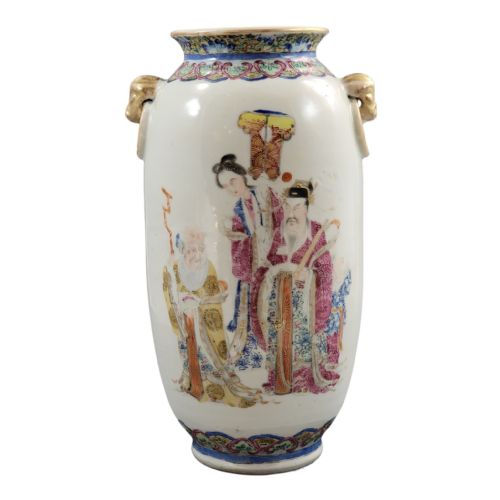


Chinese Figural Ceramic Vase
A chinese figural ceramic vase brings the narrative weight of court officials, immortals, and scholars directly into a room.
Chinese Figural Ceramic Vase
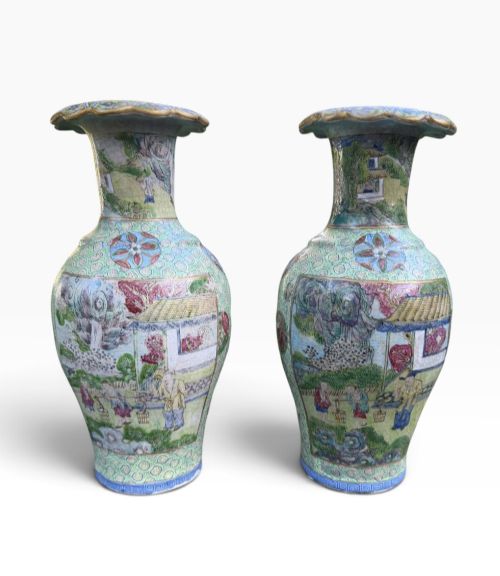
A chinese figural ceramic vase represents vessels that incorporate human figures, immortals, and narrative scenes into their design. The pieces available span the nineteenth century through the early twentieth century, taking the form of baluster vases, ginger jars, brush pots, and vessels mounted in brass.
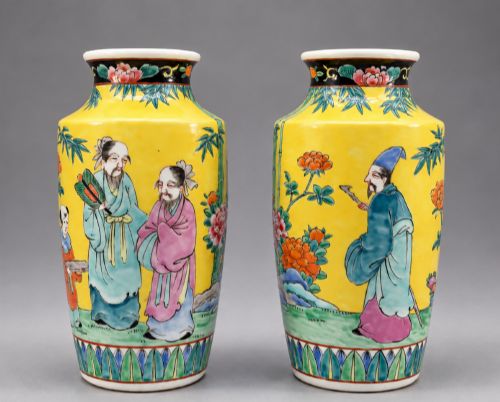
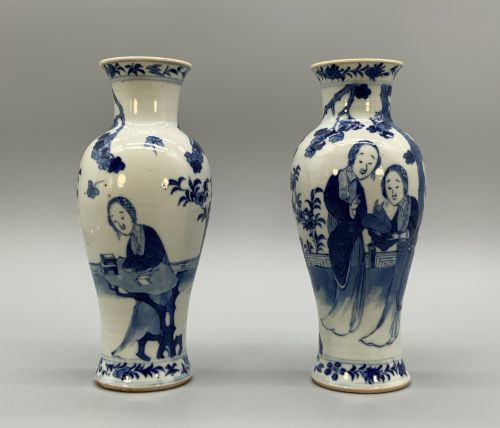
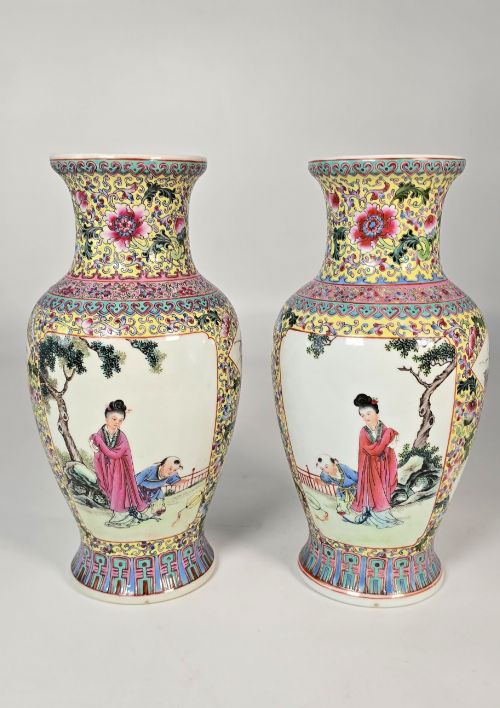
Buyers will encounter pairs of famille rose porcelain vases alongside blue and white pieces decorated with ladies in Kangxi style. Regional kilns also appear, represented by yellow-glazed Shiwan figures and enamelled Yixing stoneware from the nineteenth century.
Materials and Techniques
The construction of these pieces relies primarily on porcelain and stoneware, shaped into substantial vessels and finished with various glazes. Cobalt blue underglaze and polychrome enamels provide the palette for narrative scenes, complemented by crackleware effects and hand-painted details.
Secondary materials emerge in specific pieces, such as brass mounts fitted to porcelain bodies and Yixing clay utilised for stoneware vessels. Makers applied coloured grounds, including yellow, to frame figures like Magu, Shoulao, and Hotei.
Shiwan potters delighted in rendering Hotei with such generous proportions that his happy belly practically demands its own zip code.
Factors of Distinction
Distinction in these works rests upon the execution of the hand-painted figural scenes and the crispness of the surrounding details. Mastery shows in the expression and posture of scholars, officials, and immortals rendered across the ceramic surface.
The choice of ground colour and the integration of secondary elements like brass mounts also mark the graduation between standard production pieces and more ambitious works. Kiln output from centres such as Jingdezhen and Shiwan displays varying degrees of painterly precision.
The Chinese Figural Ceramic Vase Glossary
- Baluster
- A vase shape characterised by a rounded body that tapers towards a narrow neck and flares at the rim. This form provides a wide canvas for narrative figural scenes.
- Bitong
- A cylindrical brush pot used on a scholar's desk for holding writing brushes. These often feature carved or painted figural relief scenes mirroring larger vase designs.
- Crackelware
- Pottery or porcelain featuring a network of fine cracks intentionally created in the glaze layer during cooling. It adds texture and an antique appearance to the surface.
Chinese Figural Ceramic Vase: Frequently Asked Questions
What are chinese figural ceramic vases?
These are ceramic vessels decorated with painted or glazed depictions of people, including scholars, ladies, officials, and immortals from Chinese history and mythology.
They encompass various forms such as baluster shapes, ginger jars, and brush pots produced across the nineteenth and early twentieth centuries.
How were these vases used originally?
Vases served as decorative objects within scholar's studios, reception halls, and domestic interiors, often displayed in symmetrical pairs.
Some vessels functioned alongside specific furnishings or were later adapted as table lamps during the nineteenth and twentieth centuries.
How should I display a ceramic vase?
Place them on stable surfaces away from high traffic areas to protect delicate enamel decoration and any applied brass mounts.
Allow sufficient space around baluster shapes and ginger jars so the figural narratives painted across the surface remain fully visible.
How do I identify nineteenth century pieces?
Look for stylistic indicators such as famille rose palettes, yellow ground enamels, and specific figural subjects like Hotei or Magu.
Reference marks to the base, such as four-character inscriptions, alongside regional potting characteristics from Jingdezhen or Shiwan help contextualise the period.