




Chinese Famille Rose Vase
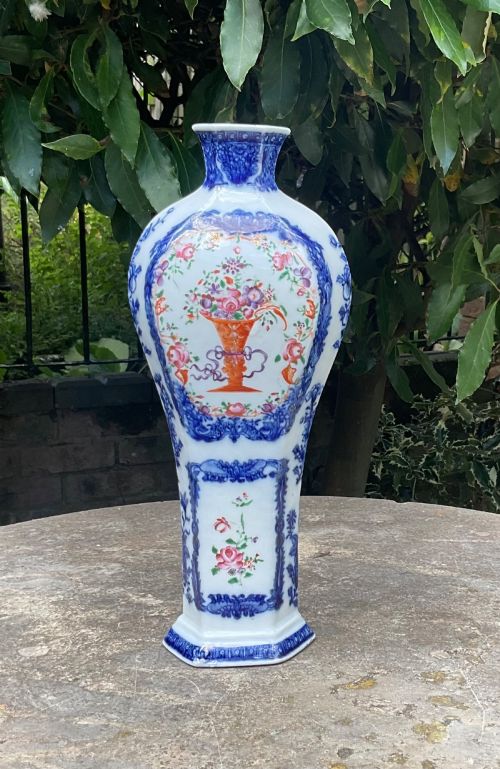
A chinese famille rose vase brings vibrant enamel palettes and intricate pictorial scenes into an interior, whether in a traditional baluster form or converted for lighting.
Chinese Famille Rose Vase
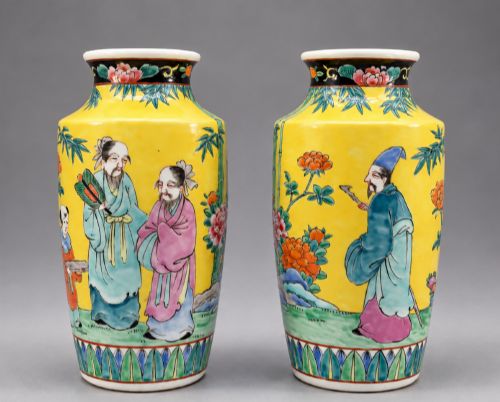
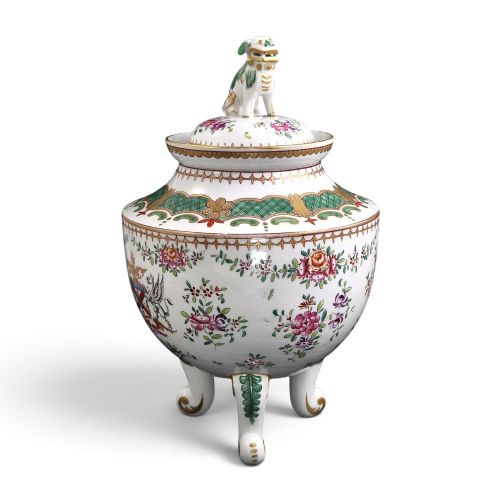
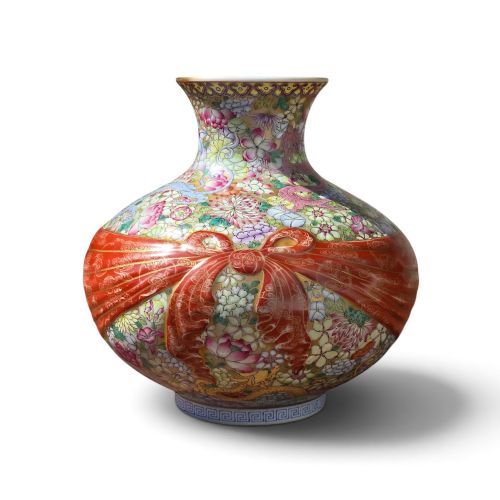
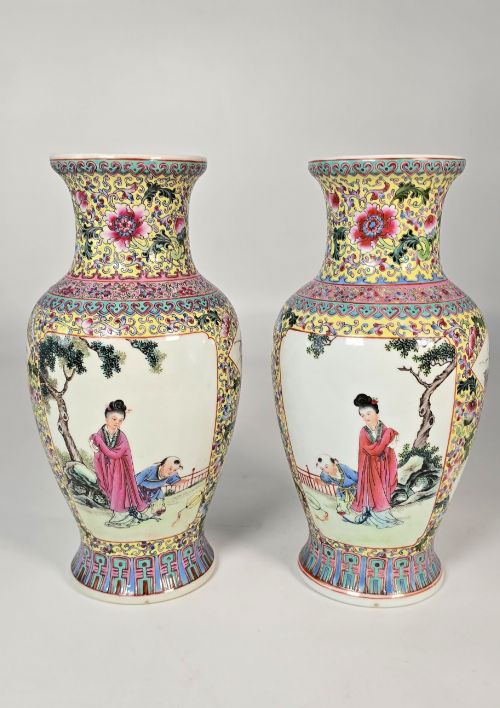
A chinese famille rose vase encompasses a range of ceramic vessels decorated in opaque and translucent enamels dominated by pink or rose tones. Collectors frequently encounter pieces originating from the nineteenth century, including Canton production and Qing dynasty examples, alongside later Republican period works.
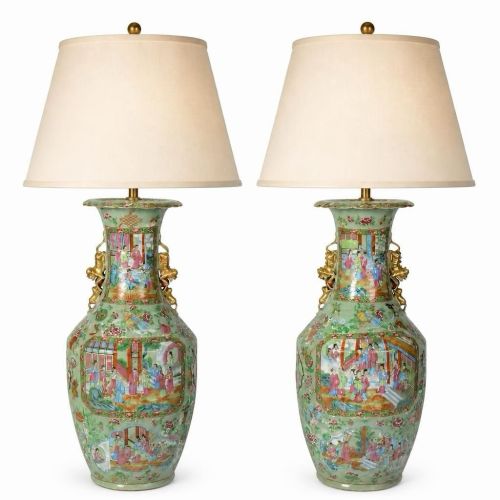
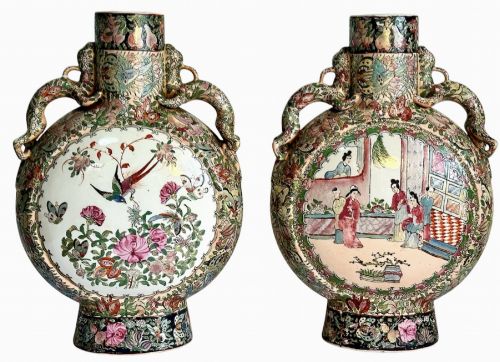
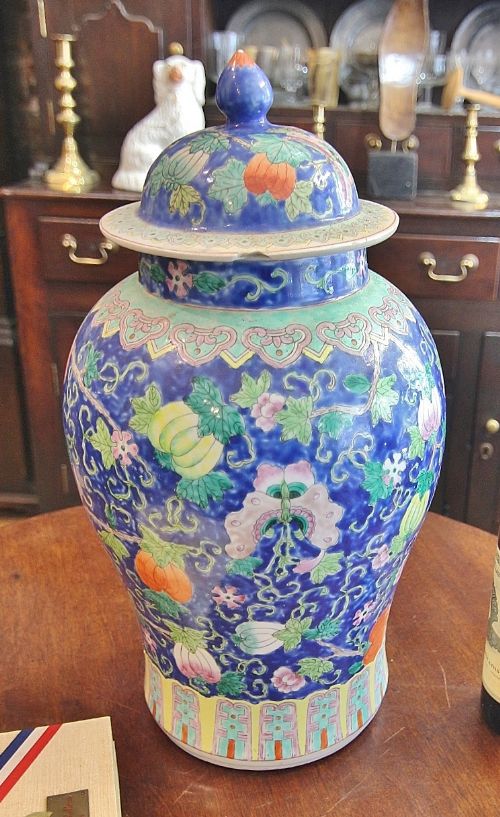
Beyond standard cabinet vases, the form extends to lidded ginger jars, moon flasks, monumental floor vases, and brush pots. Many examples have been adapted over time to function as table lamps, pairing porcelain bodies with brass mountings, fabric shades, and silk cords.
How They Were Made
Potters shaped high-fired porcelain bodies, sometimes applying moulded details or relief elements such as dual dragons and handles. Artisans then hand-painted the surfaces using a diverse palette of mineral-based enamels, incorporating gold leaf highlights to accentuate motifs of birds, flowers, and scholarly figures.
Kiln firing fixed the vitrified colours to the glaze, resulting in durable decorative surfaces. Additional mounting often involved wood bases or ormolu mounts added in later periods to suit Western interiors.
Listings feature porcelain, enamel, ormolu, and wood across forms ranging from small brush pots to monumental floor vases.
What Varies In Quality
The precision and density of the hand-painted enamels dictate visual distinction, with superior pieces displaying finely delineated facial expressions on figures and meticulously rendered flora. Earlier dynastic examples or pieces bearing specific imperial marks often command greater attention from collectors.
Condition and originality play a significant role, particularly regarding the preservation of the enamel surface and the integrity of any associated covers or matched pairs. Conversion to lamps alters the original vessel form, though professionally executed adaptations remain common.
Samson Paris·Gao Hengsheng
The Chinese Famille Rose Vase Glossary
- Famille rose
- A major palette of Chinese ceramic enamels introduced in the eighteenth century, distinguished by opaque pink or rose colours derived from colloidal gold. This palette allowed for nuanced shading and intricate pictorial designs.
- Canton
- A major trading port in southern China responsible for exporting substantial quantities of decorated porcelain during the nineteenth century. Pieces from this centre often feature dense panel decorations filled with figures and flowers.
- Moon flask
- A flattened circular ceramic vessel with a narrow neck and two small loop handles, supported on an oval foot. This ancient bronze shape was frequently replicated in porcelain during the Qing dynasty.
- Garniture
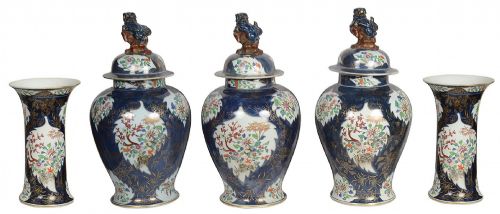
- A set of matching ceramic vessels, usually comprising vases and beakers, designed to be displayed together on a mantelpiece or cabinet. Complete surviving sets are sought after by collectors.
- Rouleau vase
- A straight-sided cylindrical vase with a short neck and flat rim, named after its resemblance to a rolled scroll. The form became popular during the Qing dynasty for elaborate enamel decoration.
Chinese Famille Rose Vase: Frequently Asked Questions
How do I identify a nineteenth-century piece?
Nineteenth-century examples typically display robust potting and hand-painted enamel palettes that reflect the output of Qing dynasty kilns in Jingdezhen and Canton. Examining the wear on the footrim and the characteristics of the glaze helps determine age.
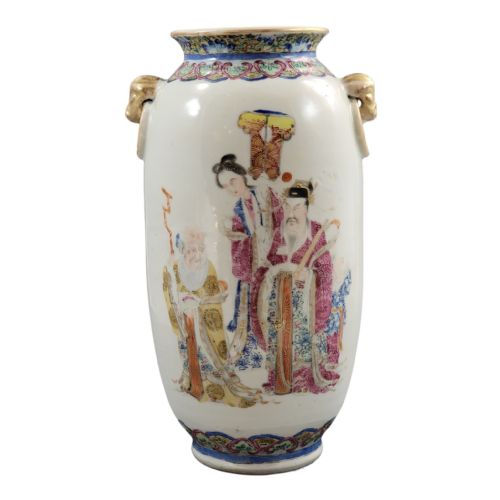
Makers and decorators during this era often utilised specific motifs, such as court figures and floral borders, which evolved from earlier eighteenth-century designs.
Were these vessels originally made as lamps?
Most of these vessels started life as decorative display pieces, ginger jars, or floor vases intended for interiors. Conversion into table lamps occurred frequently in European and American homes during the nineteenth and twentieth centuries.
This adaptation involved drilling the base or mounting the porcelain with brass and ormolu hardware to hold electrical fittings.
What is Rose Medallion decoration?
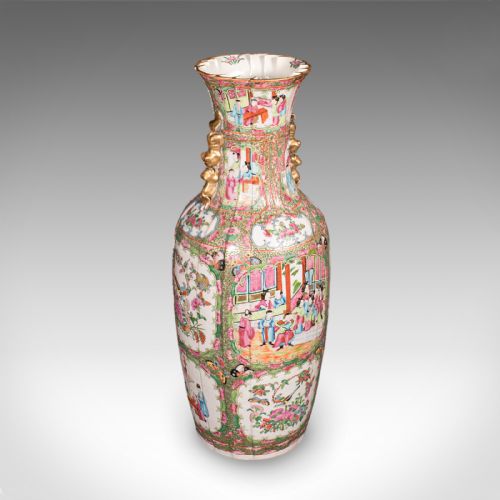
Rose Medallion is a distinct style of Cantonese export porcelain featuring segmented panels filled with alternating scenes of figures, birds, and butterflies. These panels are set against a dense background of green foliage and pink flowers.
This decorative scheme became extremely popular in the West during the Victorian era and remains instantly recognisable.
How should I clean a painted porcelain surface?
Dusting gently with a soft, dry brush preserves the delicate enamel pigments and any applied gold leaf highlights. Avoid using liquid cleaners or chemical agents, which can damage the vitrified surface over time.
For pieces adapted as lamps, take care around the electrical wiring and any fabric shades during routine maintenance.