
Chinese Export Porcelain Dishes
Chinese export porcelain dishes bring together Eastern craftsmanship and Western taste through durable ceramic bodies and hand-painted mineral pigments.
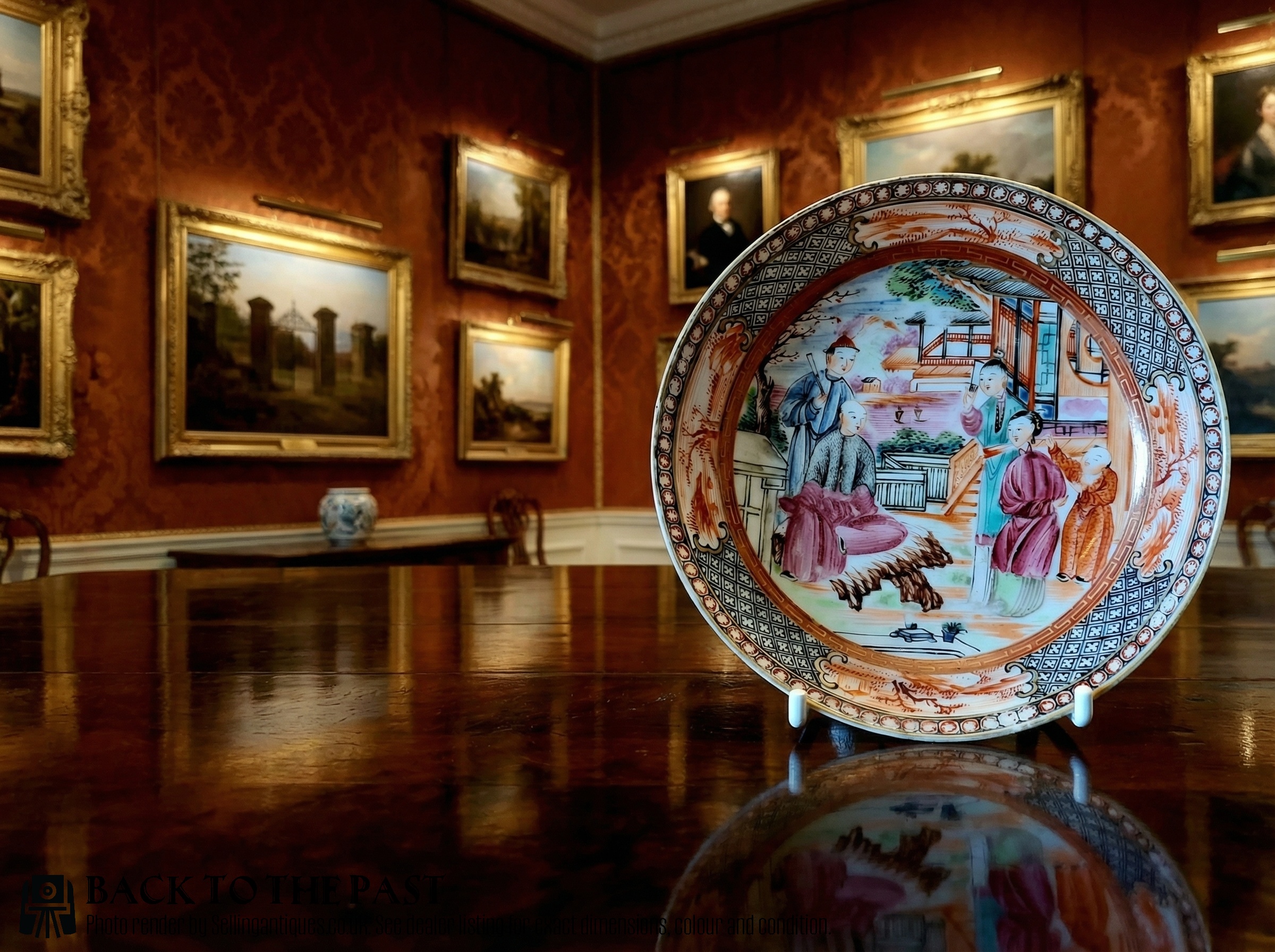
Chinese Export Porcelain Dishes
Chinese export porcelain dishes comprise plates, platters, chargers, and serving vessels created in workshops across China specifically for overseas markets. These objects bridge traditional Eastern manufacturing methods with the decorative demands of European and American interiors.
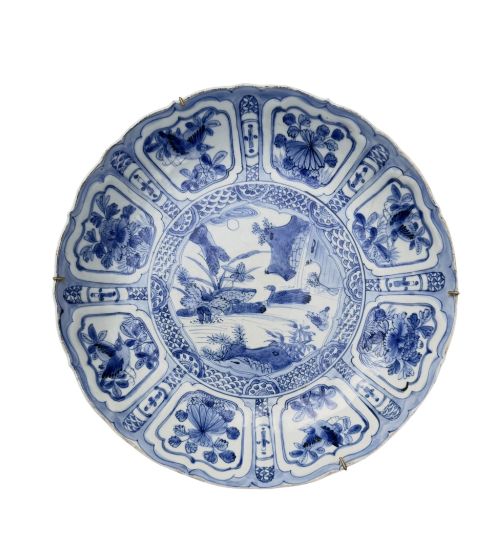
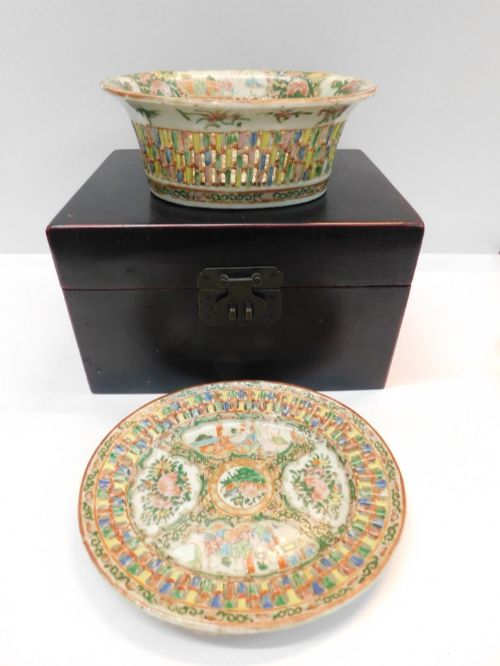
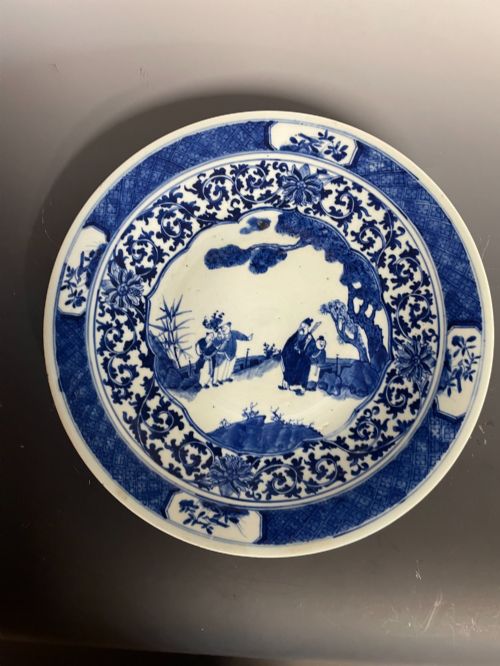
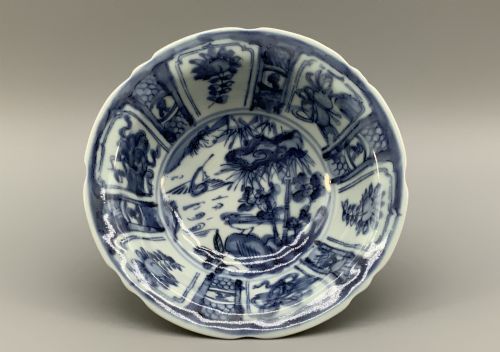
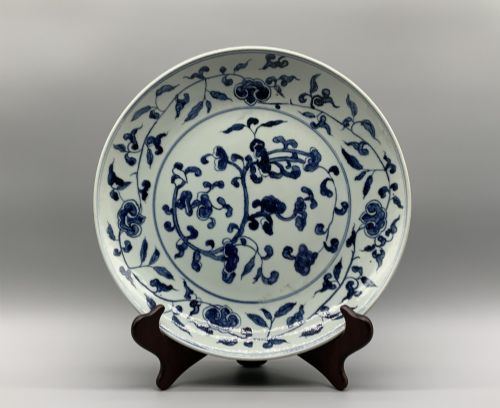
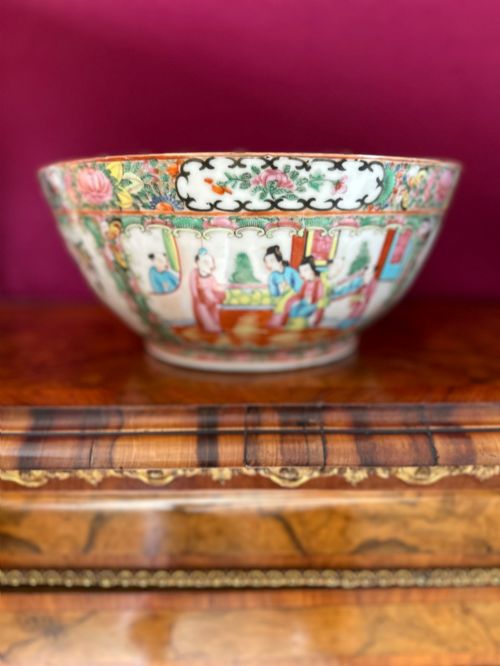
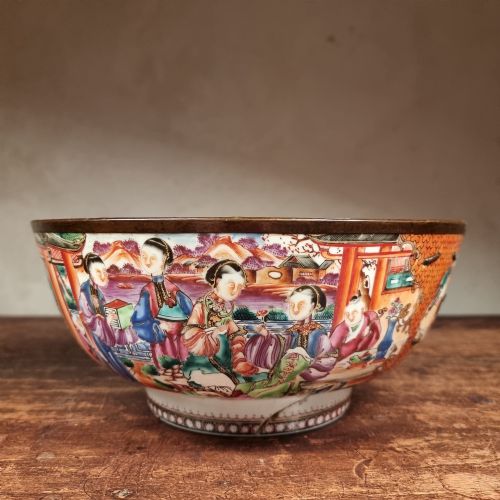
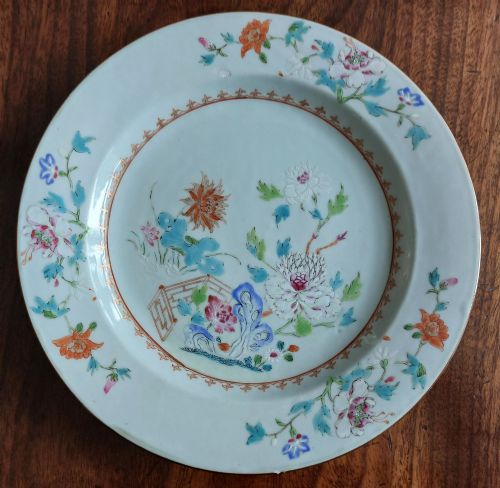
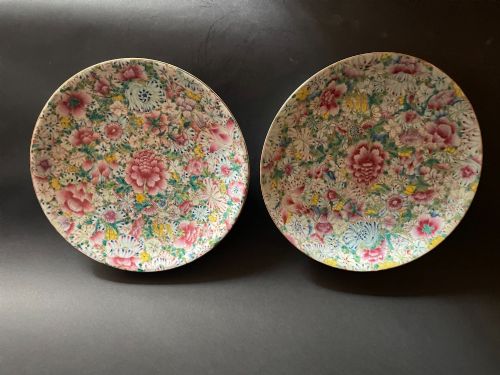
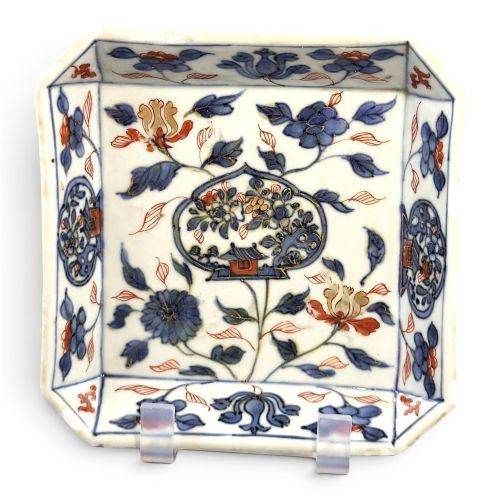
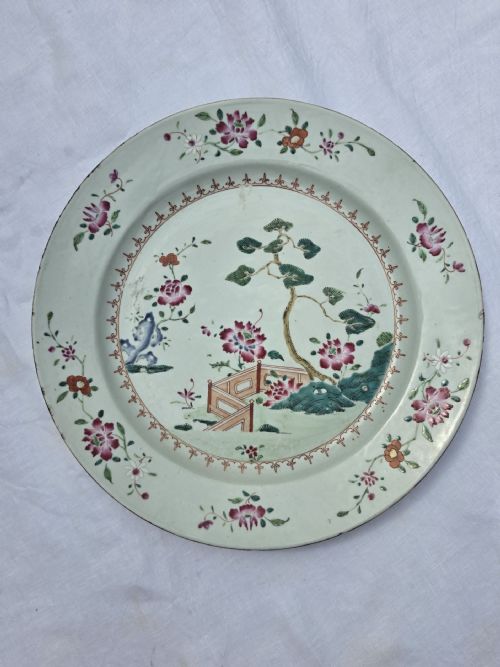
The selections available range from sturdy Ming Dynasty blue and white charger bowls to intricate 18th-century Famille Rose plates and vibrant 19th-century Canton wares. Buyers encounter varied forms spanning lobed bowls, chamfered square dishes, and reticulated chestnut baskets.
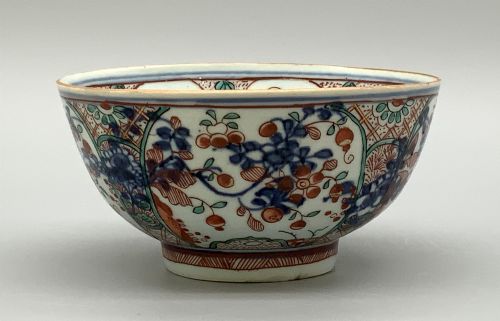
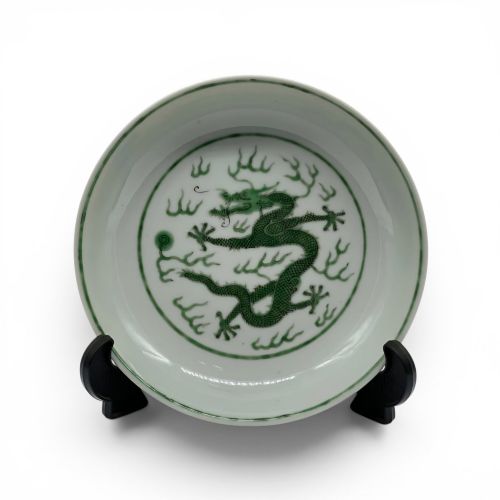
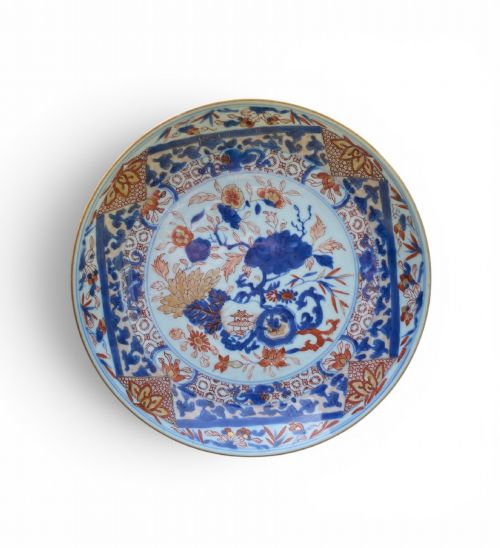
Earlier pieces often display deep underglaze cobalt designs derived from maritime trade eras, whilst later Victorian and Qing examples utilise rich enamel palettes including iron-red, gold leaf, and green dragon motifs. Each item reflects the specific aesthetic priorities of its decade of production.
How they were made
The foundational body consists of hard-paste porcelain, formed from refined clays fired at high temperatures to create a dense, vitrified ceramic structure. Artisans then applied underglaze cobalt blue or prepared enamel pigments directly onto the biscuit or glazed surface before a secondary kiln firing.
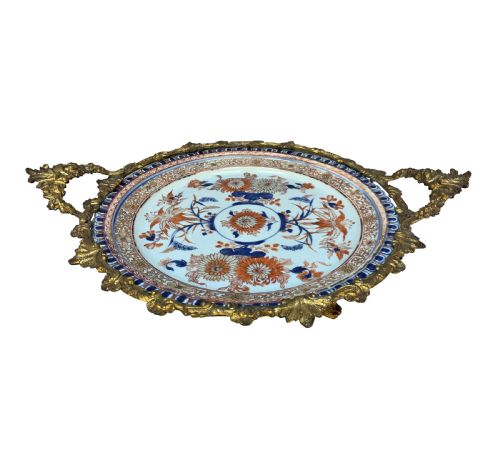
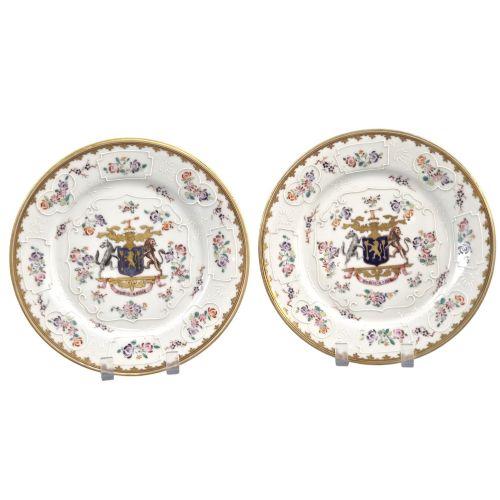
Many examples incorporate supplementary detailing such as hand-applied gilding, gold leaf highlights, or ormolu mounts added in European workshops to elevate the status of the imported ceramics. This combination of Eastern throwing and painting with Western metalwork defines the composite nature of export wares.
Materials recorded across current inventory include gold leaf, cobalt glaze, and hard-paste porcelain.
What varies in quality
The refinement of the painted brushwork dictates the upper tier of the range, separating hastily executed trade pieces from master-painted Imperial-style or bespoke armorial services. Crispness in the cobalt underglaze and precision within polychrome enamel fills indicate superior workshop execution.
Body weight, porcelain translucency, and the smoothness of the glaze surface differentiate standard utilitarian vessels from highly articulated decorative plates, pedestals, and shaped baskets. Structural integrity across large chargers and complex reticulated forms also marks the distinction between ordinary and exceptional production.
Edmé Samson & Cie·C.J. Mason
The Chinese Export Porcelain Dishes Glossary
- Famille Rose
- A prominent palette of opaque enamels dominated by pink and rose shades, introduced during the Qing Dynasty. This technique allowed for nuanced shading on floral and figural scenes.
- Famille Verte
- An enamel colour scheme featuring vibrant green tones combined with iron-red, yellow, and blue, characteristic of Kangxi period production. The style creates high-contrast decorative compositions across plates and bowls.
- Cobalt Underglaze
- A blue pigment applied to the raw porcelain body prior to glazing and firing, yielding permanent chemical integration with the ceramic. This method protects the design from surface wear over centuries of handling.
- Swatow Ware
- A category of robust, heavily potted export ceramics produced in southern Chinese kilns for overseas shipping during the late Ming period. These pieces frequently feature spontaneous brushwork under transparent glazes.
- Armorial Porcelain
- Custom-ordered dinner services bearing European family crests, coats of arms, or monograms painted in Chinese kilns. Wealthy merchants and aristocracy commissioned these sets through trading companies.
Chinese Export Porcelain Dishes: Frequently Asked Questions
How do I date Chinese export porcelain dishes?
Dating relies on stylistic markers such as reign marks, palette shifts between Famille Rose and earlier blue and white, and the integration of European metal mounts. Examining the composition of the hard-paste body and glaze characteristics helps narrow the decade of origin.
Changes in trade routes and overseas commissioning patterns also guide the timeline, as armorial services and specific Canton shapes align with distinct periods of maritime commerce.
Were these dishes used for dining?
Many items functioned as practical tableware for elite European dining rooms, serving meats, fruits, and condiments during formal meals. Platters, tureens, and deep saucers formed part of extensive matching dinner services.
Other forms, particularly large chargers and heavily decorated display plates, served primarily as decorative objects for sideboard exhibition or cabinet display rather than daily culinary use.
What is the difference between Kangxi and Qianlong pieces?
Kangxi period pieces, dating from the late 17th and early 18th centuries, frequently showcase brilliant cobalt blue underglaze and crisp green enamel accents. The forms tend toward robust chargers and lobed bowls with botanical motifs.
Qianlong era production leans towards the elaborate polychrome world of Famille Rose enamels, featuring intricate floral borders, armorial crests, and softer pastel tones suited to later 18th-century tastes.
How should I display antique porcelain plates?
Displaying antique dishes requires secure wall mountings or stable plate stands designed to support the weight of dense hard-paste porcelain without placing stress on the edges. Position pieces away from direct, harsh sunlight to protect vulnerable enamel pigments and gold leaf details over time.
Maintaining stable ambient room humidity prevents stress on both the ceramic body and any historic European ormolu mounts attached to the pieces.