


Chinese Export Charger
A Chinese export charger brings the scale and ambition of historic kilns to the table, offering bold painted scenes created for overseas trade.
Chinese Export Charger
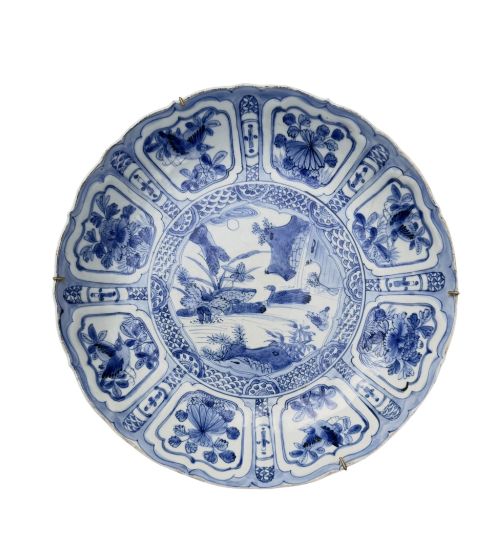
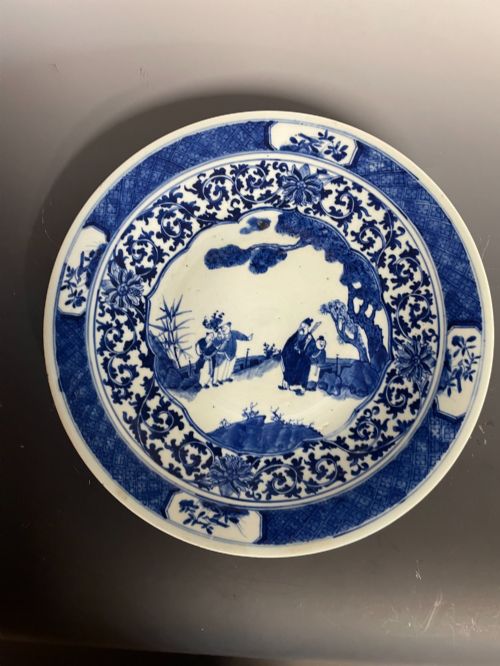
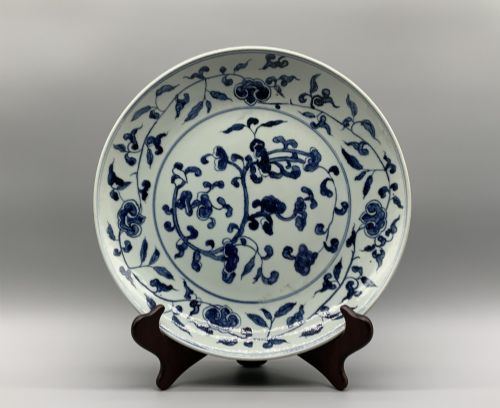
A Chinese export charger represents the large-format ceramic production made in China specifically for international markets, spanning centuries of trade. These substantial serving pieces and display dishes range from sixteenth-century Kraak wares to eighteenth-century armorial services and polychrome palettes.
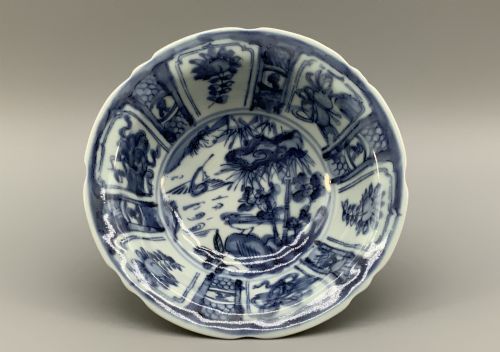
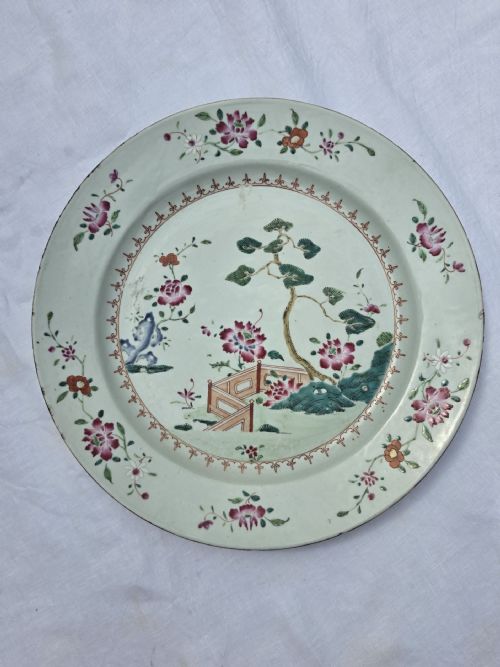
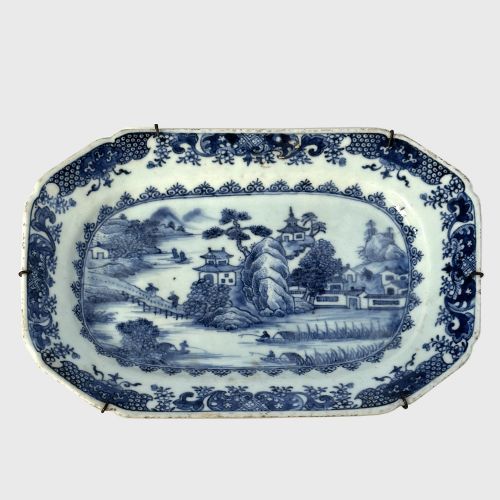
The versions most commonly met on this page include eighteenth-century blue and white porcelain chargers and nineteenth-century famille rose services. Collectors encounter these alongside related forms such as platters, deep plates, and lobed bowls originating across several dynasties and periods.
How they were made
Potters utilised hard-paste porcelain and specialised clays, shaping large chargers on the wheel or in moulds before applying cobalt underglaze pigments. Kiln workers then fired these pieces at high temperatures to vitrify the body and fuse the blue decoration beneath a clear glaze.
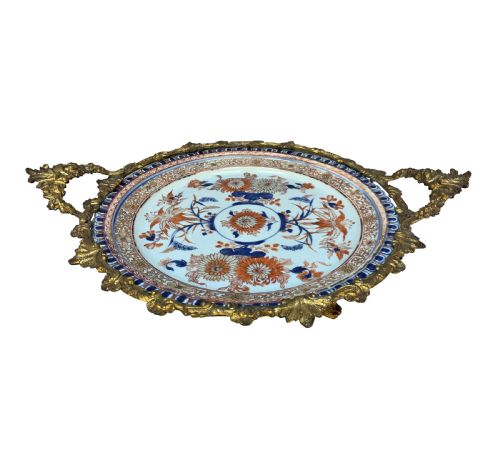
Overglaze enamel decoration, gold leaf, and bronze or ormolu mounts appear on later or more elaborate pieces, adding raised colour and metallic framing. Artisans hand-painted these supplementary details in workshops before secondary low-temperature fixative firings.
Plates occasionally arrive wearing French ormolu hats they met centuries after leaving the kiln.
What varies in quality
The clarity and precision of the hand-painted brushwork distinguish standard utilitarian vessels from superior examples, with finer pieces showing confident control in cobalt blue or polychrome enamels. Pigment saturation and the crispness of floral, figural, or armorial motifs reveal the skill of the original workshop.
The structural integrity of the heavy porcelain body and the stability of any applied ormolu or brass mounts shape the overall standard of survival. Firing consistency and the preservation of overglaze gilding and enamels without excessive rubbing complete the distinction between ordinary and exceptional specimens.
C.J. Mason
The Chinese Export Charger Glossary
- Kraak porcelain
- A type of Chinese export porcelain produced mainly during the Ming dynasty, characterised by panelled border designs and central motifs of birds, flowers, or landscapes. This ware frequently appears in sixteenth and seventeenth-century maritime trade finds.
- Famille rose
- A palette of opaque overglaze enamel colours introduced in the Qing dynasty, dominated by pink and rose shades mixed from gold chloride. Artisans used this scheme to render intricate floral and figural scenes.
- Chinese Imari
- A hybrid style combining underglaze blue with overglaze iron-red and gold highlights, emulating Japanese export wares produced in the town of Imari. Chinese kilns adopted this aesthetic for European markets during the eighteenth century.
- Armorial porcelain
- Custom-ordered dinner and service wares painted with European family coats of arms, crests, or mottos. These commissions formed a significant part of eighteenth-century trade between East India companies and noble houses.
- Swatow ware
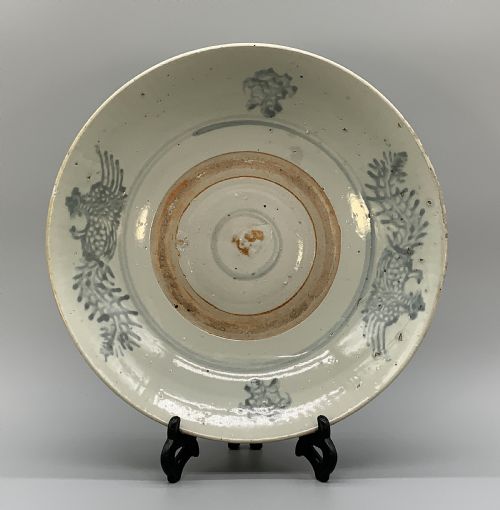
- A generic term used by collectors for coarse, heavily potted Chinese export ceramics made in southern provincial kilns for Southeast Asian and Japanese markets. These pieces typically feature freely brushed cobalt decoration under crackled glazes.
Chinese Export Charger: Frequently Asked Questions
What is a Chinese export charger?
A Chinese export charger is a large decorative plate or serving dish manufactured in China for foreign markets rather than domestic use. These pieces often feature specific Western coats of arms or adapted oriental motifs designed to appeal to international buyers.
Measuring significantly larger than standard dining plates, chargers were intended for formal display on sideboards or heavy serving duties at grand tables. Their production spans multiple dynasties, reflecting shifting international trade routes and artistic preferences.
How were these chargers used historically?
Historically, large chargers served as centrepieces for communal dining or as decorative display items within wealthy European and Asian households. Wealthy families used armorial services to display social status and lineage during diplomatic banquets.
Over time, many of these plates transitioned from utilitarian dining service to purely decorative wall or cabinet display. Their robust porcelain construction allowed them to survive centuries of handling and transit across oceans.
How do I distinguish Wanli from Kangxi periods?
Wanli period pieces, particularly Kraak wares, typically display segmented border panels and slightly greyish or crackled underglaze blue tones. The brushwork is spirited and spontaneous, reflecting late Ming dynasty aesthetic traditions.
Kangxi period chargers generally exhibit a brilliant sapphire blue underglaze on a dense, bright white porcelain body with meticulous floral or narrative painting. The foot rims on Kangxi pieces are often finely turned and polished smooth compared to earlier wares.
How should I clean and care for antique porcelain?
Antique porcelain requires gentle hand washing in lukewarm water using a mild, non-abrasive detergent when cleaning is necessary. Scrubbing brushes and harsh chemical agents must be avoided to protect delicate overglaze enamels and gilding.
Display environments should shield the pieces from direct sunlight and sudden temperature shifts that might stress the ceramic body or historic mounts. Secure wall hangers or stable plate stands protect heavy chargers from accidental tipping.