






Chinese End Tables
Chinese end tables bring centuries of traditional craftsmanship and rich timber into a room as versatile low stands.

Chinese End Tables
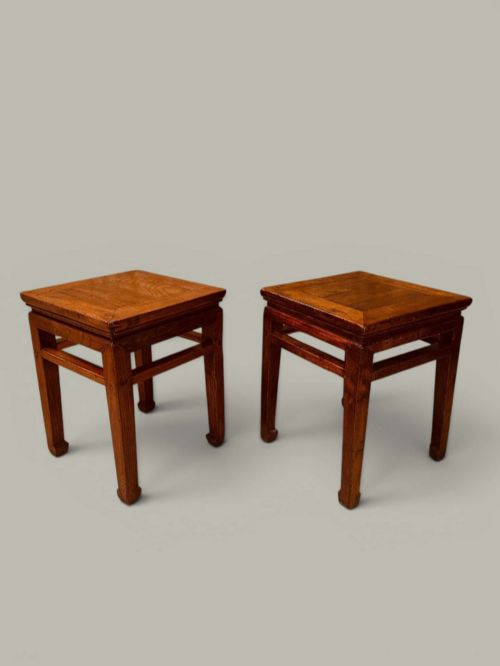
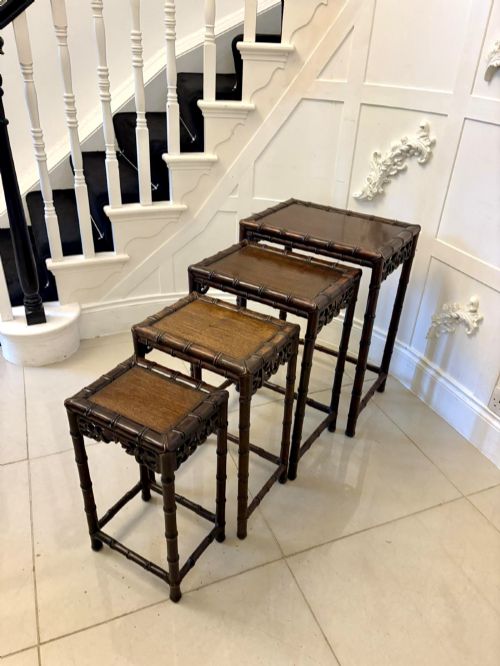
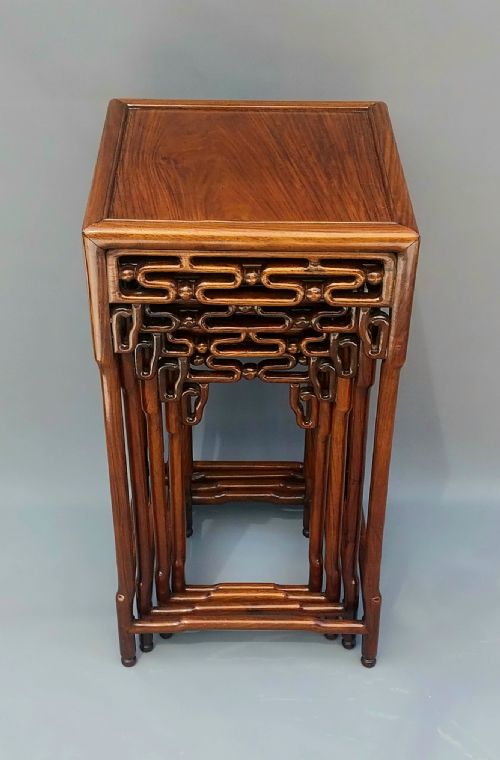
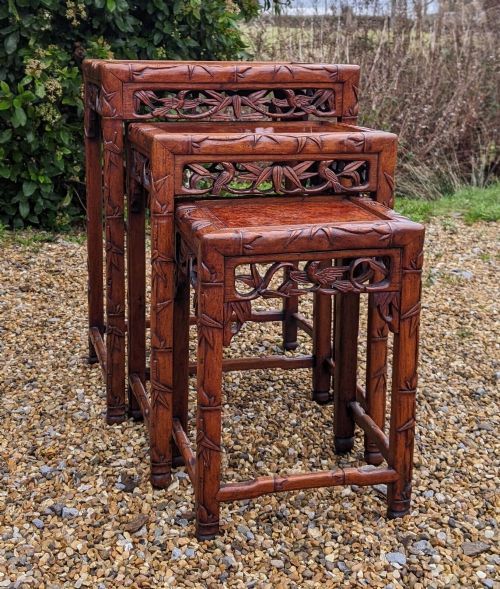
When buyers search for chinese end tables, they encounter low stands, nests of tables, and occasional furniture spanning the nineteenth and early twentieth centuries. These pieces originate from various periods including the Qing Dynasty and late nineteenth-century workshops, taking forms such as kang tables, altars, and nests of four graduated tables.
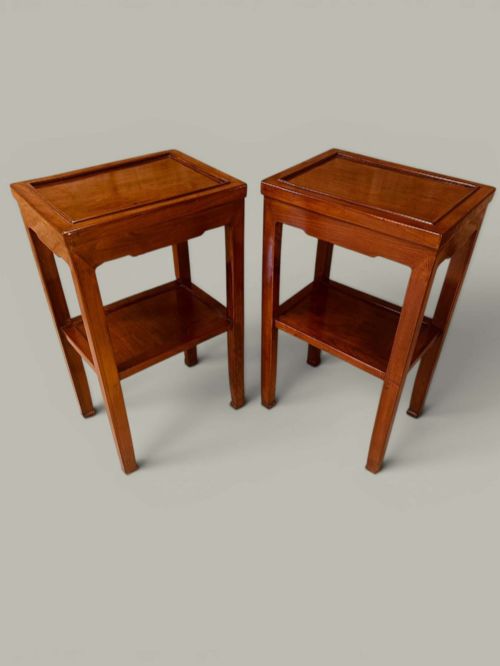
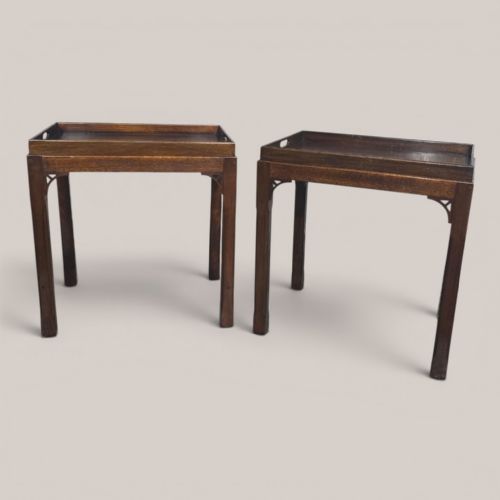
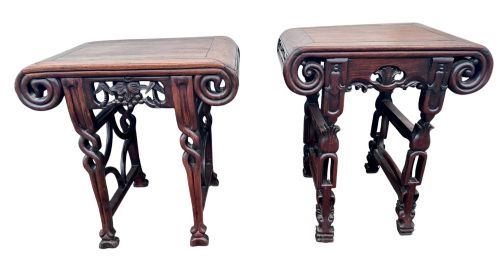
The selection ranges from compact elm side tables and rosewood stands to lacquer and cloisonne pieces intended for domestic use beside seating. Buyers frequently find matching pairs designed to sit low beside chairs or beds, utilising traditional joinery and carved ornamentation.
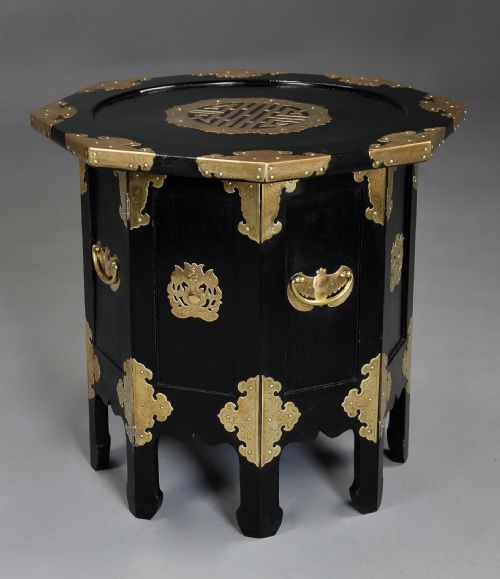
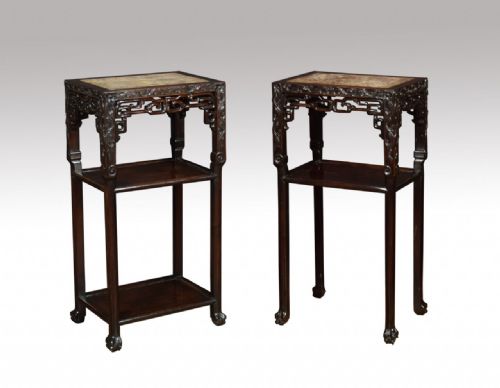
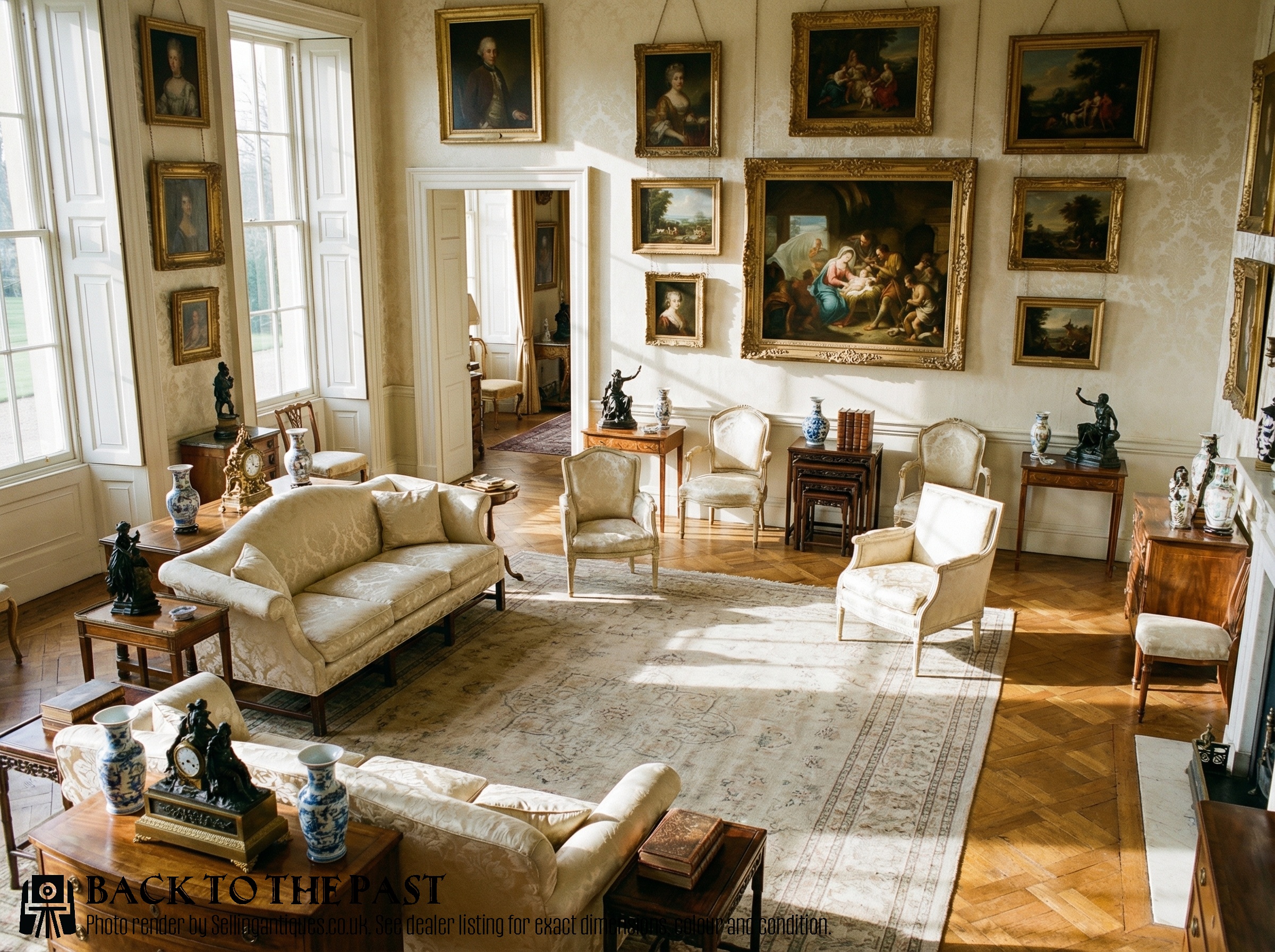
Forms also include octagonal occasional tables, plant stands, and occasional tables with inset marble or porcelain panels. These surfaces served practical functions in Chinese interiors, later adapting readily to Western sitting rooms as lamp or end tables.
Materials and construction
Cabinetmakers constructed these tables using dense Asian hardwoods such as rosewood, hongmu, huanghuali, and huali, alongside domestic timbers like elm. These woods provided the structural integrity required for intricate carving and heavy use without excessive bulk.
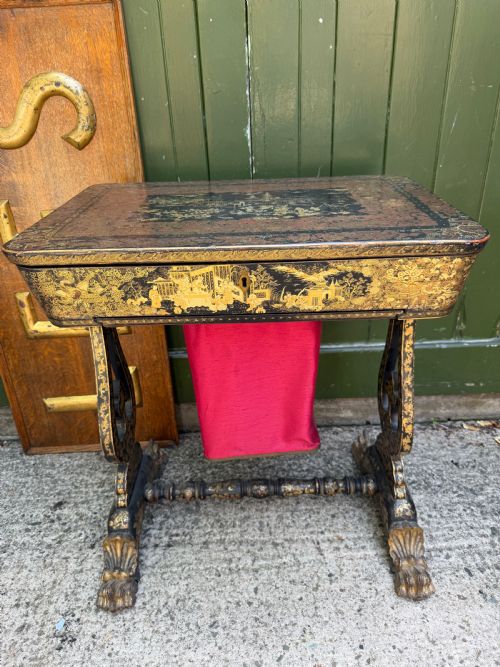
Surfaces often received treatments of lacquer, sometimes paired with gilded decoration, brass mounts, or inlaid porcelain and rouge marble panels. Joinery techniques allowed timbers to expand and contract naturally while maintaining rigid frames for scroll-end kang tables and nesting sets.
Chinese End Tables Retail Price Guide 2026
Typical asking prices for chinese end tables among the pieces listed under this phrase on Sellingantiques today, from the lower quarter to the upper quarter. They describe what is for sale here now, not the wider market.
Tables meant for opium smoking still double rather nicely for your morning coffee.
Distinguishing quality
Quality in these tables rests primarily upon the selection of timber and the depth and crispness of the hand-carved detail. Dense hardwoods like huanghuali and rosewood display superior grain patterns and colour that elevate the visual presence of a piece.
The integration of inset panels, whether rouge marble, porcelain, or cloisonne, demonstrates advanced workmanship. Finer examples maintain structural balance and refined proportions across nests of graduated tables or larger altar forms.
The Chinese End Tables Glossary
- Kang table
- A low table traditionally used on a heated brick bed, or kang, for eating, writing, or serving tea.
- Hongmu
- A dense, dark traditional Chinese hardwood, often translated as red wood, used for fine furniture.
- Quartetto
- A set of four graduated occasional tables designed to slide neatly beneath one another.
- Cloisonne
- An enamelwork technique where metal wire forms compartments on a base, filled with paste and fired.
Chinese End Tables: Frequently Asked Questions
How were Chinese end tables originally used?
These low tables served multiple domestic purposes, from supporting tea sets and lamps to holding decorative objects and scholar's items.
Many low forms like kang tables functioned on raised platforms for sitting or resting, while smaller stands sat beside seating areas.
What is a nest of tables?
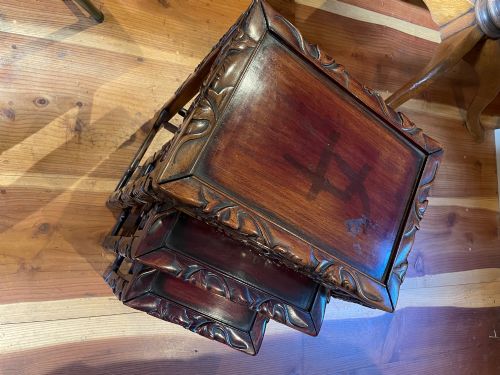
A nest consists of several graduated tables designed to slide neatly beneath the largest one when not in use.
This format allowed households to save floor space while providing extra surface area for entertaining guests.
How do I identify Qing Dynasty pieces?
Pieces from this era typically feature traditional carved hardwood construction, specific joinery methods, and classical motifs.
Dates generally span the nineteenth century up to the early twentieth century, reflecting traditional imperial aesthetics.
Can I use these tables with modern decor?
Their compact scale and rich timber tones allow them to integrate smoothly beside contemporary seating or beds.
Pairs of low stands function effectively as lamp tables or bedside cabinets in varied interior schemes.