


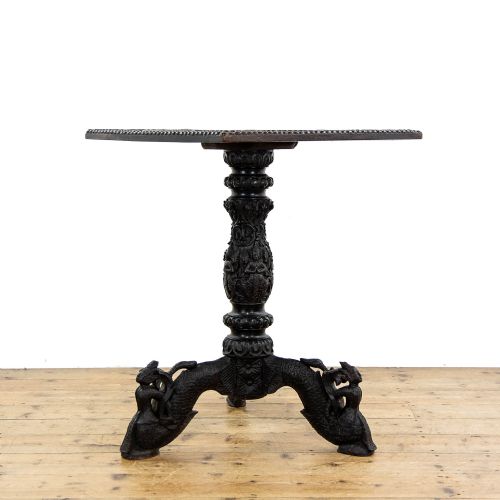


Chinese Dragon Side Table
These Chinese dragon side table pieces bring carved hardwood and marble surfaces into a room.
Chinese Dragon Side Table
A chinese dragon side table brings carved timber and occasionally inset marble to a room. These forms appear in styles from Chinese Export and Chinoiserie to Qing Dynasty and Victorian periods.
Buyers meet various table forms including side tables, nests of tables, occasional tables, centre tables, console tables, plant stands and display stands. Hardwood and rosewood examples dominate the selection alongside lacquer and teak pieces.
How they were made
Makers utilised dense timbers such as rosewood and carved hardwood, shaping intricate ornamentation directly into the solid material. Surfaces frequently incorporated inset marble or rouge marble panels fitted into the timber frames.
Lacquer work and glazing techniques also appear on select items, combining woodwork with smooth finishes. Hand carving defines the construction across 19th-century and early 20th-century production.
The selection includes items from the Victorian period through to 1920, utilising hardwood, rosewood, marble, lacquer and glass.
What varies in quality
The depth and definition of the hand carving separate simpler items from more ambitious works. Crisp detailing in the dragon motifs and foliage displays greater skill in the artisan.
The choice of materials alters the character of the piece, particularly where heavy rosewood or fitted marble inserts are employed. Structural rigidity in multi-tiered nests or console frames also marks out better execution.
The Chinese Dragon Side Table Glossary
- Chinoiserie
- European artistic styles reflecting Chinese motifs and decorative techniques. This aesthetic heavily influenced 19th-century furniture design.
- Hardwood
- Dense timber derived from broad-leaved trees, used extensively for durable furniture. Rosewood and teak fall under this broad material category.
- Rouge Marble
- A deep red ornamental limestone with white or grey veins. It appears as inset tops within Victorian and 19th-century tables.
- Cinnabar
- A bright scarlet mineral pigment applied in multiple layers on lacquer pieces. Carvers then cut designs into the hardened lacquer surface.
Chinese Dragon Side Table: Frequently Asked Questions
What is a Chinese dragon side table?
A chinese dragon side table is a small surface featuring hand-carved dragon motifs in hardwood, rosewood or teak. These items date primarily from the nineteenth and early twentieth centuries.
They serve practical roles as occasional furniture while displaying traditional Asian export and Qing Dynasty carving styles.
How do I clean a carved wood table?
Dust the carved crevices regularly with a soft brush to prevent dirt accumulation. Avoid harsh chemical cleaners that might strip the polished timber finish.
Maintain stable humidity levels in the room to protect the antique hardwood and any inset marble tops from cracking.
Where should I place a console table?
Console tables fit well against hallway walls or living room spaces where floor area is restricted. Their shallow depth allows them to function without blocking walkways.
Pair them with lamps or decorative objects to anchor the arrangement within the room.
How do I date a nineteenth-century table?
Examine the construction joints, timber selection and tool marks visible on the underside of the piece. Nineteenth-century examples often display dense rosewood and hand-carved details characteristic of the Qing Dynasty or Victorian eras.
Compare the style against documented export furniture to narrow down the decade of production.