
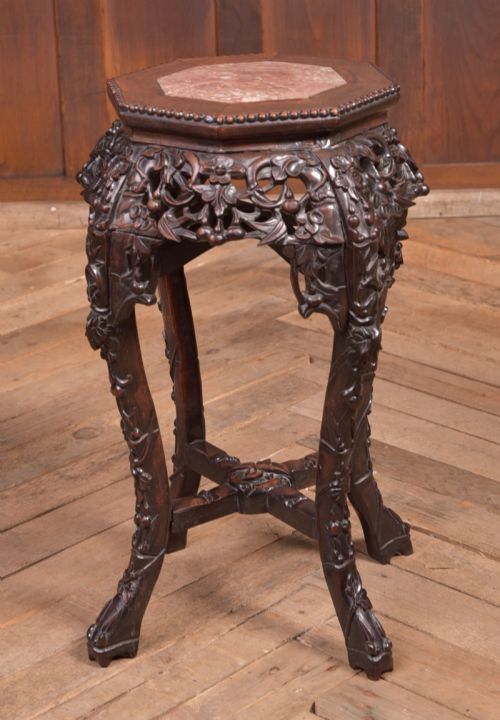
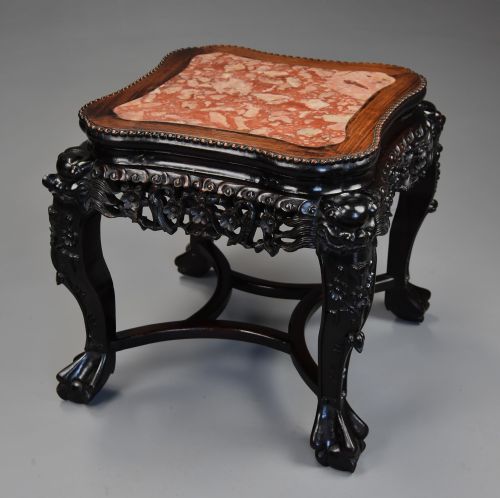
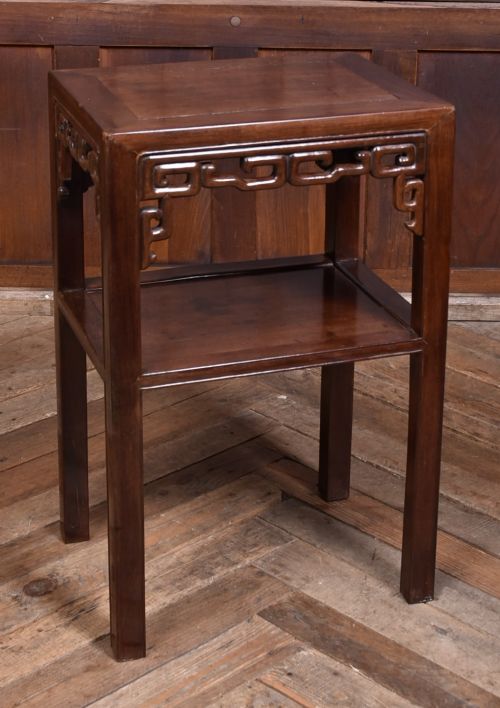
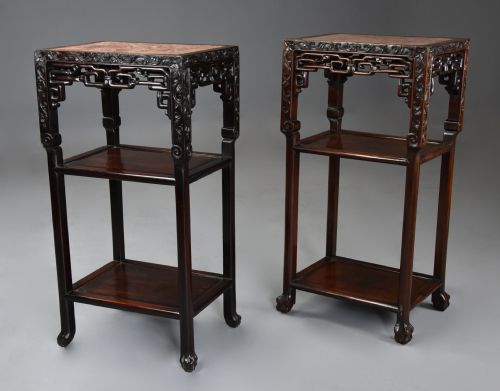
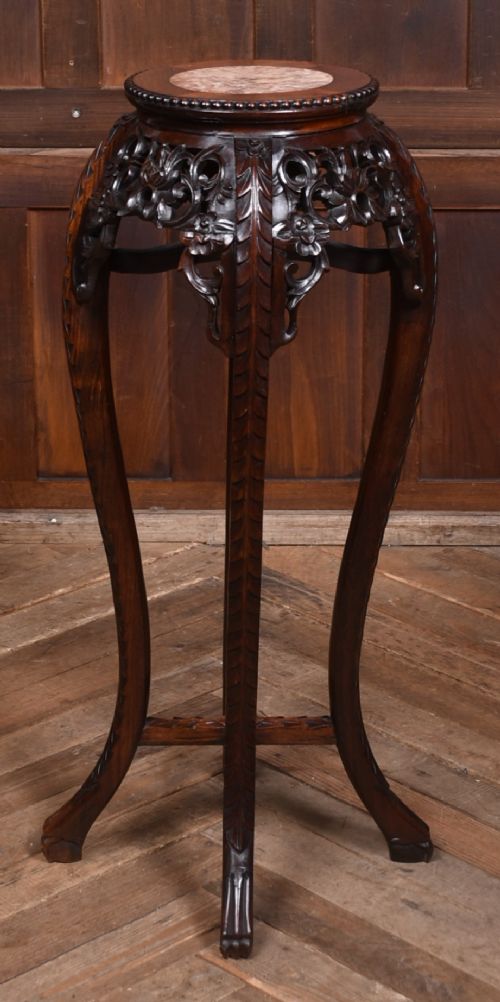

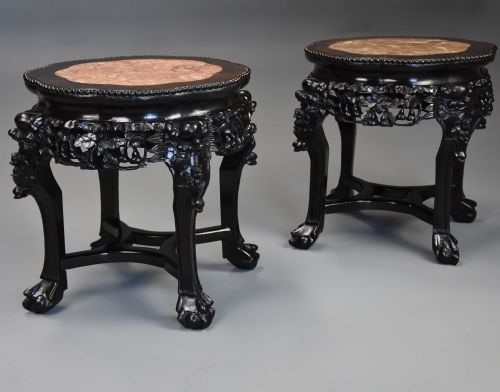

Chinese Carved Urn Table
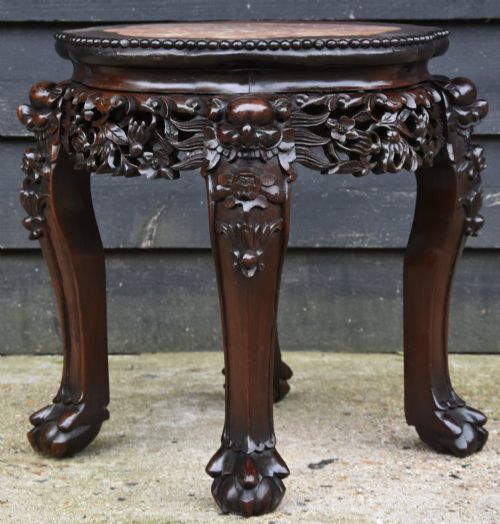
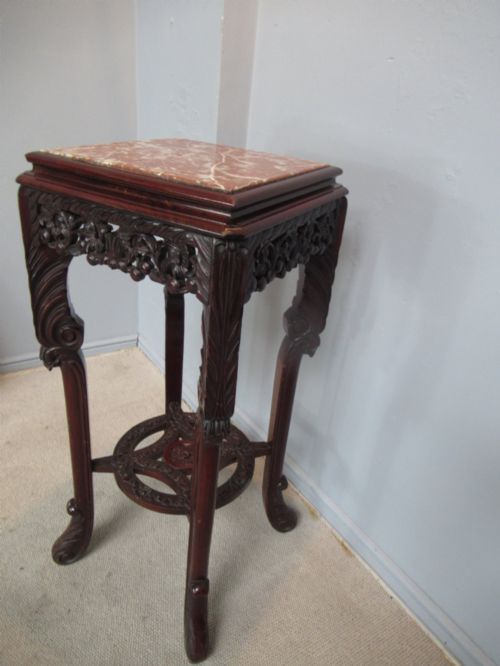
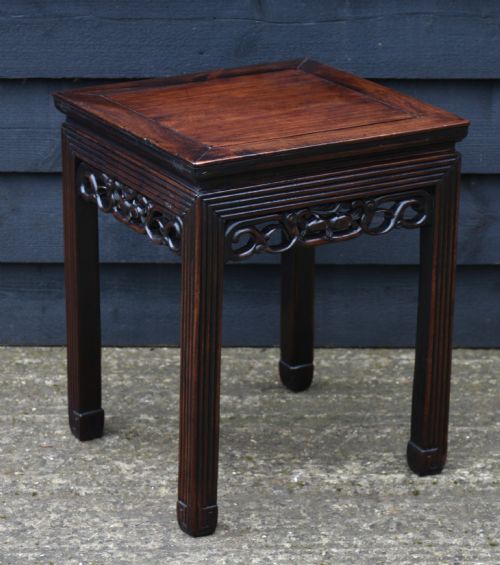
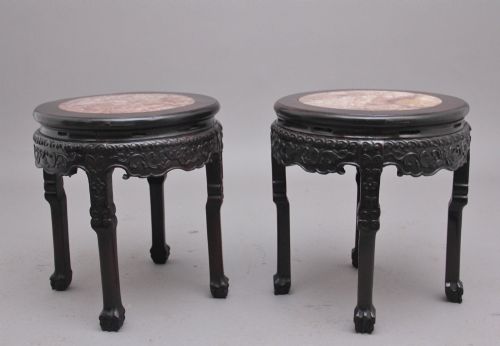
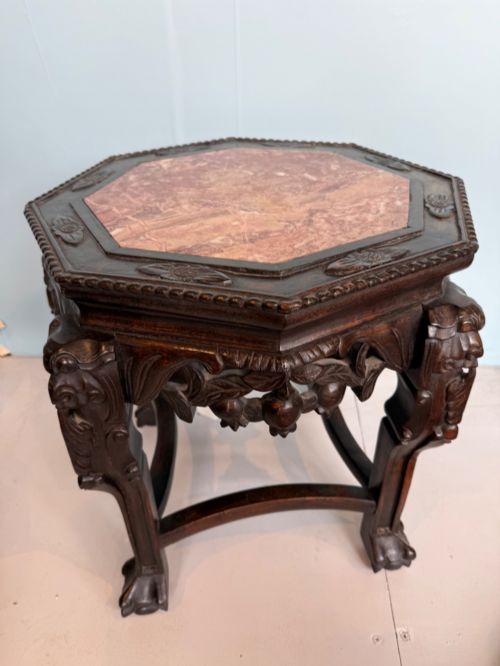
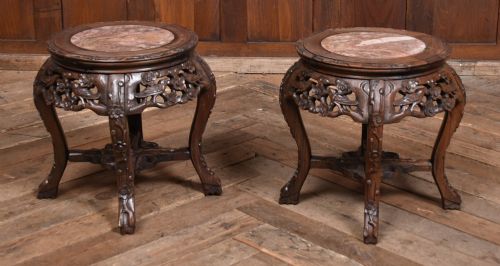
A chinese carved urn table brings dense exotic timber and inset stone into a room, serving as a sturdy display point for heavy ceramic vessels.
Chinese Carved Urn Table
When searching for a chinese carved urn table, buyers encounter compact occasional furniture designed primarily to elevate plants, vases, and decorative vessels. The pieces listed span from the late eighteenth century through the Edwardian era, with nineteenth-century examples dominating the selection.
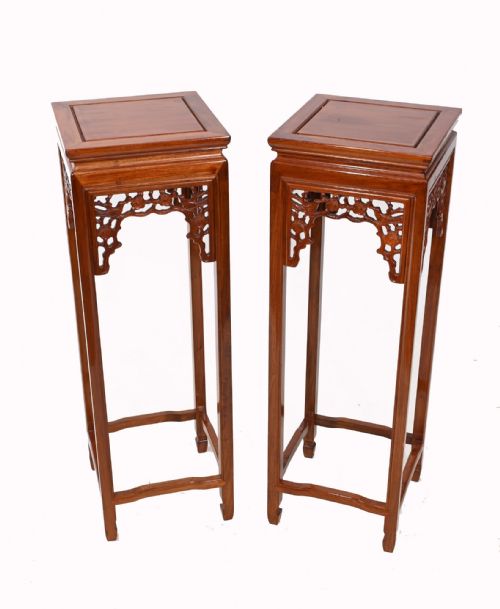
Forms vary from low jardiniere stands and pot stands to taller pedestals and side tables. Many originate from the Qing dynasty and Chinese export traditions, whilst occasional English ebonised or mahogany interpretations also appear in the record.
What varies in quality
The standard of carving dictates much of the distinction between ordinary production and finer examples, separating shallow, mechanical incisions from crisp, deeply undercut foliage and figures. The choice and figure of the timber, particularly richly grained rosewood or heavy padouk, also elevate a piece.
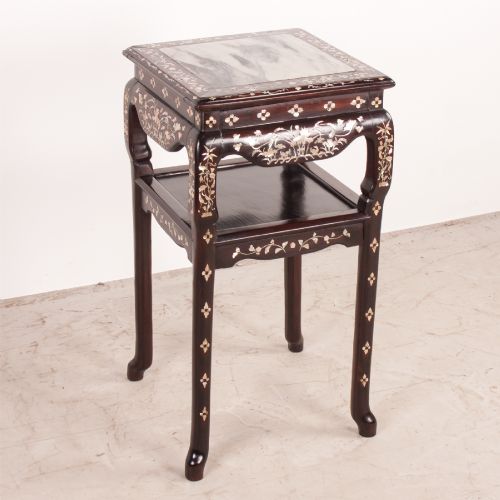
The quality of the inset marble top, its fit within the surrounding wooden rebate, and the integrity of any mother of pearl inlay contribute significantly to the overall execution. Proportion and the crispness of the shaped aprons separate standard workshop items from superior commissions.
Stands often feature hidden joinery designed to let the dense wood expand and contract safely through changing seasons.
The Chinese Carved Urn Table Glossary
- Hongmu
- A traditional Chinese term denoting dense, dark hardwoods used for fine furniture. It translates literally as red wood.
- Jardiniere stand
- A small table or pedestal specifically built to hold a ceramic plant container. These pieces feature water-resistant stone or tiled surfaces to protect the timber.
- Padouk
- A heavy, durable tropical hardwood with a reddish hue. Cabinetmakers utilised it for strong structural forms and deep carving.
- Rouge marble
- A decorative red-toned limestone with contrasting veining. It provides a smooth, cool surface inset into table tops.
- Qing dynasty
- The final imperial dynasty of China, lasting from sixteen-forty-four to nineteen-twelve. Many decorative arts in the trade date from its later decades.
Chinese Carved Urn Table: Frequently Asked Questions
What were Chinese carved urn tables used for originally?
These tables served primarily as raised platforms for heavy porcelain planters, bronze urns, and decorative vases within traditional interiors. Raising the vessel protected delicate flooring and brought the arrangement to a better viewing height.
Over time, owners also utilised them beside seating for lamps, small objects, and tea wares. Their compact footprint made them versatile additions to various reception rooms.
How do I care for the marble top?
Marble requires gentle cleaning with a damp cloth and mild soap, avoiding acidic substances that can etch the polished surface. Regular dusting prevents grit from scratching the stone over time.
Apply a neutral stone wax occasionally to maintain the sheen and protect against moisture rings from plant pots or glassware.
How can I tell the period of a hardwood stand?
Dating relies on examining the timber species, tool marks, joinery methods, and the style of the carving. Nineteenth-century examples often display hand-cut joinery and heavy, dense rosewood or padouk construction.
Later Victorian and Edwardian pieces may show subtle shifts in proportion and finish, whilst Qing dynasty items reflect traditional imperial design motifs.
Can these tables support heavy objects?
The dense hardwoods and sturdy pillar or leg constructions provide substantial weight-bearing capacity. They were engineered specifically to hold heavy stone and ceramic vessels safely.
Ensuring the joints remain firm and the table rests evenly on the floor preserves this structural stability during daily use.