
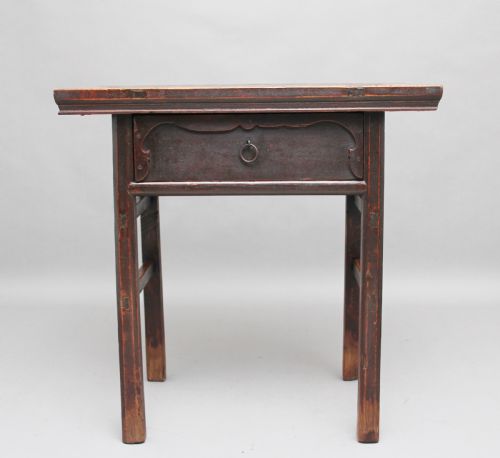


Chinese Carved Console Table
A Chinese carved console table brings weight and carved detail into a hallway or reception room, drawing the eye with traditional Qing forms.
Chinese Carved Console Table
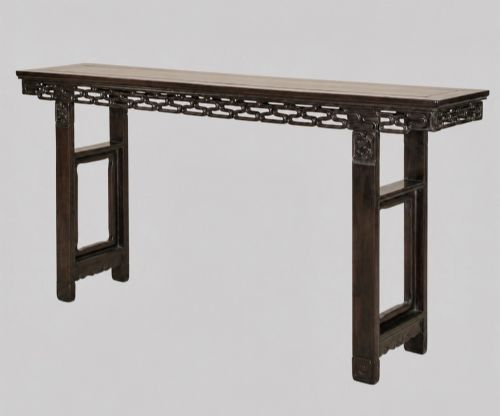
A Chinese carved console table stands primarily as a narrow surface designed for placement against a wall, frequently originating from the nineteenth century or the late Qing Dynasty. These pieces emerge in forms such as altar tables, demi-lune hall tables, and rectangular centre tables.
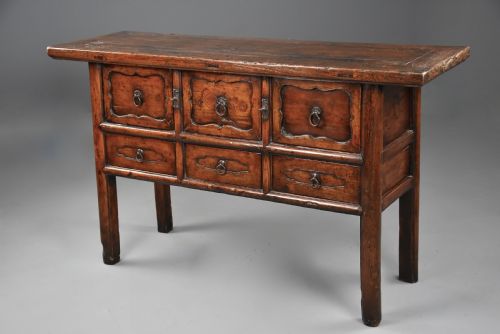
The assortment on this page includes traditional Chinese provincial examples alongside export pieces and occasional British interpretations in the Chinese Chippendale manner. Elm and dense hardwoods predominate, supplemented by lacquered surfaces and inset marble panels.
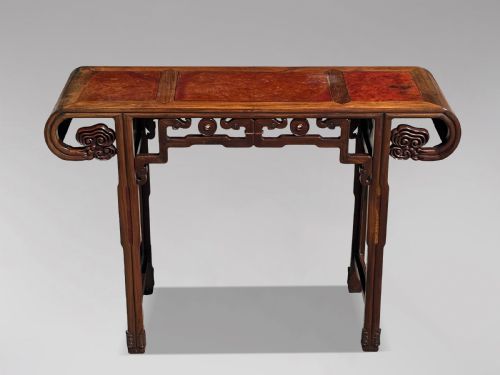
Buyers encounter variations ranging from rustic elm sideboards to heavily carved hongmu scroll-ended altar tables. Such furniture serves practical roles as writing desks, side tables, or dramatic hallway centrepieces.
Materials and construction
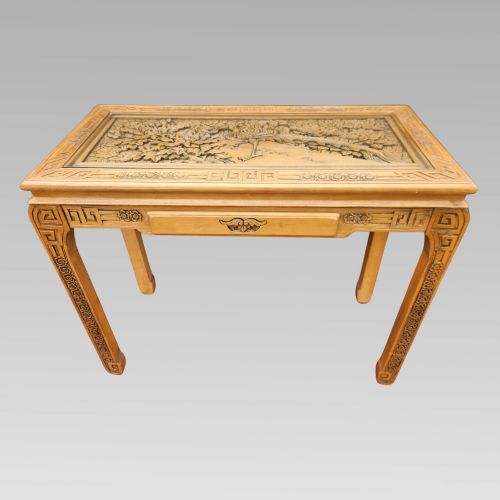
Cabinetmakers utilised dense native timbers such as hongmu, rosewood, and sturdy elm to construct these tables. Hardwood frames support intricate hand-carved panels, dragon motifs, and scroll ends executed with traditional joinery.
Surfaces frequently display applied red or black lacquer finishes, sometimes paired with inset rouge marble panel tops. Brass hardware and mounts appear on select sideboard and cabinet variations.
Listings span the eighteenth, nineteenth, and early twentieth centuries, featuring elm, mahogany, brass, and marble.
Distinctions in quality
Quality rests upon the crispness of the hand-carving and the selection of timber, where dense hongmu and well-figured elm command greater appreciation than softer utility woods. The depth of the relief work and the integrity of the original lacquer or patina set finer examples apart.
Proportion and structural balance dictate the success of a piece, particularly in altar tables where scroll ends and stretcher placement define the silhouette. Original marble inserts and intact joinery further elevate the standing of a table.
The Chinese Carved Console Table Glossary
- Altar table
- A rectangular ritual table featuring upturned flange ends, adapted for domestic console use. These pieces form a significant portion of traditional Chinese furniture.
- Hongmu
- A translation meaning red wood, applied to dense and heavy tropical hardwoods used in fine Qing Dynasty furniture. It develops a rich dark patina over time.
- Demi-lune
- A half-moon shaped table designed to stand flat against a wall. Pairs of these tables often combine to form a circular dining or centre table.
- Chinoiserie
- European decorative style reflecting Chinese artistic influences, seen in British interpretations of oriental forms. This aesthetic gained popularity during the eighteenth and nineteenth centuries.
- Patina
- The surface sheen and mellowing acquired by wood and lacquer through age and handling. A fine patina indicates years of gentle use and maintenance.
Chinese Carved Console Table: Frequently Asked Questions
Where should I place a console table?
These narrow tables suit hallways, landings, and reception rooms where floor space is limited. Their shallow depth allows them to sit neatly against a wall without obstructing walkways.
Larger altar tables also function effectively behind sofas or as serving surfaces in dining areas, displaying lamps or decorative objects.
How do I identify a Qing Dynasty table?
Qing Dynasty pieces typically feature dense hardwoods like hongmu, traditional joinery without metal nails, and deep relief carving depicting dragons or scrolling foliage. Construction methods reflect traditional Chinese cabinetmaking.
Many examples also incorporate specific architectural elements such as upturned ends on altar tables or geometric aprons beneath the tabletop.
Are elm tables durable for daily use?
Elm provides a sturdy and resilient timber framework suitable for everyday furniture. While softer than tropical hongmu, it withstands regular placement of household items.
Rustic elm sideboards and side tables often display visible grain and surface character that tolerates general living wear.
What is the difference between an altar table and a console?
Altar tables historically featured raised flanges at the short ends and were built for ceremonial spaces before entering domestic use as display surfaces. Console tables are engineered specifically to stand against walls.
In practice, nineteenth-century export definitions often merged these terms, applying them interchangeably to long, narrow rectangular tables.