

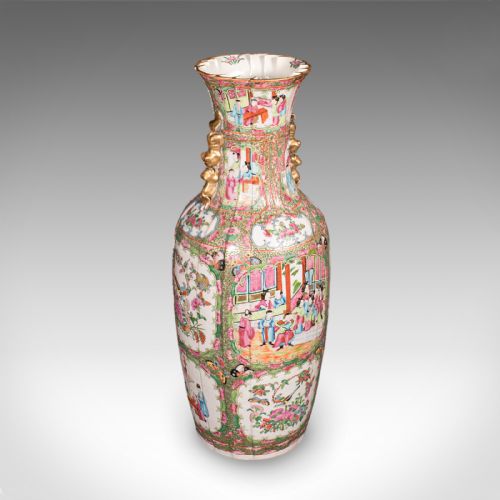


Chinese Baluster Vase
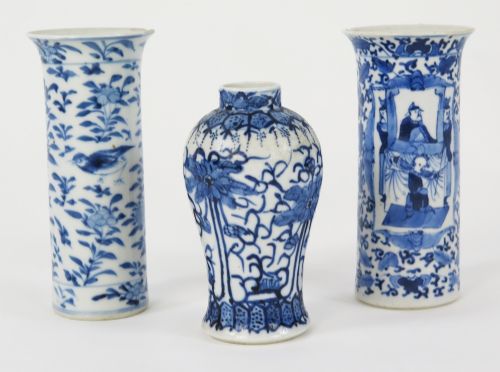
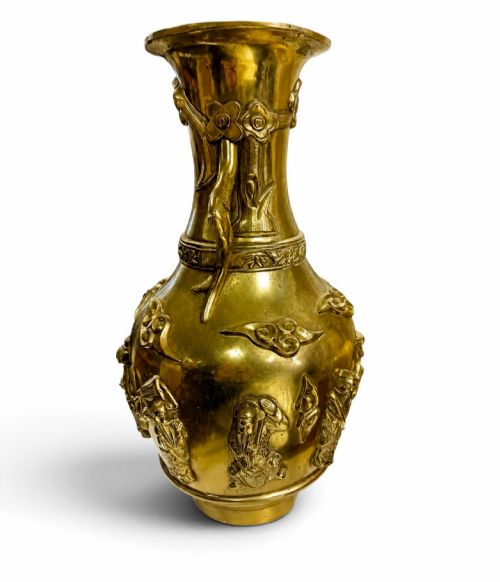
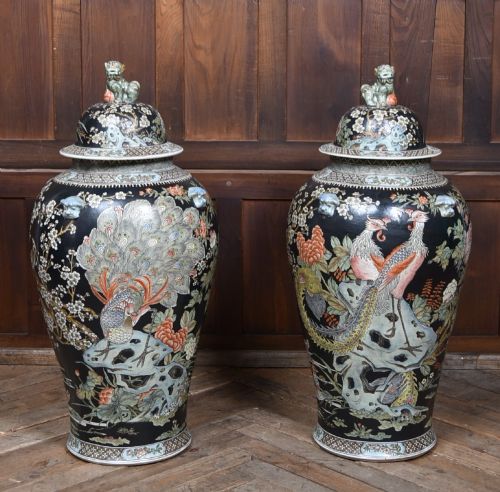
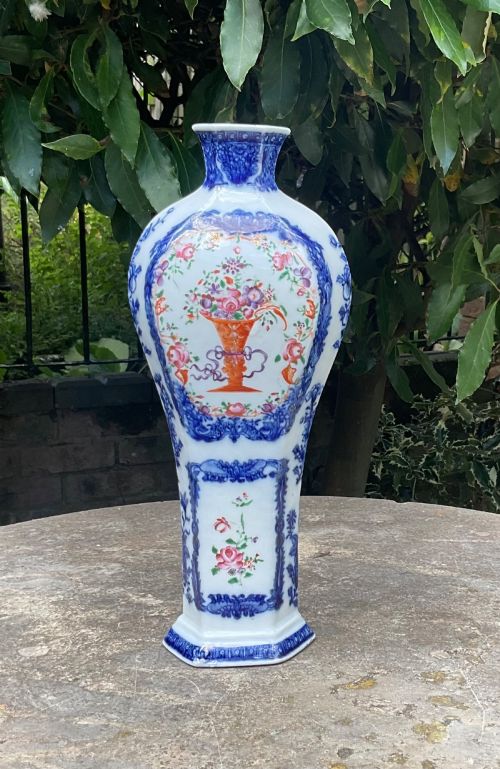
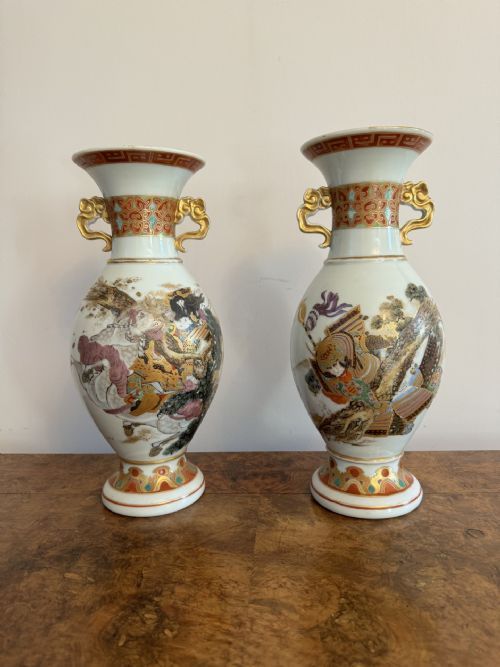
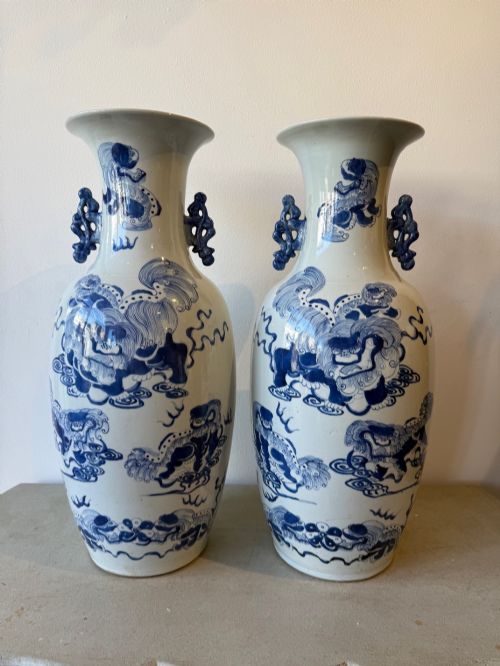
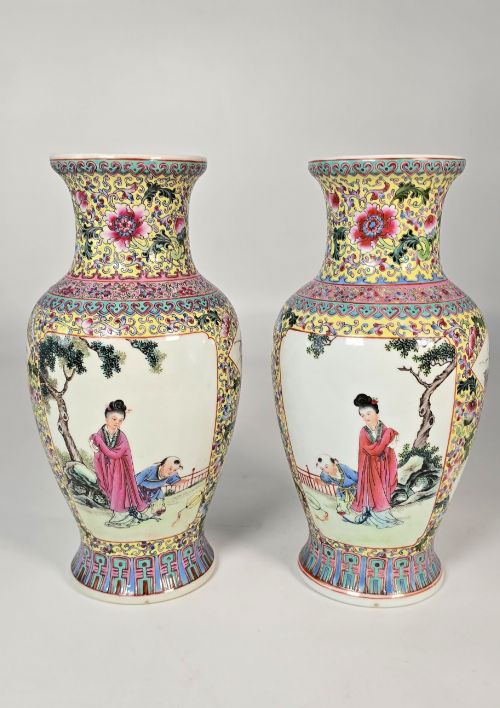
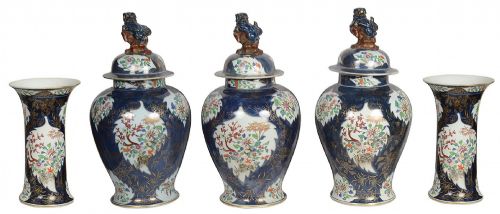
These pieces are Chinese baluster vases, characterised by their distinctive curved profiles and rich painted surfaces, collected for their decorative impact and historical depth.
Chinese Baluster Vase
A Chinese baluster vase displays a flared neck, rounded body and tapering base, taking many proportions from monumental floor jars to smaller cabinet pieces. The examples gathered under this search phrase span centuries of production, with a strong representation of nineteenth-century Qing Dynasty pieces alongside twentieth-century Republic period works.
Makers utilised various mediums beyond traditional ceramics, adapting the classic silhouette into table lamps, garnitures and temple vases. Buyers encounter blue and white porcelain, famille rose enamels, bronze, cloisonné and cinnabar lacquer within the selections.
The decorative schemes range from restrained celadon grounds and archaic motifs to densely painted figural scenes depicting Daoist immortals and scholars. Many nineteenth-century items reflect export markets, while others adhere closely to imperial Kangxi or Qianlong period designs.
Materials and Technique
Potters shaped high-fired porcelain on the wheel or pressed clay into moulds before applying cobalt blue pigments under the glaze or polychrome enamels over the glaze. Artisans also worked in copper alloys and bronze, casting vessels with high-relief details or applying champlevé enamel cells.
Surface ornamentation involved meticulous hand-painting, carving into thick layers of cinnabar lacquer, or mounting finished porcelain bodies with French ormolu brass for the European export trade. Gilding and gold leaf highlights frequently completed the elaborate polychrome palettes of the later periods.
Several vases depict Daoist immortals who clearly preferred riding dragons and crossing stormy seas to a quiet life in the scholar's retreat.
Evaluating the Pieces
Quality rests upon the precision of the hand-painted brushwork, the depth and clarity of the enamel colours, and the crispness of any relief-cast metalwork or carved lacquer. Pieces with steady proportions and well-balanced decorative bands display greater artistic control than hurried commercial outputs.
The condition of the glaze, the integrity of the body without major structural repairs, and the authenticity of period base marks influence the standing of an item. Original covers or matched ormolu mounts further elevate the completeness of the vessel.
The Chinese Baluster Vase Glossary
- Baluster
- A vase shape characterised by a bulbous lower body that tapers toward the neck. This silhouette draws its name from the architectural baluster column.
- Famille Rose
- A ceramic palette dominated by opaque pink enamel introduced during the Qing Dynasty. Artisans used this group of colours to render delicate floral and figural compositions.
- Famille Verte
- A porcelain decoration style relying primarily on green enamels alongside iron red and other underglaze or overglaze colours. This palette flourished particularly during the Kangxi period.
- Cloisonne
- A metalwork technique where artists solder flat wire partitions to a bronze or copper base to create cells. These compartments are filled with enamel paste and fired.
- Celadon
- A pale green or grey-green translucent glaze applied to porcelain or stoneware. The subtle colour imitates the appearance of jade.
Chinese Baluster Vase: Frequently Asked Questions
What is a baluster vase?
A baluster vase is a vessel featuring a curved, bulbous lower body that narrows gracefully toward a flared or upright neck. This classic profile provides stability while offering a broad canvas for detailed painted scenes.
Craftsmen produced these vessels in various sizes, ranging from compact cabinet pieces to monumental temple jars designed to anchor a room.
How do I date a Chinese vase?
Dating relies on examining the characteristics of the clay body, the tone of the cobalt blue or enamel colours, and the style of any painted or incised reign marks on the base. Stylistic clues such as mounting types or specific figural motifs also help place an object within the Qing Dynasty or later periods.
Many nineteenth-century pieces deliberately echo earlier Kangxi or Qianlong aesthetics, requiring careful study of the brushwork and material quality to distinguish revival pieces from originals.
Were these vases made for export?
A significant portion of nineteenth-century production targeted Western markets, leading to decorative styles tailored for European and American homes. Export pieces often featured lavish famille rose palettes, gilt highlights, or later adaptations as oil and electric lamps.
Other works remained closer to domestic tastes, focusing on scholarly themes, Daoist immortals, or traditional blue and white landscapes.
How should I display a large floor vase?
Monumental floor vases and temple jars command attention when placed directly on a solid floor in a hallway, entryway, or corner of a reception room. Ensuring a stable surface protects the heavy ceramic or bronze body from accidental knocks.
Pairing matching floor jars on either side of a fireplace or doorway creates symmetry, while smaller baluster vases suit side tables and mantelpieces.