


Chinese Accent Coffee Table
These Chinese accent coffee table pieces bring low-slung timber forms and carved Asian export designs into modern rooms, prized for their rich woods and distinct silhouettes.
Chinese Accent Coffee Table
A Chinese accent coffee table takes many forms, appearing as low kang tables, opium tables, square stands, and nests of four tables across this selection. Buyers find pieces dating from the eighteenth century through the early twentieth century, spanning Qing Dynasty and Chinese Export traditions.
How they were made
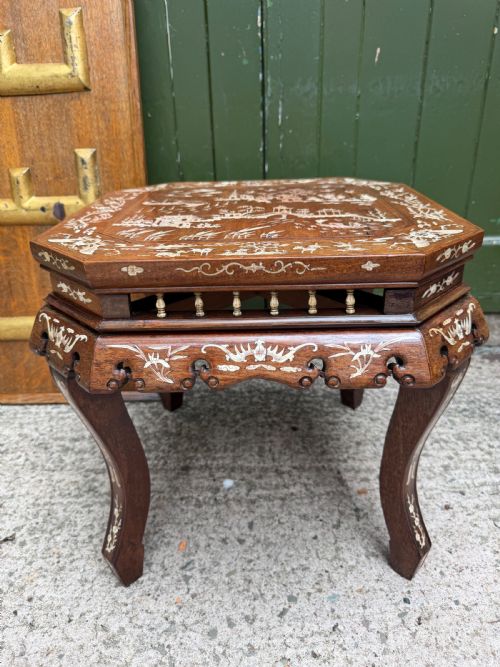
Cabinetmakers constructed these tables using dense timbers such as hardwood, rosewood, hongmu, elm, and teak. These strong materials allowed for stable low-profile framing and intricate hand carving without requiring heavy internal bracing.
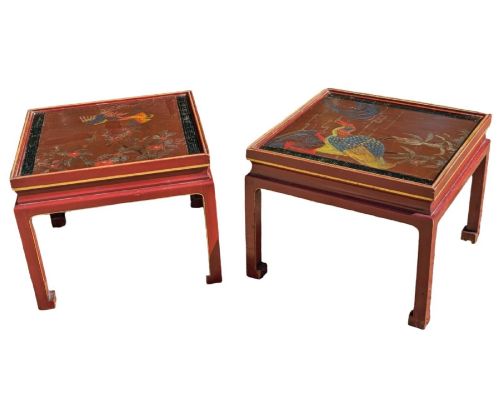
Surfaces received careful hand carving, particularly with dragon motifs, or smooth finishes highlighting the natural grain of the wood. Red lacquer also appears on eighteenth-century examples, providing a durable coloured coating over the timber base.
Dragons occasionally peer out from the carved side aprons, guarding your tea cups with fierce expressions.
What varies in quality
Quality depends on the density and selection of the timber used, with heavy rosewood and hongmu sitting at the higher end compared to standard elm or mixed hardwoods. The depth and crispness of the hand carving also separate standard utility tables from finer decorative pieces.
Construction joints and the preservation of original surfaces dictate the desirability of an antique table. Pieces retaining their early lacquer or untouched patination on the hardwood show superior historical integrity.
The Chinese Accent Coffee Table Glossary
- Kang table
- A low platform table traditionally used on a heated brick bed in northern China for dining and writing, now adapted as a coffee table. These pieces sit close to the floor with sturdy legs.
- Opium table
- A common dealer term for a low rectangular coffee table with recessed legs and simple panel construction. They mirror the proportions of tables historically used for resting items within arm reach of a low seating mat.
- Hongmu
- A translation meaning red wood, used to describe various dense and heavy tropical hardwoods native to Asia. It develops a deep natural sheen and darkens gracefully over decades of use.
- Nest of tables
- A set of graduated tables designed to slide neatly underneath one another when not in use. This clever grouping allows multiple surfaces to occupy a small floor space.
- Qing Dynasty
- The final imperial dynasty of China, ruling from sixteen forty-four to nineteen twelve. Pieces from this era often feature traditional motifs like carved dragons and formal framing.
Chinese Accent Coffee Table: Frequently Asked Questions
What is a kang table?
A kang table is a low-profile timber surface designed to sit upon raised sleeping platforms in traditional northern Chinese homes. They provided a stable place for tea service and writing while sitting or kneeling.
Today, these pieces function well as low coffee tables in contemporary reception rooms. Their compact height pairs naturally with low modern sofas.
How do I use a nest of tables?
A nest of tables provides flexible surface space that you can expand or tuck away depending on your needs. The graduated sizes slide together into a single compact footprint when floor space is limited.
In daily use, you can separate the smaller tables to hold drinks or books around the room. When guests leave, simply slide them back into the main frame.
What woods were used?
Maker workshops utilised a variety of durable Asian timbers including dense hongmu, rosewood, teak, and local elm. These woods provided the structural strength needed for slender legs and carved aprons.
Hardwoods were often left with a polished natural finish to showcase the grain. Softer timbers occasionally received a protective coating of red lacquer.
How do I date these tables?
Dating relies on observing construction methods, timber patination, and stylistic markers tied to nineteenth-century and early twentieth-century export periods. Hand-cut joinery and signs of genuine wear indicate antique age.
Earlier examples from the eighteenth century often display specific lacquer techniques and simpler proportions. Comparing the carving style to established Qing Dynasty motifs helps narrow the timeframe.