


Cherub Porcelain Centrepiece
These cherub porcelain centrepiece items bring figurative Continental elegance to a table, combining moulded ceramic figures with decorative bowls or baskets.
Cherub Porcelain Centrepiece
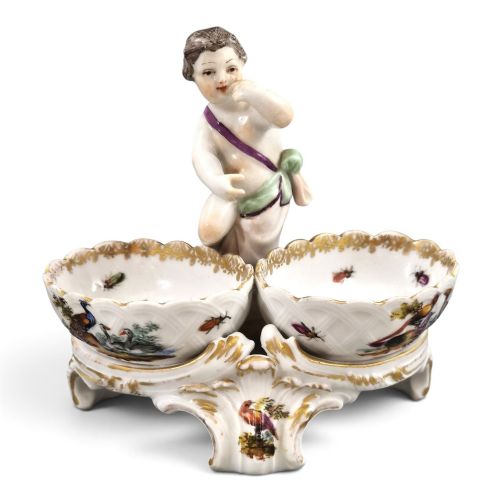
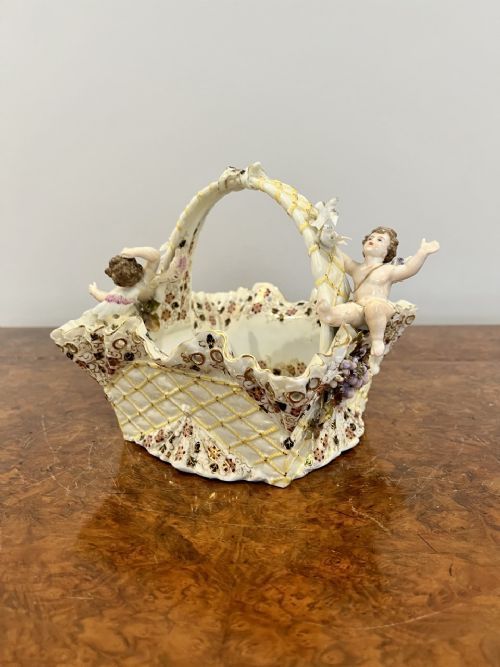
A cherub porcelain centrepiece serves as a striking table focal point, featuring modelled putti or cherubs alongside vessels such as baskets, bowls, and shell forms. These ornamental objects draw upon 19th Century and Edwardian decorative traditions, ranging from German factories to French ateliers.
The pieces on this page appear in various configurations including sweetmeat dishes, figural salt cellars, and large tiered arrangements. Makers often integrated applied floral elements and gilded details alongside the ceramic figures to create elaborate display pieces.
How they were made
Craftsmen utilised hard-paste porcelain and ceramic bodies, shaping them through detailed mould work and hand-modelling. Applied elements like individual rose petals and delicate foliage required precise manual assembly before firing.
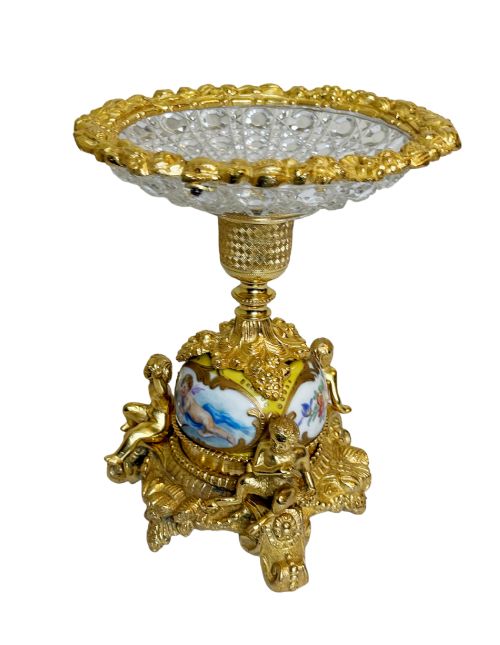
Makers applied hand-painted enamels, gold leaf, and gilt bronze mounts to enhance the ceramic surfaces. Cut crystal bowls and ormolu framing also appear in combination with the porcelain figures to construct composite centrepieces.
Musical putti hold tiny instruments mid-air, playing silent eternal concertos across porcelain baskets.
What varies in quality
The refinement of the modelling dictates the distinction between standard and superior pieces, particularly in the facial expressions and anatomical detail of the cherubs. Crisp definition in the applied floral work and precision in the hand-painted enamels indicate higher manufacturing standards.
The integration of secondary materials such as gilt bronze mounts, cut crystal, and ormolu alters the character and ambition of an object. Heavier gilding and more complex architectural compositions separate standard factory output from premier exhibition pieces.
KPM Berlin·Royal Dux Bohemia·Schierholz·Volkstedt·Meissen
The Cherub Porcelain Centrepiece Glossary
- Putti
- Plump, wingless or winged infant figures commonly depicted in Renaissance and revival decorative art. They form the primary figural decoration on these centrepieces.
- Comport
- A decorative dish raised on a high foot, frequently used for fruit or sweetmeats on a dining table. These often incorporate ceramic figures into the stem or base.
- Sweetmeat dish
- A small vessel designed for holding confectionery, nuts, or preserved fruits. They frequently take the form of shell or basket containers supported by cherubs.
- Ormolu
- Finely ground high-carat gold applied in a mercury amalgam to bronze. This technique appears on the metal mounts framing the porcelain sections.
Cherub Porcelain Centrepiece: Frequently Asked Questions
What were cherub porcelain centrepieces used for?
These pieces served primarily as decorative centerpieces for large dining tables during formal meals, often holding fruit, sweetmeats, or flowers.
Wealthy households used them to display taste and status during dining events, placing them centrally where guests could admire the modelled figures and painted details.
How do I identify the period of a centrepiece?
Dating relies on examining the styling influences, such as Rococo Revival curves or Art Nouveau asymmetry, alongside factory marks where present.
Materials like gilt bronze mounts and cut crystal also point towards specific decades within the nineteenth and early twentieth centuries.
Are these pieces purely decorative or functional?
Most examples function primarily as decorative art objects, though bowl and basket sections can hold lightweight items like dried florals.
Due to delicate applied porcelain flowers and hand-painted enamel surfaces, owners generally reserve them for display rather than heavy daily use.
How should I display a porcelain centrepiece?
Position the object on a stable, flat surface away from high traffic areas to protect fragile applied elements like delicate flower petals and protruding cherub limbs.
Ensure the display location has balanced lighting to highlight the hand-painted enamels and any gilded bronze or crystal components.