


Victorian Minton Porcelain
Victorian minton porcelain brings together refined nineteenth-century ceramic artistry, delicate hand-painted detail and classical forms that anchor any serious cabinet collection.
Victorian Minton Porcelain
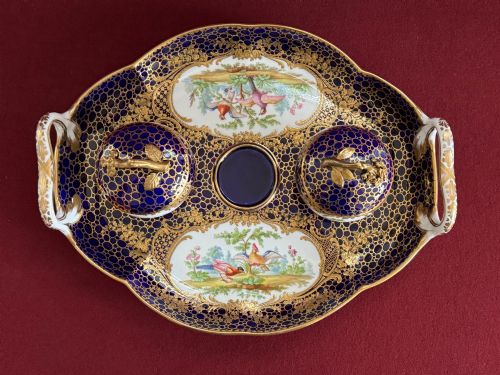
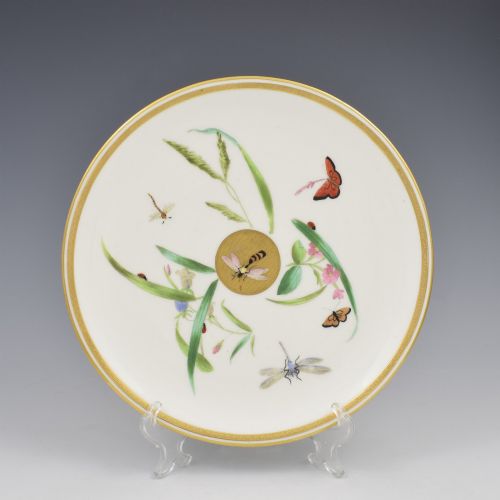
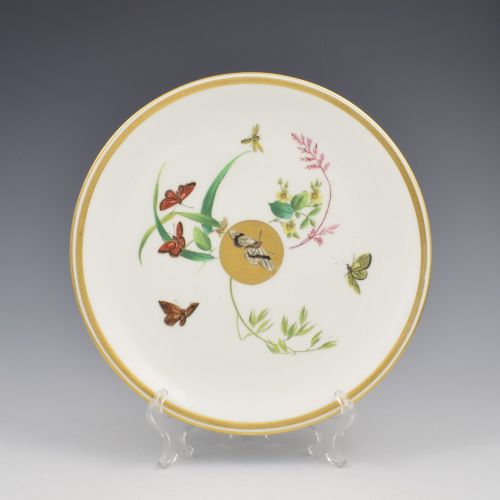
Victorian minton porcelain encompasses cabinet plates, vases, figurines and decorative objects created during the nineteenth century by the renowned Stoke-on-Trent factory. Pieces on this page range from early mid-century Sèvres-inspired inkstands and flower-encrusted ewers to later Aesthetic movement plates and pate-sur-pate plaques.
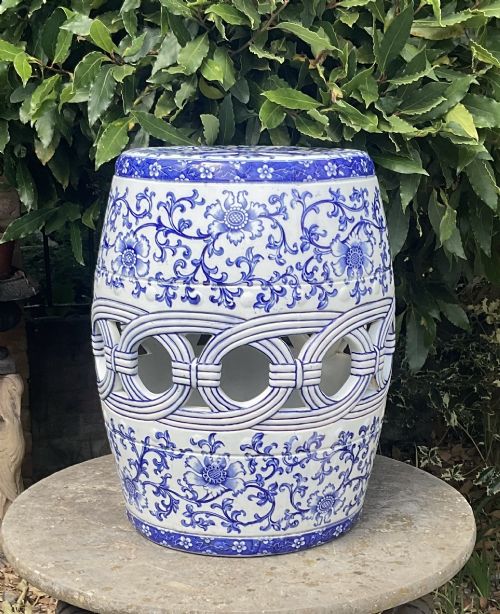
Buyers encounter diverse stylistic revivals, including Rococo and Gothic interpretations, alongside Japanese-inspired motifs by designers such as Christopher Dresser and W.S. Coleman. Functional table wares like dessert plates, garden seats and tea sets sit alongside sculptural parian groups and decorative lidded pails.
The assortment reflects broad manufacturing capabilities, shifting from traditional hand-painted landscapes and armorial designs to intricate pierced borders and elaborate ground colours like pink and celeste bleu.
Materials and Technique
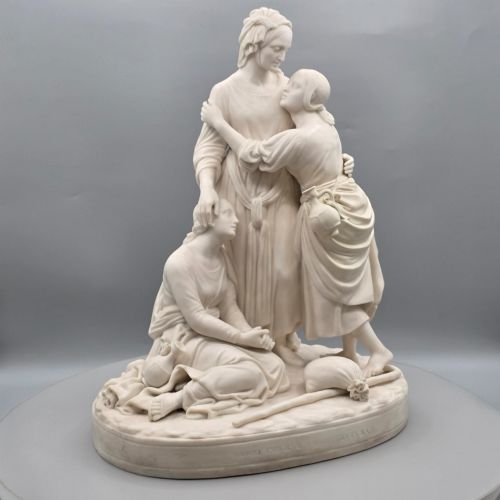
Potters utilised standard ceramic bodies alongside specialised formulations, shaping porcelain, earthenware and unglazed parian ware to achieve different sculptural and decorative effects. Parian biscuit figures and groups required precise mould work to capture the smooth, marble-like texture favoured for classical and figurative subjects.
Decoration relied heavily on meticulous hand-painting, enamel work and gilding with gold leaf, often applied over coloured grounds or contrasting glazes. Advanced techniques such as pate-sur-pate built up layers of liquid white slip on a dark body to create translucent, cameo-like relief decorations.
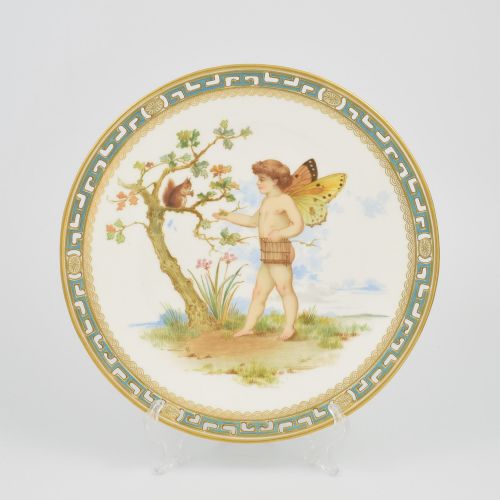
Squirrels and fairies occasionally peer out from pierced porcelain plates, proving Victorian breakfast tables possessed a whimsical side.
Evaluating Quality
Quality rests upon the crispness of the modelling in relief pieces and the precision of the hand-painted brushwork on cabinet plates and vases. Superior items display finer detailing in gilt accents, more complex enamel palettes and greater control in specialised techniques like pate-sur-pate.
The reputation of the designer or decorator heavily influences distinction, with signed works or pieces attributed to notable figures like Christopher Dresser commanding greater artistic interest. The complexity of the form, such as pierced porcelain borders or multi-figure sculptural groups, further elevates the standard of execution.
Christopher Dresser·W S Coleman
The Victorian Minton Porcelain Glossary
- Parian Ware
- A fine-grained unglazed white ceramic resembling marble, developed in the nineteenth century for figures and sculptural groups.
- Pate-sur-Pate
- A ceramic decoration technique where successive layers of liquid white porcelain slip are painted onto a tinted body to build a translucent relief.
- Celadon
- A pale green jade-like glaze used on ceramic bodies, frequently seen on nineteenth-century figurines and vases.
- Kakiemon
- A Japanese style of polychrome enamel decoration featuring asymmetrical naturalistic motifs, revived by European potteries during the Victorian period.
Victorian Minton Porcelain: Frequently Asked Questions
How do I identify genuine Victorian Minton porcelain?
Look for factory impressed or printed marks characteristic of the nineteenth century, alongside the specific stylistic traits of the period.
Hand-painted details, gilding quality and the specific formulation of the porcelain or parian body further confirm authenticity.
Were these pieces used for dining or display?
Many items, such as dessert plates, compotes and tea sets, served actual dining and entertaining functions in nineteenth-century households.
Cabinet plates, plaques, garden seats and decorative vases were primarily intended for visual display within parlours and drawing rooms.
What is the difference between porcelain and parian ware?
Porcelain is a fired ceramic body that is typically glazed and vitrified, offering a smooth, impervious surface suitable for detailed painting and gilding.
Parian ware is an unglazed biscuit porcelain specifically formulated to imitate carved marble, primarily utilised for sculptural figures and portrait busts.
How should I care for antique ceramic plates and vases?
Keep pieces out of direct sunlight to prevent fading on delicate hand-painted enamel and gilt surfaces.
Dust gently with a soft, dry cloth and avoid washing antique gilded or painted ceramics in water.