


Dresden Porcelain Basket
These dresden porcelain basket pieces bring ornate floral work and figural detail straight from German kilns to your table.
Dresden Porcelain Basket
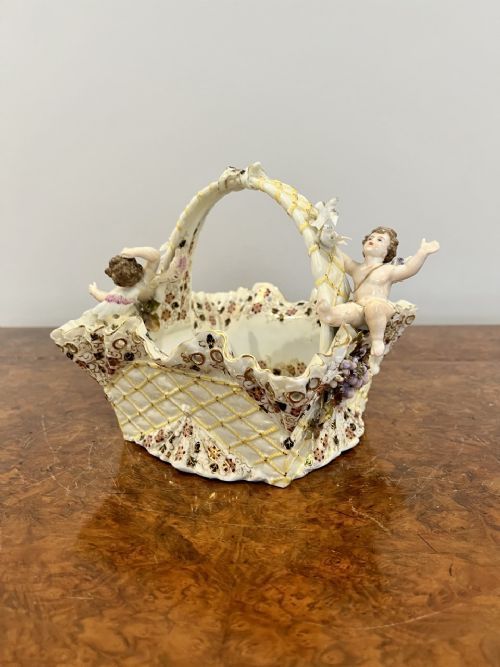
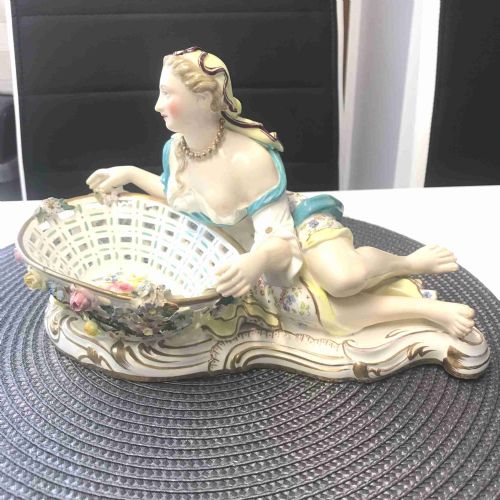
Buyers seeking a dresden porcelain basket encounter elaborate ceramic centrepieces, sweetmeat dishes, decorative bowls, and figural work produced across the nineteenth and early twentieth centuries. These pieces originate predominantly from German factories, including Meissen, Schierholz, Sitzendorf, and Saxony makers.
The most common forms on this page include large floral centrepieces adorned with cherubs, figural maiden sweet baskets, and detailed decorative bowls. They span periods from the eighteenth century up to Edwardian iterations around nineteen ten.
Makers drew heavily on Rococo and Victorian Rococo Revival styles to shape these ornamental vessels. Pierced lattice walls, applied porcelain flowers, and hand-painted surfaces define the typical visual vocabulary of the group.
How they were made
Artisans utilised hard-paste porcelain and standard ceramic bodies, shaping them into elaborate forms like centrepieces and comports. Applied elements such as individual petals and leaves required meticulous hand-modelling before firing.
Enamel colours and gold leaf application finished the surface decoration. Gilded enamel highlights and rich gilding accentuated the sculptural moulded details across the Rococo revival shapes.
Gardeners carrying baskets populate these tables, proving that porcelain vegetables and tiny cherubs belong together forever.
What varies in quality
The refinement of the applied floral work and the crispness of the moulded cherubs or figural maidens distinguish superior examples. Finer pieces demonstrate intricate hand-painting and delicate piercing without distortion in the kiln.
The application of gold leaf and enamel also marks the distinction between standard production and the highest grade German porcelain centrepieces. Greater depth in the relief modeling and more complex figural arrangements indicate better workmanship.
Meissen·C.G. Schierholz and Sohn·Sitzendorf
The Dresden Porcelain Basket Glossary
- Hard-paste porcelain
- A dense, durable ceramic composed of kaolin and petuntse, fired at high temperatures. It forms the impermeable white body typical of continental European decorative figures.
- Centrepiece
- A large decorative vessel placed in the middle of a dining table or sideboard. These objects often incorporate pierced baskets or figural supports.
- Rococo Revival
- A nineteenth-century design movement mimicking the asymmetrical scrolls, shell motifs, and floral abundance of the eighteenth-century French style. It dominates the ornamentation of these German vessels.
- Sweetmeat dish
- A small decorative container designed for holding confections, nuts, or dried fruits during formal dining. They frequently take the form of open baskets supported by figures.
- Gilding
- The application of gold leaf or powdered gold onto the ceramic surface to highlight rims, handles, and moulded relief details.
Dresden Porcelain Basket: Frequently Asked Questions
What is a dresden porcelain basket used for?
These vessels originally served as decorative table centrepieces, sweetmeat dishes, or fruit comports during formal dining. Wealthy households used them to display confectionery or fresh produce.
Today, collectors primarily display them on sideboards, tables, or cabinets as standalone decorative art objects. They add height and historical character to traditional interiors.
How do I identify German porcelain centres?
Look for characteristic German factory styles, particularly the inclusion of applied floral encrustations, cherubs, and figural maidens. The forms typically follow Rococo Revival aesthetic patterns.
Check for maker marks or style traits associated with factories such as Meissen, Schierholz, and Sitzendorf. The presence of hard-paste porcelain and hand-painted enamel further confirms the origin.
Are these pieces from the eighteenth century?
While some designs reference eighteenth-century Meissen models, the majority of pieces date from the nineteenth and early twentieth centuries. Periods represented include the Victorian era, Edwardian period, and specific decades between eighteen eighty and nineteen ten.
Stylistic revivals during the Victorian era frequently copied earlier eighteenth-century shapes. Careful examination of the paste and enamel helps distinguish original early pieces from later revivals.
How should I clean porcelain baskets?
Dust these delicate items gently with a soft, dry brush to prevent damage to the intricate applied petals. Avoid harsh cleaning solutions or abrasive cloths that could wear away the enamel and gilding.
Keep them away from direct sunlight and high-moisture areas to protect the painted surfaces and gold leaf. Handle them strictly by the sturdy base rather than the fragile pierced rims or applied flowers.