


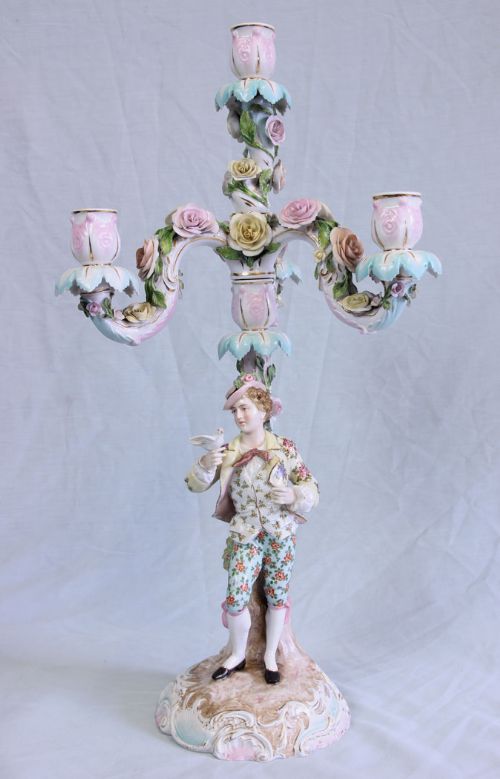
Applied Flower Porcelain
Applied flower porcelain pieces are intricate ceramic works adorned with delicate sculptural blooms, sought after for their elaborate Victorian and Regency decorative forms.
Applied Flower Porcelain
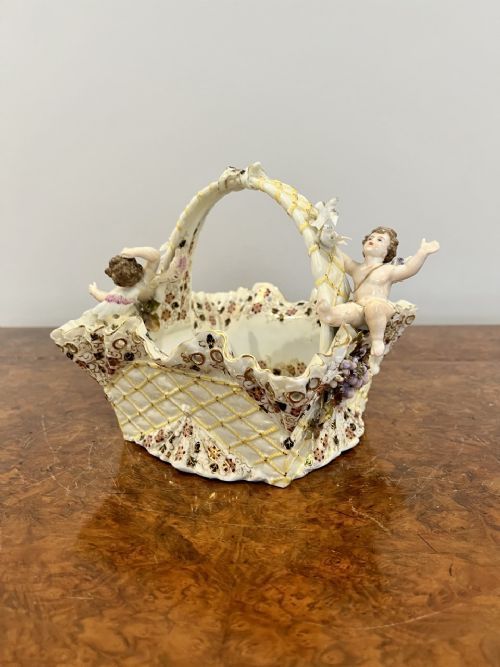
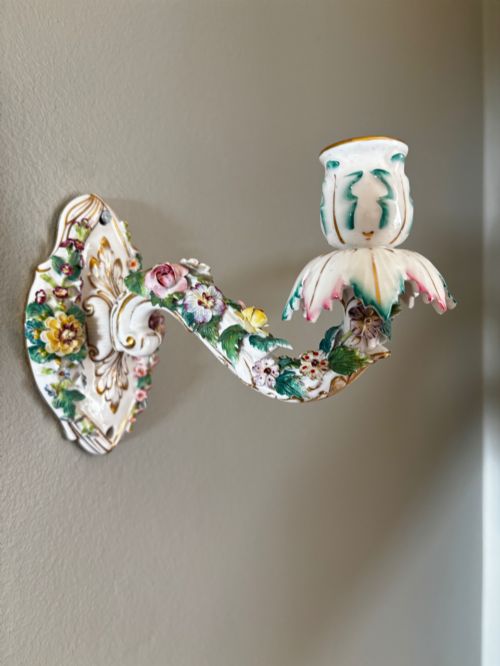
Applied flower porcelain brings together ornamental items such as decorative baskets, vases, centrepieces, wall sconces, and candelabras produced across the nineteenth and early twentieth centuries. These objects display sculpted floral motifs fixed onto the ceramic body before firing, a characteristic feature across the periods seen on this page.
The versions most commonly met here range from Victorian Rococo Revival centrepieces to Regency and Edwardian decorative vessels. Pieces span English makers like Rockingham and Coalport alongside continental European factories including Meissen, Sitzendorf, and Plaue Schierholz.
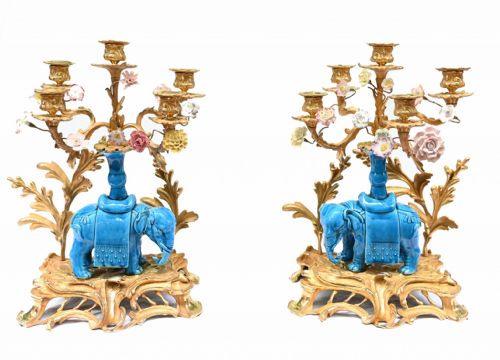
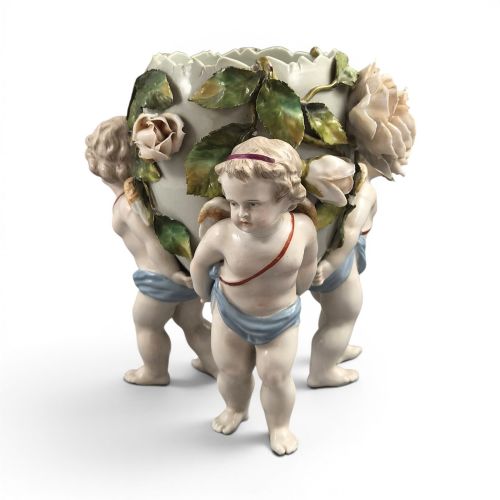
Forms vary from cabinet cups and saucers to large musical putti centrepieces and elephant candelabras. Each object demonstrates the period penchant for ornate, nature-inspired ornamentation executed in hard-paste porcelain and ceramic.
Materials and construction methods
Potters utilised hard-paste porcelain and ceramic as the primary body for these sculptural works, modelling individual flower petals by hand before attaching them to the main vessel. This meticulous hand-modelling accounts for the raised, three-dimensional quality of the roses and foliage.
Makers embellished the fired ceramic surfaces with enamel, gold leaf, and gilding to accentuate the modelled details. Many pieces combine painted views or gilded trim with applied floral clusters, creating a rich visual texture characteristic of the Victorian and Regency eras.
Listings feature porcelain pieces spanning the nineteenth century, including Victorian, Edwardian, and Regency periods.
Factors determining quality
The refinement of the hand-modelled flowers separates the finest examples from simpler productions, with thin, lifelike petals showing superior skill compared to thick, heavy ceramic moulding. The intricacy of the underlying form, whether an elaborate putti centrepiece or a standard vase, also dictates the piece's standing.
The application of gilding, gold leaf, and enamel painting influences the overall visual success of the work. Crisp detailing in the surrounding rococo scrollwork and the preservation of the delicate applied petals without excessive modern restoration define the upper tier of these items.
Meissen·Sitzendorf·Plaue Schierholz·Rockingham·Coalport
The Applied Flower Porcelain Glossary
- Hard-paste porcelain
- A durable ceramic composition fired at high temperatures, composed of kaolin and petuntse. It provides a dense, vitrified body suitable for intricate sculptural modelling.
- Rococo Revival
- A nineteenth-century design style characterised by asymmetrical scrollwork, C-scrolls, and naturalistic motifs. This aesthetic heavily influences the decorative baskets and vases found here.
- Centrepiece
- A large ornamental object designed for the middle of a dining table or sideboard. Examples on this page frequently incorporate applied roses and putti figures.
- Gilded Enamel
- Coloured vitreous enamel combined with gold accents applied to the ceramic surface. This technique adds metallic lustre to the decorated vessel.
- Putti
- Depictions of plump, winged infant figures commonly used in European porcelain sculpture. They often appear alongside applied flowers on centrepieces and candelabras.
Applied Flower Porcelain: Frequently Asked Questions
Were these candelabras used for lighting?
Yes, pieces like the Regency porcelain elephant candelabras and wall sconces served functional lighting roles in nineteenth-century interiors. They held wax candles to illuminate rooms while doubling as decorative showpieces during daylight.
Over time, many of these items transitioned into purely decorative objects for display in cabinets or on mantelpieces. Using them with modern candles requires caution to prevent wax from dripping onto the delicate applied flowers.
How do I identify Victorian pieces?
Victorian examples often display heavy Rococo Revival influences, featuring ornate scrolls, gilding, and brightly coloured enamel work. Look for the characteristic exuberance in forms like decorative baskets and figural centrepieces.
Examining the base and paste quality can also offer clues, though specific factory marks provide the most reliable dating evidence. The transition from Regency restraint to Victorian opulence is marked by greater sculptural complexity.
What is a potpourri lidded vase?
A potpourri lidded vase is a ceramic vessel designed to hold dried aromatic plant materials inside a pierced or vented container. The lid allowed scented air to diffuse into the room while concealing the botanical mixture.
In applied flower porcelain, these vases combine practical function with elaborate sculptural ornamentation like applied roses. They were popular accessories for nineteenth-century drawing rooms and boudoirs.