
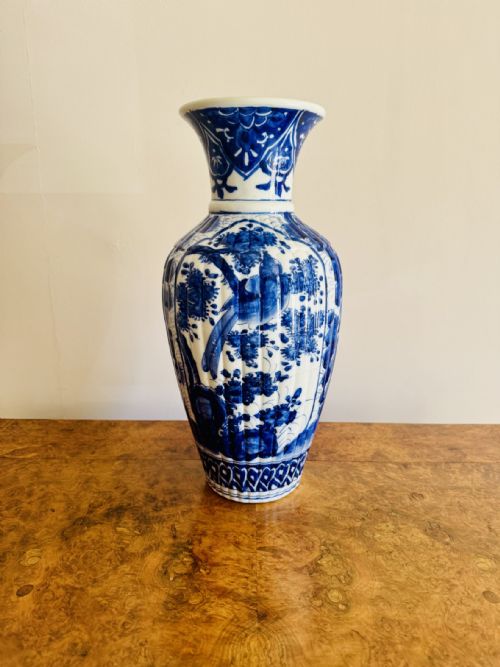
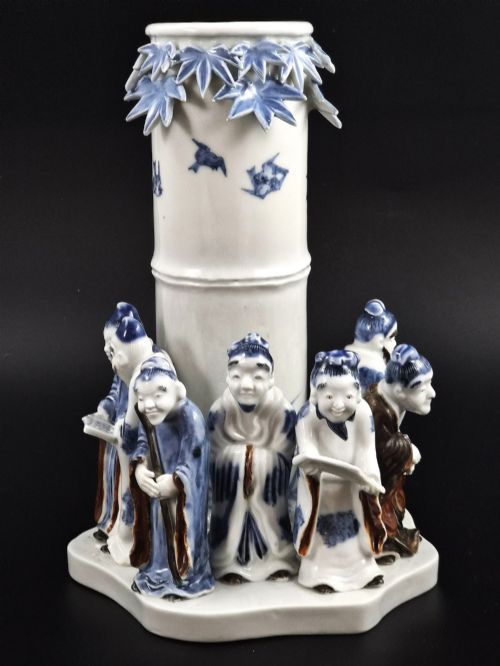
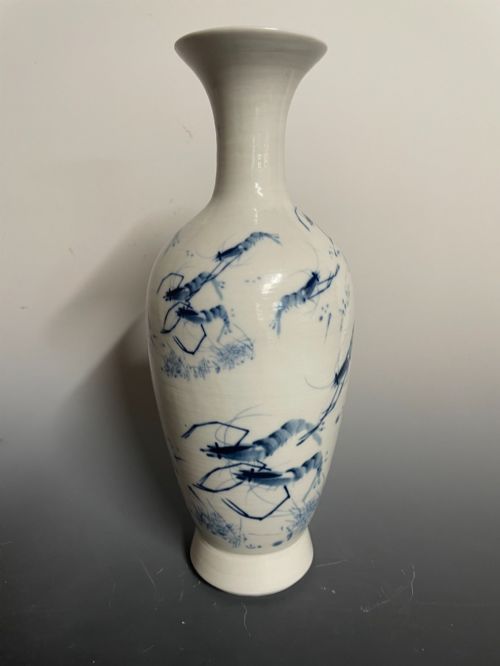
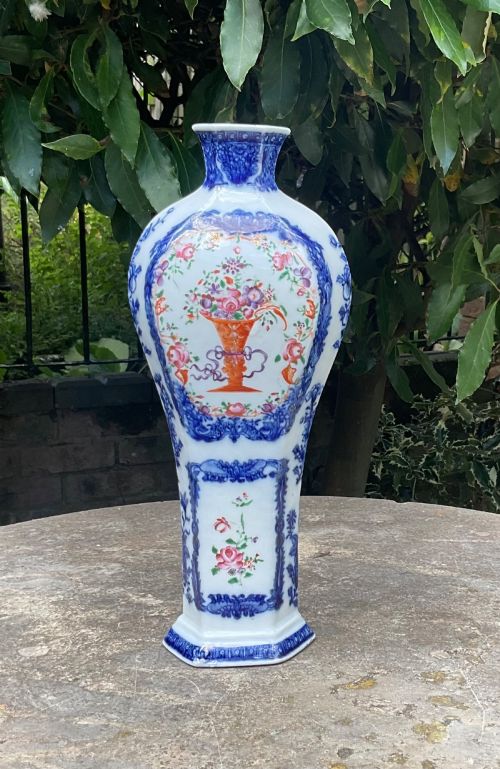



White Porcelain Flower Vase
White porcelain flower vase pieces arrive here from diverse periods and origins, offering botanical display with classic elegance.
White Porcelain Flower Vase
A white porcelain flower vase brings refined shape and neutral ground to floral display, ranging from compact posy holders to grand garniture sets. When you search for a white porcelain flower vase, you encounter items spanning the seventeenth century through the early twentieth century, including English manufactories, continental European works, and Chinese export wares.
The selections on this page encompass various forms such as tulipieres, bough pots, egg vases, and lidded jars designed to hold stems or sit as decorative ornaments. Pieces from periods like the Victorian era, Edwardian years, and the eighteenth century appear alongside traditional Chinese creations.
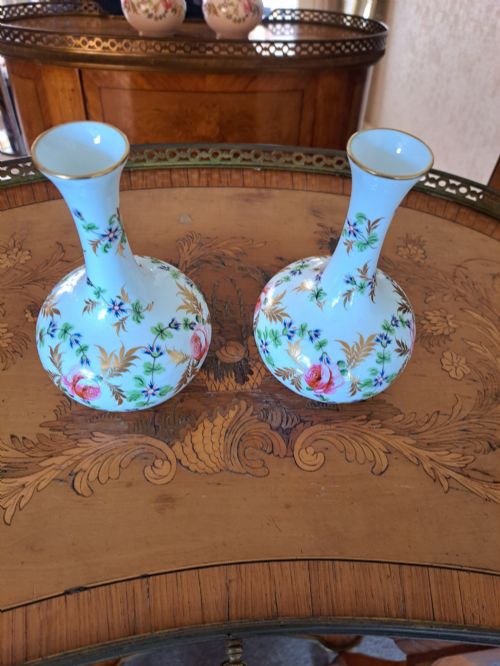
Continental European houses and English porcelain works dominate the offerings, providing hand-painted floral motifs, raised white enamel, and cobalt details. Buyers find both single display vessels and matched pairs suitable for mantelpieces and tables.
How they were made
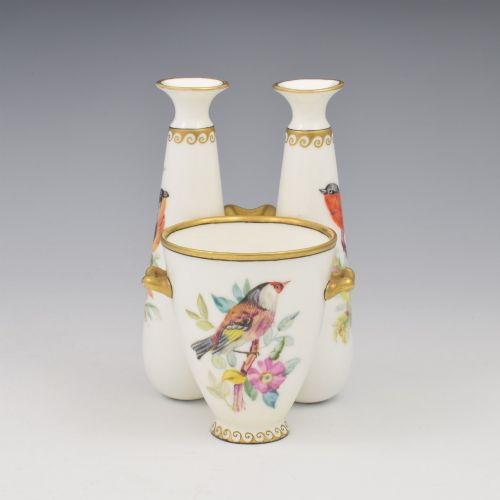
Potters shaped hard-paste porcelain and ironstone bodies, applying enamel glaze, cobalt glaze, and white enamel to create smooth surfaces ready for decoration. Artisans then hand-painted botanical and avian scenes directly onto the ceramic body.
Gilding, gold leaf, and gilt accents were frequently applied to rims, handles, and raised relief elements to catch the light. Kiln firing fixed the cobalt blue underglaze and the overglaze enamels, resulting in durable finishes across centuries.
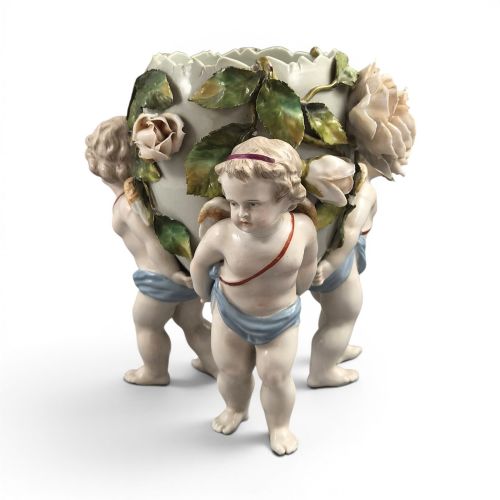
Some nineteenth-century continental porcelain vessels feature cheerful cherubs holding wheelbarrows, transforming utilitarian flower holders into playful domestic garden scenes.
What varies in quality
Quality rests upon the crispness of the porcelain moulding, the precision of the hand-painted details, and the preservation of the original gilding and enamel work. Finer examples display meticulous brushwork in floral and avian subjects, whereas simpler utilitarian items rely on basic moulded relief without hand finishing.
The distinction between standard production items and premier factory output lies in the weight of the porcelain, the depth of the glaze, and whether the piece bears recognised factory marks or period attribution.
Royal Worcester·Crown Derby·Sitzendorf·Flight Barr and Barr·Meissen
The White Porcelain Flower Vase Glossary
- Hard-paste porcelain
- A dense, vitrified ceramic composed of kaolin and petuntse fired at very high temperatures. It resists scratching and provides a bright white ground for overglaze enamels.
- Tulipiere
- A vessel with multiple spouts designed specifically for arranging individual tulip stems. This form originated in the seventeenth century and allows each flower to stand separately.
- Bough pot
- A decorative container used for holding branches of flowering shrubs or greenery inside a room. They often include a pierced cover to keep stems upright.
- Enamel glaze
- A vitreous composition fused to the porcelain body through kiln firing. It provides smooth colour and protects the painted decoration beneath.
- Gilding
- The application of gold leaf or powdered gold onto the surface of the ceramic. It highlights moulded details and edges on Regency and Victorian pieces.
White Porcelain Flower Vase: Frequently Asked Questions
How do I use a posy holder?
A posy holder is designed to support short-stemmed flowers in a compact arrangement, often featuring a pierced lid or multiple small apertures.
Place stems individually through the top openings to keep them upright without needing floral foam.
What is a garniture?
A garniture consists of a matching set of three or five vases or jars made to be displayed together on a mantelpiece or sideboard.
These sets create visual symmetry and share coordinated painted designs or moulding styles.
How do I clean antique porcelain?
Dust antique porcelain gently with a soft, dry brush and avoid abrasive cloths that might scratch the glaze or wear away delicate gilding.
Wash only when necessary using lukewarm water and mild soap, keeping away from harsh chemicals.
How can I tell the period?
Dating relies on factory marks, glaze characteristics, stylistic influences such as Rococo Revival, and the specific composition of the porcelain body.
Comparing potting techniques and hand-painting styles helps narrow the decade of manufacture.