


Cherub Centrepiece Bowl
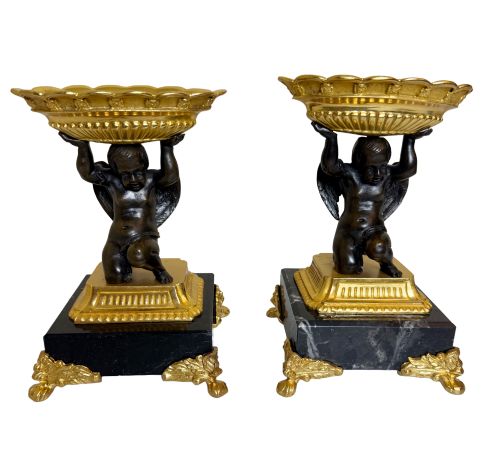
A cherub centrepiece bowl commands the middle of a formal table, bringing figural bronze or porcelain directly into the room.
Cherub Centrepiece Bowl
A cherub centrepiece bowl brings sculptural figures together with functional vessels designed for display on a dining table or sideboard. These items emerge from the nineteenth and early twentieth centuries, spanning Victorian, Edwardian, and Regency periods.
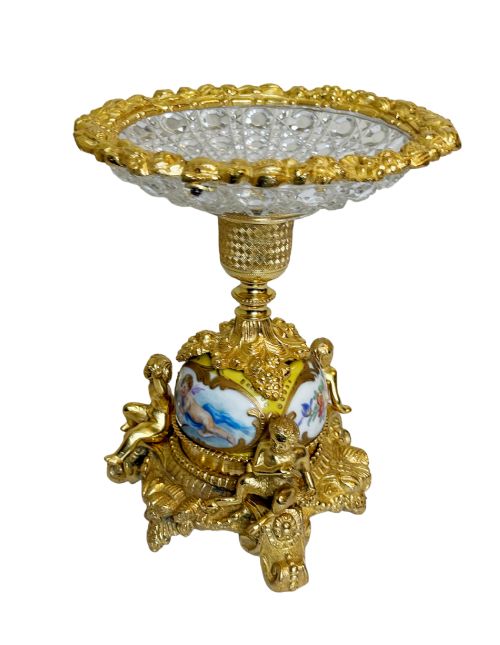
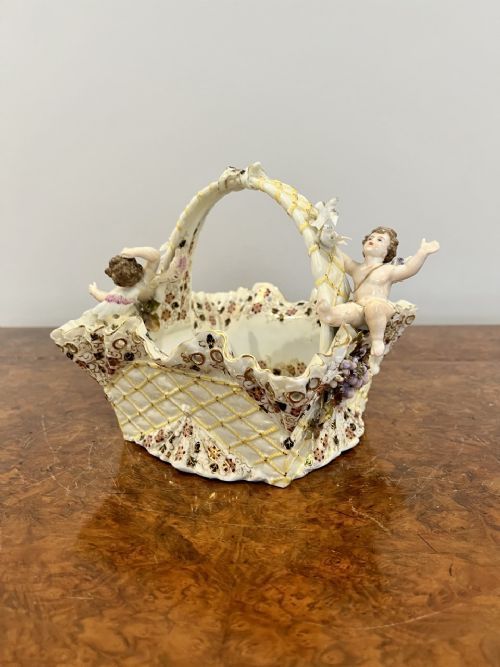
The form usually takes the shape of a bowl, tazza, basket, or compote supported or accompanied by winged figures often described as cherubs, putti, or cupids. German factories, English potteries, and French bronze workshops dominate the available examples.
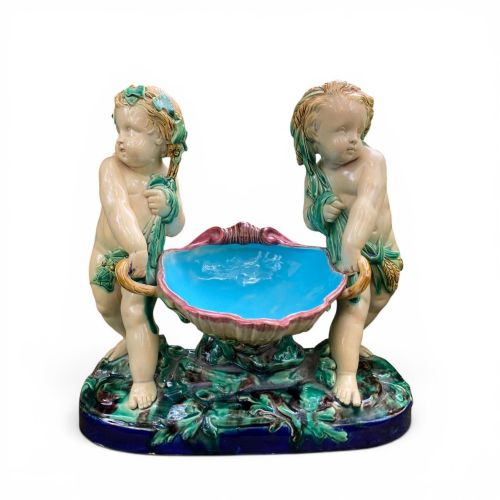
Buyers encounter porcelain, majolica, and earthenware vessels alongside gilt bronze and patinated bronze mounts. The figures interact directly with the vessel, either holding the rim, riding shells, or clustering around the central stem.
How they were made
Ceramic pieces rely on moulded earthenware, majolica, and hard-paste porcelain, often finished with hand-painted details, applied flowers, and glossy glazes. Factories like Schierholz, Minton, and Dresden shaped these complex figural compositions in multiple parts before firing.
Metal versions utilise gilt bronze, ormolu, and patinated bronze, frequently cast using the lost-wax method and chased by hand. These bronze frames often hold cut crystal, glass, marble, malachite, or mother-of-pearl dishes.
Listings span from the 1860s through the Edwardian era, incorporating Victorian majolica and Regency ormolu.
What varies in quality
In metalwork, the weight of the bronze and the depth of the fire-gilding determine the tier of the piece. Combining luxury hardstones or cut crystal with finely chased bronze mounts indicates higher production standards.
Minton·Christofle Paris·Schierholz Plaue·Volkstedt
The Cherub Centrepiece Bowl Glossary
- Putti
- Plural of putto, representing plump, winged male infants derived from classical art. These figures populate many nineteenth-century centrepieces.
- Majolica
- A colourful, tin-glazed earthenware developed with rich lead glazes. Minton produced notable examples featuring moulded figural scenes.
- Tazza
- A shallow bowl or saucer mounted on a stem and foot, designed for serving fruit or sweets. They frequently incorporate figural bronze or ceramic supports.
- Ormolu
- Finely chopped gold applied to a bronze base through a mercury amalgamation process, creating a deep golden lustre. This technique appears on Regency and Victorian metalwork.
Cherub Centrepiece Bowl: Frequently Asked Questions
How were centrepiece bowls used?
These vessels held fruit, sweetmeats, or flowers at the centre of dining tables during formal meals.
They functioned as decorative centrepieces meant to impress guests rather than for heavy daily dining use.
Are the figures cherubs or putti?
Makers and sellers use cherubs, putti, and cupids interchangeably to describe the winged infant figures adorning these pieces.
Classical myth and Renaissance revival tastes inspired the inclusion of these sculptural companions on nineteenth-century vessels.
How do I date a porcelain centrepiece?
Factory marks on the underside provide the primary clue, alongside stylistic indicators such as Victorian rococo revival moulding or Edwardian pastel palettes.
Physical characteristics of the paste and glaze help confirm whether a piece belongs to the mid-nineteenth century or later.
Can I use these bowls for serving food?
Many antique porcelain and glass vessels remain structurally sound for holding dry foods or fruit.
Historical gilt bronze and delicate majolica items are better suited for static display to protect the finish and glazes.